
Festivals aren’t just all about music and parades. Around the world, people celebrate by making a baby cry (yes, really) and throwing oranges. These nine festivals are offbeat, once-in-a-lifetime experiences that make travel stories worth telling.
9. Nakizumo Baby Crying Festival (Japan)

Imagine a 400-year-old tradition where sumo wrestlers try to make babies cry. That’s exactly what happens at the Nakizumo Baby Crying Festival in Tokyo. Two sumo wrestlers face each other in a ring, each holding a baby, and the first one to make their baby cry wins. This festival is rooted in the belief that a baby’s loud cry will ward off evil spirits and ensure a lifetime of good health.
8. Frozen Dead Guy Days (USA)

Only in America will you find a festival dedicated to a frozen dead guy. In Nederland, Colorado, the community has been preserving the body of Bredo Morstoel, a Norwegian man, in a cryonics facility since 1994. The town celebrates this resident with “Frozen Dead Guy Days,” a three-day festival in March filled with eccentric events. You can witness coffin races or try your hand at a frozen T-shirt contest. There’s even a parade of hearses and a grandpa costume contest.
7. Wife-Carrying World Championship (Finland)
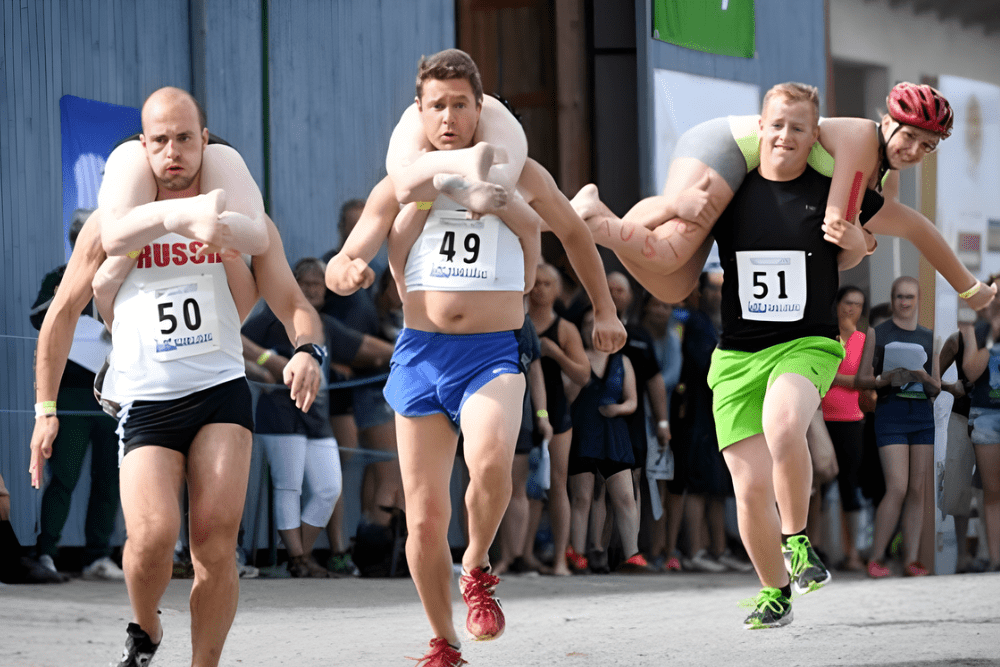
If you’re looking for a unique sporting event, look no further than the Wife-Carrying World Championship in Sonkajärvi, Finland. This competition sees male participants race through an obstacle course while carrying their female partners on their backs. The prize? The wife’s weight in beer. This bizarre endeavor is rooted in the 19th-century legend of Herkko Rosvo-Ronkainen, a robber who was said to have stolen women from villages by carrying them on his back.
6. Boryeong Mud Festival (South Korea)
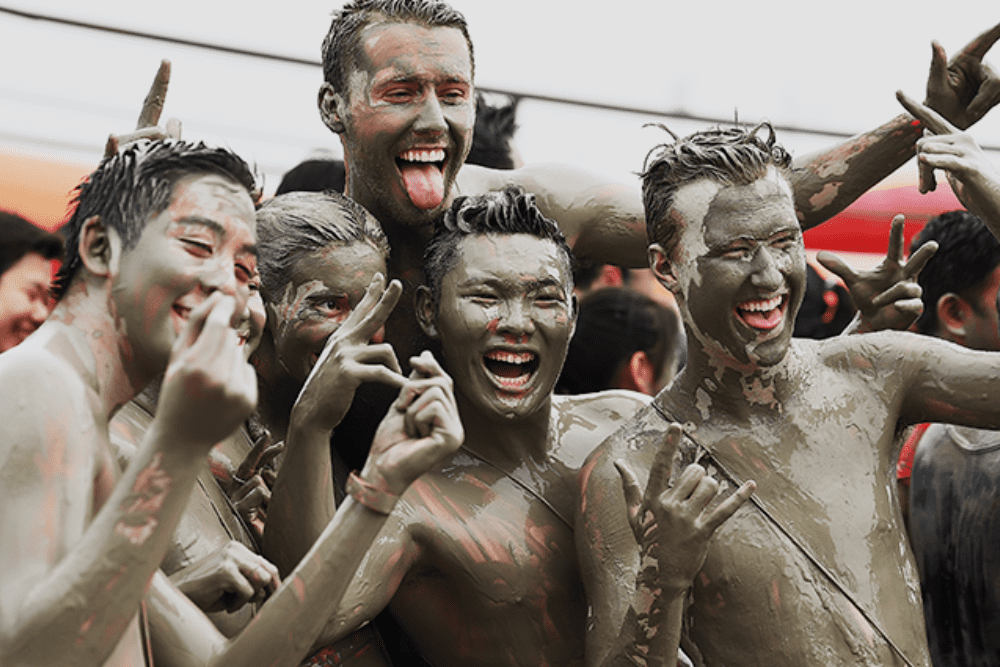
The Boryeong Mud Festival, held on the west coast of Korea, was originally created to promote the mineral-rich mud from the Boryeong mud flats, which is said to have anti-aging and healing properties. Today, the festival is a two-week-long event of mud slides, mud soccer, mud wrestling, and even a “mud prison.”
5. Battle of the Oranges (Italy)
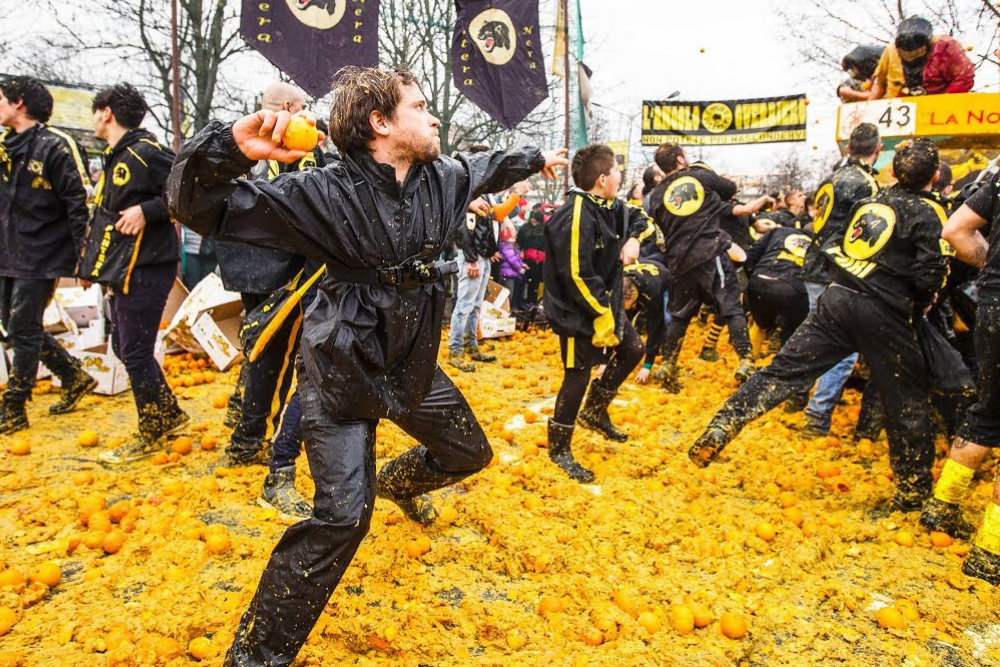
In the historic town of Ivrea, Italy, thousands of people (divided into nine historical teams), pelt each other with over a million pounds of oranges. The tradition began in the mid-1800s after Napoleon’s troops introduced the fruit to the town. If you want to avoid being a target, make sure to wear the traditional red hat. It’s a chaotic and surprisingly historical food fight that you won’t find anywhere else.
4. Up Helly Aa (Scotland)
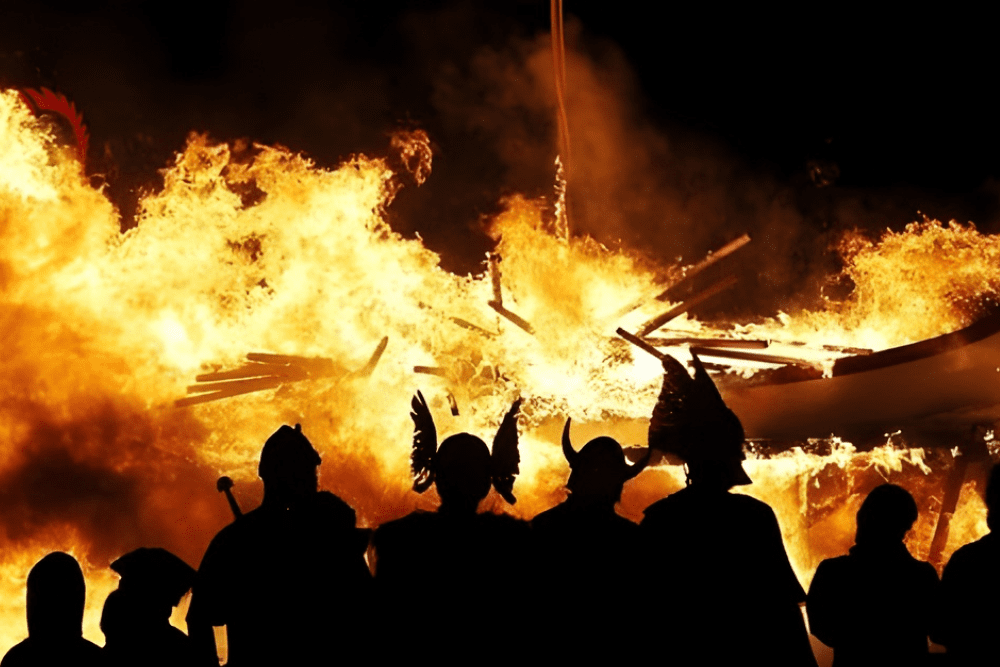
For a truly epic spectacle, visit Lerwick, Shetland for Up Helly Aa. This Scottish fire festival, held after Christmas, celebrates Shetland’s Viking heritage. Squads of torchbearers, dressed in Viking attire, drag a replica Viking longship through the streets. The festival is a visually stunning tribute to the region’s history, and a must-see for anyone interested in Viking culture.
3. Yanshui Fireworks Festival (Taiwan)
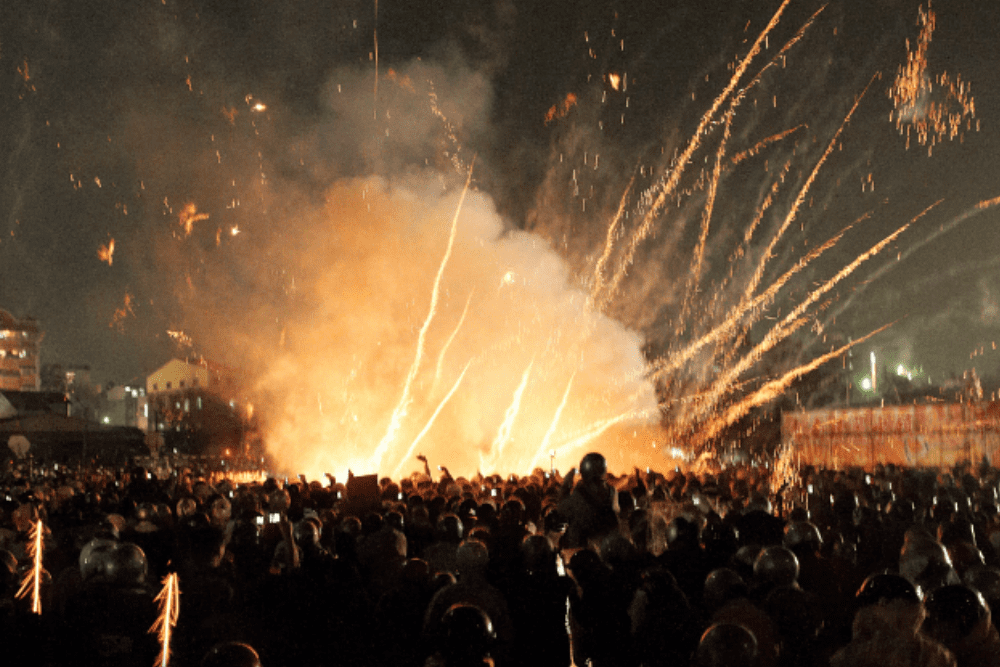
This festival, which originated from a cholera outbreak in the 19th century, is a thrilling display of pyrotechnics. Thousands of people take to the streets to set off “beehives” of fireworks, believing that being hit by a rocket brings good luck. Participants don motorcycle helmets and fireproof clothing while standing shoulder-to-shoulder in front of walls of fireworks.
2. Cooper’s Hill Cheese-Rolling (England)

At the Cooper’s Hill Cheese-Rolling and Wake, participants chase a 9-pound wheel of Double Gloucester cheese down a steep hill. The first person to cross the finish line at the bottom wins the cheese. The event is chaotic and often full of injuries, with contestants tumbling and rolling down the hill in pursuit of their prize.
1. Monkey Buffet Festival (Thailand)
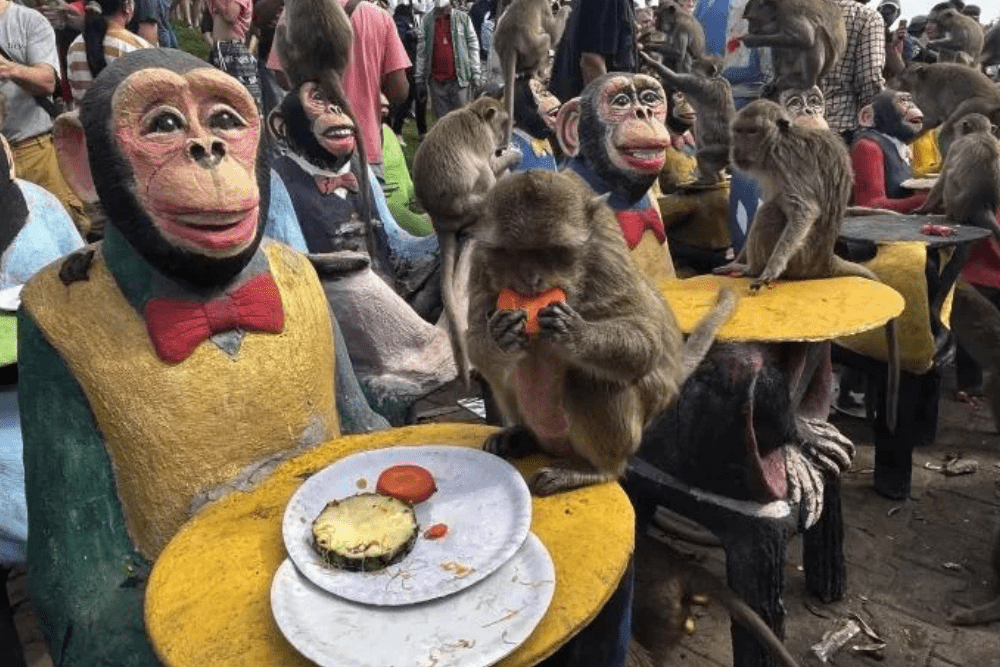
In the Lopburi Province of Thailand, the last Sunday of November is a day for the monkeys. The Monkey Buffet Festival is dedicated to the local population of over 2,000 crab-eating macaques. The festival takes place among the ruins of a 13th-century temple, where tables are piled high with fruits, vegetables, and other treats for monkeys to enjoy. The event is a way to thank the monkeys, who are believed to bring good luck to the area.