
Language is full of surprises. Common phrase like “spill the beans” and “riding shotgun” aren’t as innocent as they sound. Some of our everyday sayings have seriously dark backstories, and here are seven that prove just that.
7. Spill the Beans

If you’ve ever let a secret slip, then you’ve “spilled the beans.” While it sounds like a kitchen mishap, the phrase’s most likely origin lies in the ballots of ancient Greece. Citizens would cast their votes on important matters by placing one of two colored beans into a jar. White for ‘yes’ and black for ‘no’. If an official accidentally knocked over the jar, the beans would spill, prematurely revealing the outcome of the vote.
6. Caught Red-Handed

To be “caught red-handed” is to be discovered in the act of wrongdoing, with irrefutable proof. The origin of this phrase stems from old Scottish law. It refers to the act of catching a murderer with the blood of their victim still on their hands. The phrase first appeared in Scottish legal texts in the 15th century, and its meaning has broadened since then.
5. Mad as a Hatter

This phrase, famously embodied by Lewis Carroll’s character in Alice’s Adventures in Wonderland, has a tragic history. In the 18th and 19th centuries, hat makers used mercurous nitrate when producing felt hats. Prolonged exposure to this neurotoxin caused a condition known as “mad hatter disease,” with symptoms including slurred speech, tremors, and mental and emotional instability.
4. Pulling Someone’s Leg

Today, “pulling someone’s leg” is a lighthearted way to describe a harmless prank or joke. But in the 18th and 19th centuries, it referred to a more sinister act. The phrase originated from street thieves of London, who would literally pull their victims’ legs to trip them and send them tumbling to the ground. In the following chaos, an accomplice would rob the disoriented individual.
3. Riding Shotgun
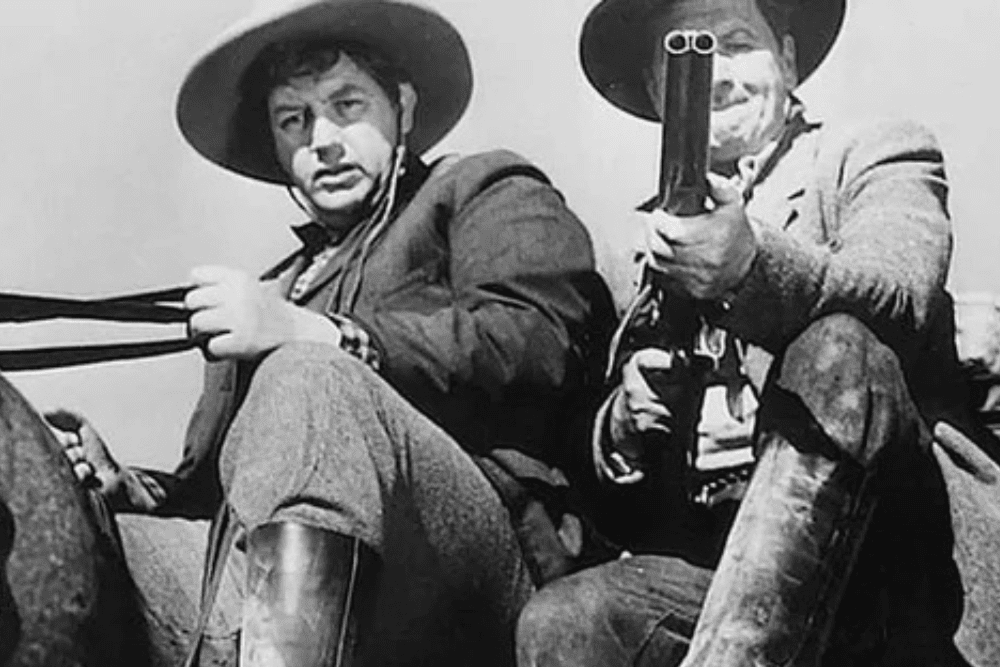
Calling “shotgun!” before a road trip means claiming the front passenger seat. But in the American Old West, this position came with a heavy responsibility. The person “riding shotgun” on a stagecoach was tasked with protecting the cargo and passengers from bandits and other threats. The person acted as a protector, armed with a shotgun. The phrase was popularized in the 20th century by Hollywood Westerns, romanticizing this dangerous but important role.
2. Meet a Deadline

For many of us, a “deadline” is a stressful but manageable part of work life. During the American Civil War, the term had a much more literal and deadly meaning. In Confederate prisoner-of-war camps, a “dead-line” was a line drawn in the dirt, a barrier that prisoners were forbidden to cross. Any captive who stepped over this line would be shot on sight.
1. Bite the Bullet

To “bite the bullet” is to face a difficult situation with courage and resolve. This phrase is believed to have originated on the battlefields of the 18th and 19th centuries, before there was modern anesthesia. When a soldier required emergency surgery, they were often given a lead bullet to bite on, distracting them from the pain and preventing them from crying or biting their own tongue.