
Somewhere between the last argument and the first quiet morning alone, a question forms: what was all of that for? Calling a past relationship “living proof” of what you will never accept again is a way of reclaiming something, not a guarantee that every heartbreak contains a tidy lesson. What it can offer, when you are ready, is information about yourself, about what you need, and about the line you now know you will protect. That is not a small thing.
A relationship can end without becoming a verdict on your life

Fear has a way of rushing in right after a breakup, and one of its quietest forms is the belief that a failed relationship proves something damning about you. That you wasted years. That you missed obvious signs. That you should have known better, or loved differently, or left sooner.
That fear deserves to be named before anything else, because it is not the truth.
The phrase “living proof” in this article’s title is rhetorical, not clinical. It is an invitation to look at what a relationship revealed, not a factual claim that every breakup delivers a clear, definitive lesson. Some relationships end and the meaning takes months or years to settle. Some end and the grief outlasts any sense of insight.
Both of those outcomes are real, and neither one says anything permanent about your worth or your judgment.
What research does suggest is that understanding why a relationship ended may support something useful over time. A longitudinal study on emerging adult breakups found that people who made sense of what happened reported fewer internalizing symptoms later, less conflict in future relationships, and stronger relationship competence. That is a meaningful finding, and it is also a modest one. It describes a possible process, not a guaranteed reward for suffering.
Sitting with what happened, and eventually asking what it showed you, is different from deciding the relationship had to happen for a reason. You are allowed to hold grief and growing clarity at the same time. Research on cognitive processing after relationship dissolution distinguishes deliberate reflection, which may support meaning-making, from intrusive thinking that circles without resolution. The goal here is the first kind, taken at whatever pace your life actually allows.
A possible lesson does not give a painful relationship a necessary purpose. Mistreatment was not useful, and it was not your fault. What you choose to do with the experience now belongs entirely to you.
Pain is not proof that you are failing to move on
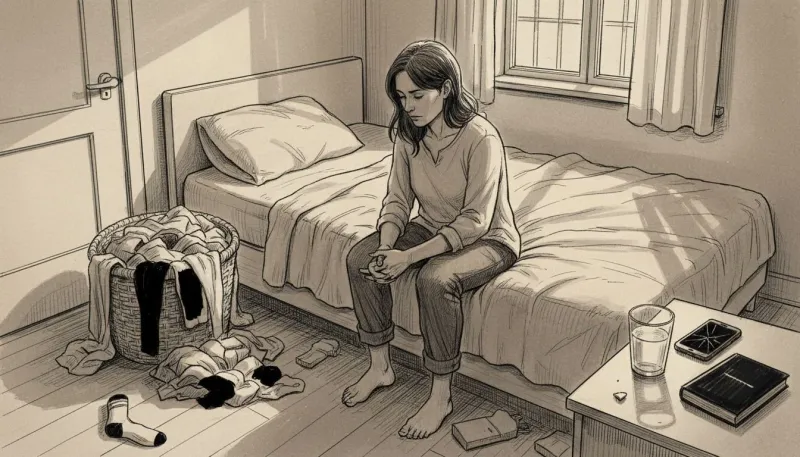
Before any talk of standards or clarity or growth, the heartbreak itself deserves room. Grief after a relationship ends is not a sign that you are stuck, weak, or doing recovery wrong. Sadness, anger, longing, and confusion can all share the same afternoon, and none of them are evidence that you have failed to move on.
Longitudinal research on self-esteem and romantic transitions found that breakups were associated with temporary decreases in self-esteem, though in the studied sample that effect had largely disappeared after one year. That timeline is worth holding gently, not as a deadline, but as a reminder that the sharp early pain is real and also, for many people, not permanent.
Recovery does not follow a single path. One longitudinal study tracking depressive symptoms after breakups identified several distinct trajectories, including resilience, relatively fast recovery, slower recovery, and more persistent distress. Rumination and certain personality factors were associated with less favorable outcomes in that research. Knowing this matters because it means that if your recovery feels slower or harder than someone else’s, that is not a character flaw.
It is a trajectory, and trajectories can shift.
Research on depressive symptom trajectories following breakups has also found that some people experience symptoms that resemble post-traumatic stress, not just ordinary sadness. That finding is not meant to alarm you. It is meant to validate that what you are carrying may be heavier than a bad week, and that it deserves real care, not just a hopeful reframe.
Clearer standards can absolutely coexist with grief, anger, and longing. You do not have to feel better before you are allowed to know what you need. And a hopeful interpretation of the relationship should never be used as a reason to skip the emotional support you actually deserve right now.
Reflection should create clarity, not another reason to blame yourself

Reviewing a relationship honestly is one of the more useful things you can do after it ends, and one of the easier ones to get wrong. The difference between reflection that helps and reflection that hurts is not how long you spend on it or how thoroughly you reconstruct every conversation. The difference is where it lands.
Deliberate reflection asks specific, forward-facing questions: What behavior hurt me? What did I overlook, or choose to explain away? What do I need in a relationship that I was not getting? What would I want to be different next time?
These questions have answers you can actually use. They point somewhere. Research distinguishing cognitive processing styles after relationship dissolution found that deliberate reflection was associated with meaning-making and, in some cases, post-traumatic growth, while intrusive, repetitive thinking was linked to greater distress and poorer adjustment over time.
Rumination looks different. It replays the same scenes without producing a conclusion. It asks why he did what he did, why you did not see it sooner, whether a different response on your part would have changed the outcome. Longitudinal research on post-breakup depressive symptoms found that rumination was associated with less favorable recovery trajectories.
Revisiting pain without a destination does not build wisdom. It extends suffering.
A practical approach: when reflection feels tolerable, try to end each session with one specific observation or one named action. It might be as simple as “I need to be able to express disagreement without being punished for it” or “I want to pay attention earlier when someone dismisses what I feel.” One concrete thing is enough.
When the process starts to feel destabilizing, stop. You are not required to extract a lesson from every painful memory, and you are not failing if some memories simply hurt without producing clarity. Pause when reflection becomes a trial where you are the defendant. The goal is understanding, not a verdict against yourself.
Name the behavior instead of turning your ex into a label

Broad labels feel satisfying for about a week. Calling someone controlling, or a narcissist, or toxic gives the relationship a clean shape that the actual experience never had. The problem is that labels do not tell you anything specific enough to use. They describe a character.
They do not describe the behavior you actually lived through, and behavior is where the usable information lives.
When you record what happened in concrete terms, the picture becomes clearer and more honest. Not “he was manipulative” but “every time I raised a concern, he turned it into an argument about my insecurity.” Not “he was controlling” but “he criticized my friendships until I stopped making plans without asking him first.” This kind of language produces something you can actually work with. It tells you what to watch for, what to name early, and what you will not explain away again.
MedlinePlus guidance on domestic violence identifies recognized warning signs that include repeated blame-shifting, humiliation, controlling contact with friends or family, sexual pressure, threats, intimidation, stalking, and financial control. These are patterns worth documenting, especially when they occur more than once. A single painful disagreement or a period of poor communication does not automatically establish abuse. And yet, the CDC’s definition of intimate-partner violence makes clear that abuse can involve a single serious incident, not only an ongoing pattern.
Behavioral language also protects you from a different kind of error: assigning a clinical diagnosis based on your own account of the relationship. Narcissistic personality disorder is a specific clinical diagnosis that cannot be responsibly made from the outside, no matter how recognizable certain behaviors feel. Describing someone as having used controlling behavior, emotional manipulation, or repeated invalidation is accurate, honest, and far more useful than a label that closes off further thought.
What you are building is a record of your experience, not a case file against someone else. That record belongs to you, and its value is entirely in what it helps you recognize and protect against going forward.
Turn what you learned into specific standards and boundaries

Standards sound abstract until you write them down in plain language. “I want to be treated with respect” becomes useful the moment you define what respect looks like in practice: someone who follows through on what they say, who listens without interrupting to correct you, who disagrees without making you feel small. The more specific the expectation, the easier it is to notice when it is and is not being met.
A helpful starting point is separating three things that often get blurred together. A preference is something you would enjoy but could reasonably compromise on, like shared hobbies or a particular communication style. A need is a condition your emotional well-being genuinely depends on, things like honesty, reliability, and feeling emotionally safe. A boundary is the action you will take when a need is consistently violated, such as ending a conversation that has become intimidating, or leaving a relationship when a repeated boundary is ignored.
Loveisrespect’s framework for healthy relationships grounds these distinctions in communication, mutual respect, support, and consent rather than in chemistry or compatibility alone.
Research on ideal standards in newlywed couples found that greater consistency between a person’s relationship ideals and their perception of their partner was associated with greater relationship satisfaction. That finding supports examining whether a relationship genuinely reflects your core expectations. It does not suggest that higher standards alone create better relationships, or that any universal list of ideal partner qualities exists.
Standards are also not a means of controlling another person or a test designed to eliminate everyone who falls short. They are a reflection of what you know you need to feel safe, seen, and respected. Perfectionism dressed up as standards will make every relationship feel insufficient. Values grounded in your actual lived experience will help you recognize something real when you find it.
Boundaries, specifically, are about your own actions, not rules you impose on someone else. “If this happens again, I will leave the conversation” is a boundary. “You are not allowed to do this” is a request, and requests require the other person’s cooperation. Knowing the difference gives you something you can actually keep.
Not every painful relationship was abusive—and abuse is not a life lesson

Painful does not always mean abusive. Some relationships end because two people were genuinely incompatible, wanted different things, communicated in ways that never quite aligned, or hurt each other without either person intending to cause lasting harm. That kind of loss is real and it deserves grief. Calling it something it was not does not make the grief more valid or the healing faster.
The CDC defines intimate-partner violence as including physical violence, sexual violence, stalking, and psychological aggression, and emphasizes that it can range from a single serious episode to chronic, escalating patterns. That range matters. A single act of physical or sexual violence is abuse, even without a years-long pattern behind it. And coercive control, which involves ongoing conduct designed to dominate, isolate, or intimidate, can be deeply harmful even when it never becomes physical.
Patterns of power and control are especially important to consider when assessing psychological or coercive abuse, where the harm may be harder to name and where CDC risk-factor research recognizes that multiple individual, relational, community, and societal factors contribute to vulnerability. That context matters because it means no single personality trait, history, or emotional style makes a person responsible for someone else’s abusive choices.
Responsibility for abusive behavior belongs to the person choosing it, not to the woman who stayed, loved deeply, empathized generously, or failed to identify an evolving pattern the moment it began. MedlinePlus notes that abusive behavior can develop gradually and escalate over time, which is one reason readers should not blame themselves for not recognizing it sooner.
Abuse is also not a lesson the universe arranged for your benefit. Framing serious harm as a necessary teacher implies the suffering had a purpose, and that implication, however well-intentioned, belongs in the category of things that do not actually help. What may help is naming what happened clearly, separating it from what was ordinary disappointment, and deciding what you will protect going forward, on your own terms and your own timeline.
Put safety before closure
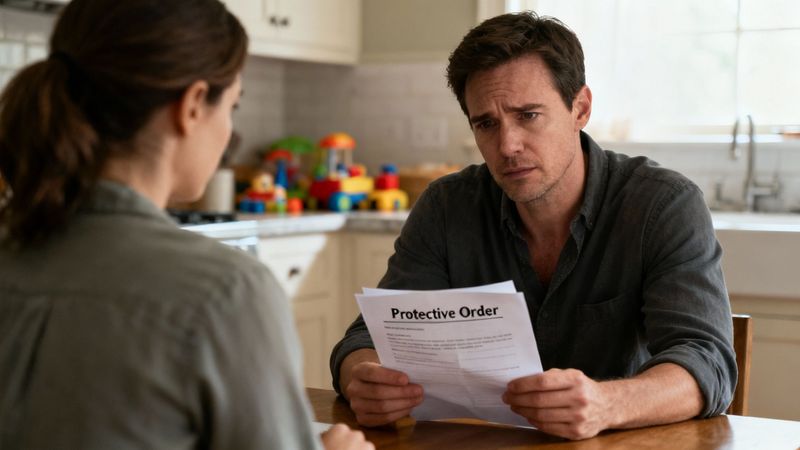
Closure is a compelling idea. The thought of one final conversation where everything gets said, acknowledged, and resolved can feel like the missing piece between where you are now and where you want to be. For some people, in some situations, a calm ending conversation is genuinely possible. For others, especially those navigating threats, coercion, stalking, intimidation, violence, or ongoing monitoring, seeking that conversation can increase risk rather than reduce it.
Learning from a relationship does not require confronting the person who hurt you. You do not need to announce your conclusions, collect evidence of what happened, or arrange a formal exit in order to move forward. The clarity you build belongs to you, and it does not depend on the other person’s participation or acknowledgment. In situations where safety is a concern, the most important thing is not getting the last word.
The most important thing is protecting yourself.
The National Domestic Violence Hotline’s safety planning resources include options for people who are still in a relationship, those who are preparing to leave, and those who have already separated. Each situation is different, and a personalized plan reflects that. The Hotline also notes that internet activity may be monitored, which is worth keeping in mind if you are researching your options from a shared device or network. Their interactive safety planning tool is available if you want a more private, guided starting point.
Limiting or ending contact can genuinely help some people create the space they need to recover. It is not a universal requirement, and it is not always immediately safe or even possible. When children, shared finances, housing, employment, legal matters, or other ongoing responsibilities connect you to a former partner, structured communication may be necessary. That does not mean you are failing to protect yourself.
It means you are navigating a more complicated situation, and the approach has to match the actual circumstances.
Safety is not a step you take after you have processed everything. Safety is the foundation on which any other step becomes possible.
Carry forward the standard without erasing what you lost

Developing clearer standards after a painful relationship does not require rewriting the history of it. You are not obligated to decide the relationship was worthless in order to value what you now know, and you do not have to pretend you were foolish for staying, loving, or hoping. Both things can be true: it hurt, and you came out of it knowing something you did not know before.
Connection with people you trust can be a meaningful part of recovery. Research among people exposed to trauma found that increases in perceived social support, particularly from friends, were associated with faster recovery from post-traumatic stress symptoms. That study involved a trauma-exposed community sample and was not specifically about breakups, so it does not prove that social support causes breakup recovery. What it does suggest is that trusted connection, when it is available and feels safe, may be worth leaning into rather than managing alone.
When sadness, anxiety, intrusive thoughts, or low mood persist and begin to interfere with daily life, professional support is the appropriate next step. NHS guidance on grief and loss advises seeking clinical help when low mood lasts more than two weeks, when coping feels genuinely out of reach, or when safety is a concern. US readers should look for a licensed mental-health professional, and anyone in immediate danger should contact emergency services. This article is not a substitute for that kind of care.
The most honest version of “living proof” is not a claim that your past relationship was sent to teach you something. It is the quieter recognition that you now know what to notice, what to name, and what you will protect. That knowledge was not required to cost what it did. But it is yours, and you get to carry it forward.