
After enough hurt, building walls around your heart stops feeling like fear and starts feeling like wisdom. You stop trusting easily, stop opening quickly, and maybe stop believing that love can reach you without asking you to bleed first. That worry, that you are now too guarded to be loved, is one of the most quietly painful things a woman can carry. This article is for you, and its honest answer is gentler than you might expect.
Your walls are not proof that you are impossible to love

Something happens when love turns dangerous. You stop reaching out first. You read texts twice before answering. You keep your weekends vague and your feelings close, because the last time you let someone in fully, it cost you something you are still recovering.
That is not a character flaw. That is a person learning, sometimes painfully, where her edges need to be.
Guardedness can function as genuine self-protection, and attachment research on avoidance and closeness describes it as discomfort with emotional exposure that often becomes more visible under pressure or when someone pushes for intimacy faster than feels safe. That discomfort is not a personality sentence. It is a response, and responses can shift when conditions change.
A boundary, as the APA defines it, is a psychological limit that protects a person’s integrity and defines what participation in a relationship feels acceptable. Keeping those limits is not the same as being emotionally unavailable. A boundary says “this is what I need to feel safe here.” It is information, not rejection.
Now, the title of this article needs an honest note before anything else. The idea that the right man will find his way to you no matter how many walls you build is a beautiful piece of hope, but it is not a guarantee research can back. No study shows that a destined partner will appear, persist through any level of withdrawal, or heal every wound. What the evidence does support is quieter and more useful: you do not have to remove every protection to be loved.
A relationship that feels safe can give you room to open gradually, at whatever pace trust is actually earned.
You are not impossible to love. You are a woman who learned to be careful, and careful is not the same as closed.
Safety shows in how a partner responds to your defenses

One of the clearest ways to evaluate whether someone is emotionally safe is not what he says about himself. It is how he behaves when you pull back.
Researchers who study partner responsiveness describe it as a combination of three things: feeling understood by the other person, feeling validated, and feeling genuinely cared for. Studies linking perceived partner responsiveness to relationship well-being suggest that when people feel their partner truly sees and values them, they tend to report greater satisfaction and connection over time. A related study found associations between this kind of responsiveness and improvements in eudaimonic well-being, the sense that life has meaning and direction. Those are associations, not promises, and they do not guarantee that any particular relationship will succeed.
But they do tell you what to watch for.
In practice, responsiveness looks like this. He listens when you talk without steering the conversation back to himself. He remembers details you mentioned once, quietly, weeks ago. When you share something vulnerable, he responds with care rather than deflection, mockery, or an immediate attempt to fix you.
He does not demand more than you are offering. He does not make you feel strange for needing time.
Contrast that with a partner who becomes affectionate only when he wants reassurance, who pushes for access when you have asked for space, or who treats your hesitation as a problem he is owed permission to solve. That pattern, however charming the delivery, is worth noticing.
Responsiveness is not grand. It is consistent. It shows up in small moments, in how he reacts when you say “I need a little space tonight” or “I am not ready to talk about that yet.” Those reactions, repeated over weeks and months, tell you far more than any early declaration of feeling.
Trust grows through reliable behavior, not romantic certainty

There is a version of romantic hope that wants one sweeping moment: he says exactly the right thing, you feel it in your chest, and suddenly trusting him feels easy. That moment is a lovely idea. It is also not how trust works.
The APA defines trust substantially in terms of reliability and predictability, the expectation that another person will follow through, behave consistently, and be depended on to do what they say they will do. Chemistry and intense declarations of feeling can accompany trust, but they cannot create it. A person can feel overwhelming chemistry for someone who does not call when he says he will, who behaves warmly in pursuit and coldly once he has your attention, or who shows up differently depending on what he needs from you that week. Feeling certain is not the same as being safe.
Healthy relationship guidance, including CDC-developed dating skills resources, emphasizes taking real time to know someone, using respectful communication, and honoring emotional and physical space as practical markers of safety. The accompanying discussion guides reinforce that setting and respecting limits is part of healthy relating, not an obstacle to it.
What you are looking for, practically, is patterns. Does he follow through after the exciting early weeks, when the effort of pursuit is no longer new? Does he behave the same way when he is not trying to win something from you? Does he communicate when something is off rather than going quiet and leaving you to guess?
Patterns over time answer those questions in ways that a single conversation, however honest it feels, cannot. Trust is something you observe more than you decide. Let behavior accumulate before you conclude either way.
Patience respects a no; it does not wear it down

Patience is frequently romanticized in ways that quietly blur a critical line. The story goes that if he really loves you, he will keep showing up, keep trying, keep finding new ways in until you finally soften. That story sounds devoted. In practice, it can describe something much less safe.
A respectful partner can offer invitations to connect. He can express that he cares, make himself available, and let you know he is not going anywhere. What he cannot do, without crossing into pressure, is pursue after you have said no, not yet, or please stop. RAINN’s guidance on responding to pressure is clear that someone who continues after a refusal, who guilts, interrogates, or waits you out until exhaustion changes your answer, is not demonstrating devotion.
That is coercion, regardless of how warmly it is framed.
The National Domestic Violence Hotline identifies manipulation, threats, retaliation, and disregard for stated limits as patterns that signal danger rather than love. A man who withdraws warmth, punishes silence, or makes you feel guilty for needing time is not being patient. He is applying pressure with a softer label.
A genuinely patient person can also stop pursuing someone who is unavailable or unable to reciprocate, and that stopping is not proof that he did not love you enough. A healthy person respects another person’s limits even when that respect costs him the relationship. His willingness to walk away when you need him to is a feature, not a failure.
One more thing worth saying plainly: if there is already a pattern of control, threats, or abuse in a relationship, removing your defenses will not fix a power-and-control problem. CDC guidance on intimate partner violence makes clear that abuse is not a communication failure between equals. Your boundaries are not the issue there. Your safety is.
You can offer gradual vulnerability without surrendering your privacy

Somewhere along the way, a lot of women absorb the message that love requires full transparency, that if you hold anything back, you are not really trying. That belief puts enormous pressure on early connection and hands a great deal of power to whoever is doing the asking.
Research on self-disclosure tells a more nuanced story. A meta-analysis of disclosure and liking found associations between sharing and closeness, while more recent studies suggest that disclosure works best in context, meaning that what you share, when you share it, and how the other person responds all matter. Disclosure is not a test of readiness. It is not something you owe someone to prove that you are serious.
You decide what to share, and when. Your trauma history is yours. Your finances, your home, your body, your private friendships, your time, these are not entrance fees to a relationship. A new partner does not earn access to them simply by being present, persistent, or charming.
What gradual vulnerability looks like in practice is small, chosen steps that match the trust already built between you. You mention something that matters to you and notice how he holds it. You share a worry and observe whether he responds with care or uses it later. You let him see one tender thing and pay attention to what he does with it.
Each of those moments gives you real information.
The pace is yours to set. A boundary, by its nature, defines what participation feels acceptable to you at a given point in time. You are not obligated to move faster because someone else is impatient, or to stay closed because you are afraid. Both options remain available, and the choice stays with you.
A safe relationship can support healing without becoming the cure
Love is a powerful thing. It is not, however, a medical treatment, and the promise that the right partner will repair every wound sets both people up for something unfair.
SAMHSA’s trauma-informed approach identifies six core principles for safe, healing-oriented environments: safety, trustworthiness, collaboration, empowerment, voice, and choice. Notice what runs through all of them. The person who has been hurt keeps her agency. She is not handed over to someone else’s care or asked to surrender control in order to get better.
A partner who supports your healing reinforces your sense of power over your own life rather than positioning himself as the one responsible for fixing you.
The SAMHSA trauma-informed care guide further emphasizes that healing environments prioritize the person’s own voice and participation in decisions about their wellbeing. That principle translates directly to relationships: a partner who insists he knows what you need, who overrides your hesitation in the name of helping you open up, is not practicing care. He is practicing control.
The VA’s guidance for families on living with someone affected by trauma acknowledges that a loving partner can provide meaningful support, while also making clear that love alone does not eliminate trauma symptoms. A VA resource on responding when someone shares trauma reinforces that support means listening, respecting limits, and not pressuring someone to process more than they are ready to share.
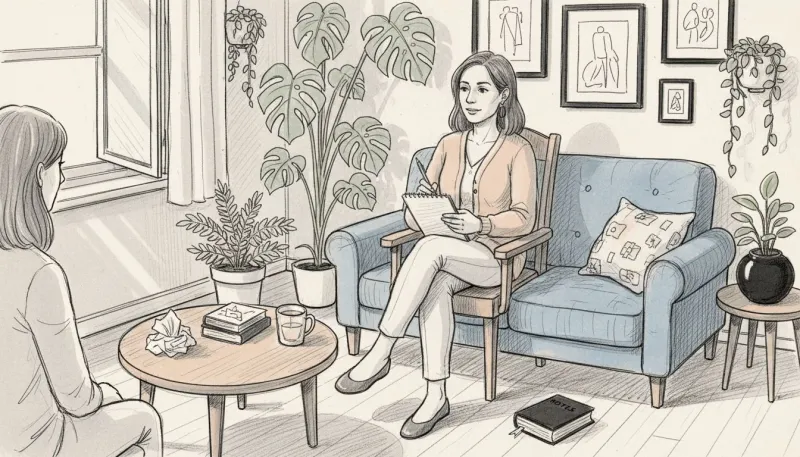
If fear, avoidance, intrusive memories, or recurring harmful relationship patterns are making daily life harder, a qualified therapist can offer something a partner genuinely cannot. That is not a condition for being loved. It is simply an option that exists, and one worth knowing about.
Real love still requires mutual participation
Here is the part of the conversation that is harder to have, and the one that respects you enough to be honest.
Guardedness can protect you. It can also, over time, become something else: a pattern of pulling away when closeness arrives, difficulty accepting care when it is genuinely offered, or reduced emotional engagement that leaves a willing partner with nothing to meet. Research on avoidant attachment describes these as tendencies that can become more pronounced under relational stress, not character verdicts, but patterns worth recognizing in yourself if they show up repeatedly.
A related study on avoidance and emotional engagement under stress found associations between avoidant patterns and distancing behaviors, particularly when a relationship requires more emotional presence than feels comfortable. Again, this is a possible pattern, not a diagnosis, and it does not describe every guarded woman or every disappointment.
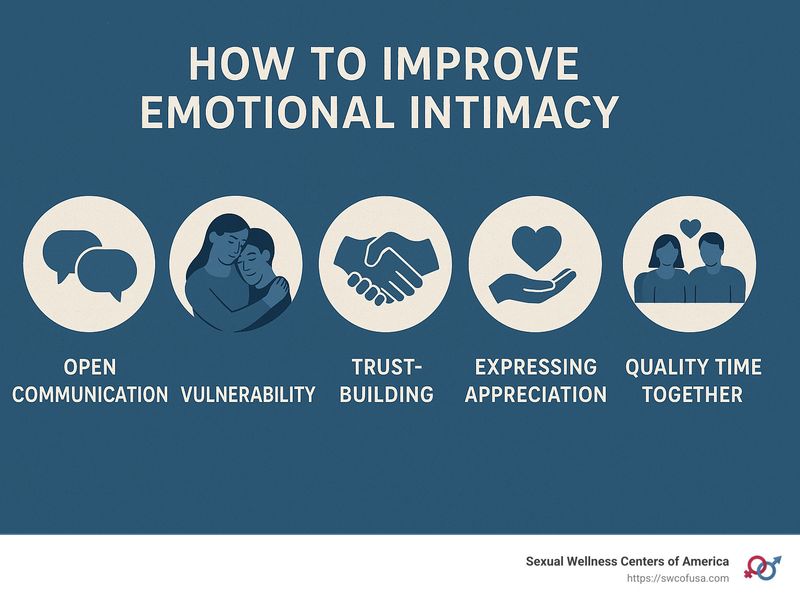
What it does mean, practically, is that a safe partner cannot carry all of the approaching, reassuring, and repairing. If you genuinely want connection, some participation from you is part of what makes it possible. That does not have to be large or fast. A small, clear act, answering honestly when he asks how you are, letting him know when something he did helped, naming what you need instead of waiting to see if he guesses correctly, can move things forward without requiring you to abandon anything that keeps you safe.
A 2025 longitudinal study found that changes in attachment insecurity over time tend to be modest and uneven, and that avoidance was not substantially transformed simply by being in a supportive relationship. That finding is not discouraging. It is clarifying. Growth is possible, and it is also gradual, personal, and not something that happens to you because someone loves you hard enough.
Keep the boundaries that protect you and open where trust earns access

You do not have to choose between being protected and being loved. Those two things can coexist, and a relationship worth having will not ask you to sacrifice one to prove you deserve the other.
The question worth sitting with is not whether your walls are too high. The more useful question is whether a particular person, in practice, respects your limits, shows up consistently, and leaves you feeling incrementally safer rather than incrementally pressured. Partner responsiveness research points to feeling understood, valued, and cared for as meaningful markers of a relationship that may support wellbeing. You can use those markers as a measuring stick rather than waiting for certainty you may never feel all at once.
Boundaries define what participation feels acceptable to you at any given point. They are allowed to shift as trust is built, and they are also allowed to hold firm when trust has not been earned. Both are legitimate. The CDC dating skills guidance frames setting clear limits as part of healthy relating, not as an obstacle to it.
Keep what protects you. Open where trust has genuinely been earned, at the pace that belongs to you. Love that is worth having will not require you to prove yourself by letting go of everything before you feel ready. The walls that have kept you standing are not your enemy.
They are part of the story of a woman who survived and is still, quietly, deciding whether to let someone new be worth it.