
Getting a message from an ex you have been trying to move on from can stop you in your tracks, even when you thought you were finally doing okay. That sudden reappearance can bring up feelings you worked hard to put to rest, and it is completely normal to feel confused, unsettled, or even a little hopeful. What that contact actually means, though, depends far less on his timing and far more on what he does, what he says, and whether it fits a pattern you have seen before. Understanding how to read that contact clearly can help you protect yourself and keep your recovery moving forward.
Renewed Contact Is a Possibility, Not a Diagnosis

When a former partner reaches out after a period of silence, it is tempting to reach for a ready-made label to explain what just happened. You may have heard the word “hoovering” used to describe this kind of reappearance. As Cleveland Clinic explains, hoovering is a popular, nonclinical term commonly used to describe attempts to draw someone back into a destructive or unhealthy relationship through tactics such as sudden affection, apologies, gifts, guilt, promises, or repeated contact. The label can feel validating, but it cannot tell you what his motive actually is.
Hoovering is not a psychiatric diagnosis, and neither is “narcissistic abuse.” These are descriptive, colloquial terms that circulate widely in online recovery spaces. They can help you name a feeling, but they cannot confirm that your ex has narcissistic personality disorder. According to the APA’s clinical definition, narcissistic personality disorder requires a pervasive, long-term pattern assessed against specific diagnostic criteria by a qualified clinician. A text message, a charm offensive, or a post-breakup apology is not enough to establish that diagnosis.
That does not mean the contact should be dismissed. Renewed contact becomes more significant when it fits an established pattern of control, emotional abuse, harassment, stalking, threats, or boundary violations. The CDC’s guidance on intimate partner violence focuses on observable behaviors, including coercion, threats, psychological aggression, and stalking, rather than on personality labels. That same focus will serve you better than any single word.
Your reaction to the message matters too. If reading it made you feel afraid, pressured, or suddenly smaller, that reaction is information worth taking seriously. The question is not whether he fits a popular profile. The question is what his behavior looks like and whether you feel safe.
Why His Return Can Feel Timed to Your Healing

There is a specific kind of ache that comes when someone reaches out right as you were starting to breathe again. The timing can feel eerie, almost deliberate, as if he somehow sensed that you were finally putting yourself back together. That feeling is real, and it deserves to be taken seriously, even if the explanation is more complicated than it might seem.
The honest answer is that the research does not support the idea that former partners can reliably detect when you have emotionally recovered and then return because of it. That version of events may feel true, and it may even be true in a particular situation, but it is not a verified psychological mechanism that applies to every case. What contact does, regardless of when it arrives, is interrupt a period of calm. It can reactivate attachment, fear, grief, or hope all at once, which is why it feels so destabilizing even if you have made real progress.
What research does support is narrower and more useful. A study on relationship instability between victims and detained domestic abusers found that some former abusive partners used declarations of love, sympathy appeals, challenges, and other strategies to reestablish communication and facilitate relationship recovery after separation. That pattern is worth knowing about, because it shows that contact can be a strategy, not just an impulse.
At the same time, renewed contact can also reflect loneliness, regret, practical needs, or even a genuine wish to repair what was broken. As Cleveland Clinic notes, the motive behind contact cannot reliably be inferred from timing alone. The behavior and its pattern are more informative than the moment it arrived in your inbox.
Separation Does Not Always End the Abuse

Leaving a relationship is often described as the hardest step, but for many women it is not the final one. Abuse does not always stop when the relationship ends. Sometimes it changes form, and sometimes it intensifies.
A 2024 literature review of 48 studies on post-separation abuse documented a wide range of tactics used after separation, including psychological, legal, economic, technological, and child-related abuse, as well as stalking and harassment. Each of these tactics can function as a way to maintain connection, pressure, or control even after the relationship has formally ended. The separation itself does not close the door on those dynamics.
Research involving women who had left abusive husbands found that verbal abuse and the use of children as leverage were common both before and after separation. That qualitative study also found that stalking and economic abuse sometimes escalated after separation rather than fading. That escalation can catch survivors off guard, especially when they expected distance to bring relief.
Contact involving children, shared finances, housing, or legal matters can create a legitimate channel that is then used to apply pressure or maintain access. This does not mean that every necessary co-parenting message or logistical exchange is abusive. The distinction lies in whether the contact respects agreed boundaries, sticks to the stated purpose, and leaves you feeling like an equal participant rather than someone being managed or monitored.
Recognizing that abuse can persist after separation is not meant to frighten you. It is meant to help you stay clear-eyed about what you are dealing with, so that you can make informed decisions about how to respond and what kind of support to seek.
Read the Message and the Pattern Together

A single message can tell you something important on its own. Read it carefully. Ask yourself whether it contains a threat, a demand, guilt-inducing language, or communication that feels designed to hurt or destabilize you. A message does not need to be part of a long pattern to be worth taking seriously.
If it frightened you, pressured you, or made you feel like you had done something wrong just by existing, that response matters right now, regardless of what came before.
At the same time, a broader pattern adds critical context. The CDC defines stalking as repeated, unwanted attention or contact that causes fear or concern for safety, and psychological aggression as communication intended to harm someone emotionally or mentally or to exert control. Both definitions apply to former partners. A single message may not meet those thresholds, but a series of messages across multiple accounts, unexpected appearances at your home or workplace, monitoring your social media, or using your children or finances to force communication can add up to a clear pattern.
The National Domestic Violence Hotline’s guidance on emotional abuse includes repeated unwanted contact, guilt or blame, pressure for immediate reconciliation, threats of self-harm, and attempts to use children, friends, money, or legal processes to force contact as signs that warrant caution.
Rather than asking “Is he a narcissist?”, try asking: Does this contact respect my boundaries? Does it leave me feeling free to say no? Does it make me feel safe or afraid? Those questions will give you more usable answers than any label.
The Hotline’s guidance after an abusive partner reaches out also emphasizes that you do not need to have a complete picture of the pattern before you take steps to protect yourself.
An Apology Has to Survive Time and Accountability
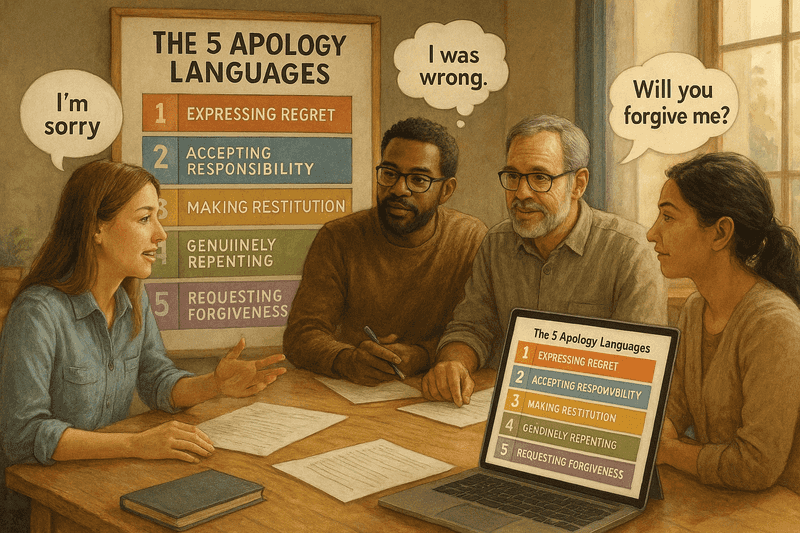
An apology that arrives by text at midnight can carry a lot of emotional weight. Words like “I know I hurt you,” “I’ve changed,” or “you were the best thing in my life” can land hard, especially when part of you has been waiting to hear them. Feeling moved by those words does not mean you are being naive. It means you are human.
The problem is that emotional intensity is not the same as evidence of change. Declarations of love, remorse, gifts, and promises can feel powerful and still not tell you whether anything is actually different. The National Domestic Violence Hotline advises looking for full accountability with no excuses or blame-shifting, concrete behavior change that you can observe, meaningful amends, genuine respect for boundaries and consequences, and improvement sustained over time rather than just in the first few days after contact.
A credible apology does not ask you to immediately forgive, reopen the relationship, or give him another chance to prove himself. The Hotline’s explanation of how good behavior can be part of a cycle makes clear that periods of kindness, remorse, and affection can coexist with controlling or harmful patterns without representing a permanent shift.
Whether change is genuinely possible in a former partner is a separate question from whether it is happening right now. The Hotline’s guidance on whether an abuser can change notes that real change requires independent accountability work, not just a partner who is willing to wait and see. You do not owe him access, forgiveness, or a reconciliation conversation while you assess whether his words are matching his actions over time.
You Do Not Owe Him a Door Back In
You are allowed to receive a message and not reply. You are allowed to read an apology and still close the conversation. You do not owe him an explanation of your healing, a chance to argue his case, or an immediate decision about the future of the relationship. Taking time, or choosing not to respond at all, is a complete and legitimate answer.
Depending on your situation, some practical steps may be useful to consider. The Hotline’s guidance on what to do after an abusive partner reaches out includes options such as blocking accounts, saving messages and screenshots, keeping a written log of incidents with dates and details, letting trusted people in your life know what is happening, and securing your devices and accounts. These are tools, not requirements. Choose what fits your circumstances.
Not every situation allows for complete separation, and no contact is not always the safest or most feasible path. The Hotline’s post-separation safety planning resource acknowledges that shared children, housing, employment, finances, immigration status, or legal proceedings may require some level of ongoing contact. In those cases, the goal is not silence but structure: communication that is limited, purposeful, and conducted in ways that reduce exposure to pressure or manipulation.
A stalking advocate guide from SPARC specifically notes that some people may need to maintain limited contact temporarily to reduce escalation risk or manage co-parenting arrangements. An individualized safety plan, developed with an advocate who understands your full situation, will serve you far better than any one-size-fits-all rule about blocking or responding.
Safety Comes Before Solving His Motive
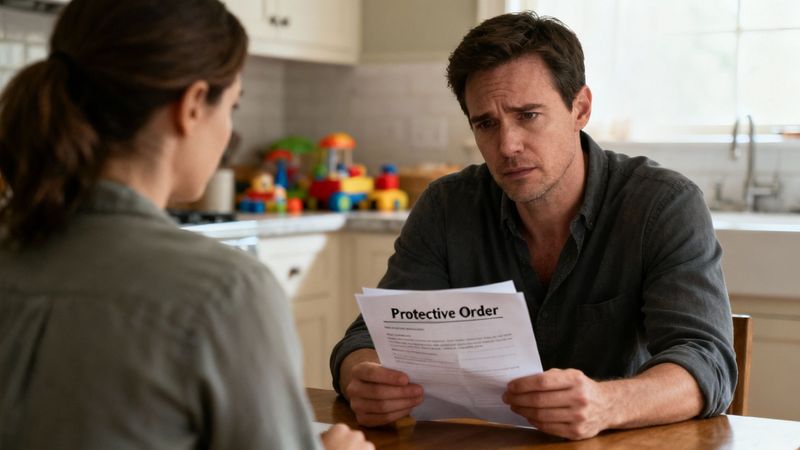
When contact involves a threat, shows up at your door uninvited, follows you across platforms after you have blocked one account, or leaves you genuinely afraid for your safety, the priority shifts. Trying to figure out why he is doing this, or whether it qualifies as a specific pattern, becomes far less important than making sure you are protected right now.
The Hotline’s safety planning resource for people who have left a relationship recommends connecting with a domestic violence or stalking advocate who can help you think through your specific situation, including what to document, who to tell, and what steps are most likely to keep you safer without increasing risk. That last part matters: some responses to threatening contact can inadvertently escalate the situation, and an advocate can help you navigate that carefully.
Documenting incidents, including dates, times, the content of messages, and any witnesses, gives you a record that may be useful if you need to pursue a protective order, involve law enforcement, or consult an attorney. The Hotline also recommends securing your devices and accounts, since monitoring through shared accounts or spyware is a documented form of post-separation abuse.
The SPARC risk and safety resource and RAINN’s safety planning guidance for survivors of stalking and harassment both emphasize that safety planning is most effective when it is tailored to your actual circumstances rather than built on general rules. If you are facing an immediate, life-threatening situation, call 911. For ongoing threats or escalating contact, reaching out to the National Domestic Violence Hotline at 1-800-799-7233 connects you with advocates who can help you build a plan that fits your life.
Your Recovery Is Not an Invitation Back

Your progress belongs to you. The fact that you have been healing, building distance, or simply getting through your days without him does not send a signal, does not create an opening, and does not oblige you to respond when he reappears. Whatever his reason for reaching out, the timing of his message does not define the meaning of your recovery.
Renewed contact does not have to reopen the question of whether to go back. You can acknowledge that you received a message and still choose not to engage. You can feel the pull of old attachment and still hold your boundary. Those two things can exist at the same time without one canceling out the other.
When you assess his contact, let the actual content of the message, its immediate effect on you, the pattern it fits into, and what it means for your safety carry more weight than the intensity of his words or whatever label feels most convenient. The CDC’s framework for understanding intimate partner violence keeps the focus on observable behavior and impact rather than on motive or diagnosis, and that same focus will keep you grounded when his words feel designed to destabilize you.
The Hotline reminds survivors that they do not have to respond to contact to stay safe or move forward. You can protect your progress without ever proving what he intended. The clearest measure of whether this contact deserves space in your life is not his explanation. It is how you feel, what the behavior shows, and whether engaging moves you toward safety or away from it.