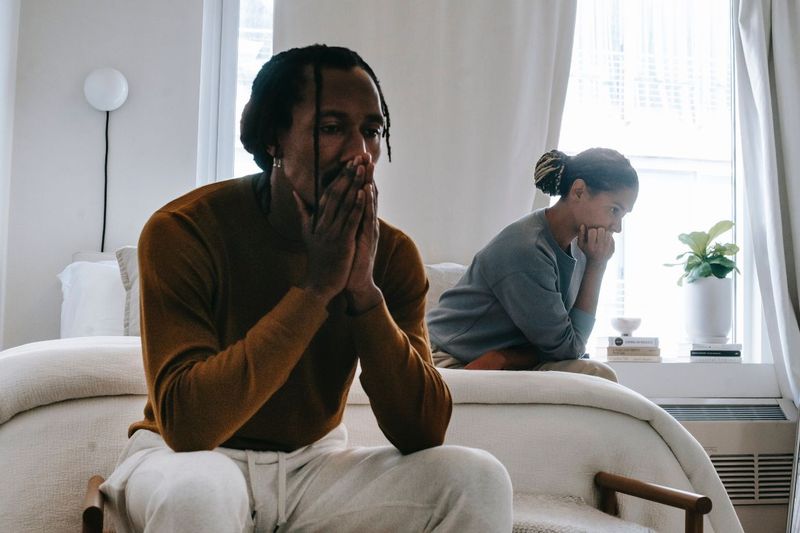
Watching your ex fall hard and fast for someone new can feel like a punch you never saw coming. You scroll past their photos and wonder whether he was holding back with you, or whether something about you made love harder for him to give. That feeling is real, and it deserves an honest answer – not a comfortable one, but a true one. What you are seeing is a beginning, and beginnings alone cannot tell you what comes next, or what your relationship meant.
A new romance cannot prove that he changed
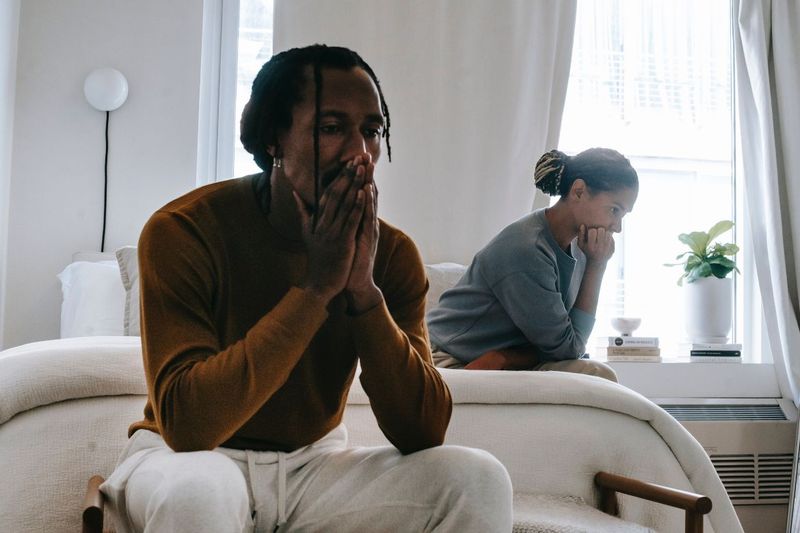
Watching him offer someone else the speed and certainty he once offered you is one of the sharpest kinds of hurt there is. You might find yourself reading it as proof: proof that you were replaceable, that you were the problem, or that he finally found someone who brings out a better version of him. None of those conclusions hold up under honest examination.
A new relationship cannot confirm that he has changed, and it cannot confirm that you were uniquely difficult to love. What it confirms is that he started something new – and starting is the easiest part of any relationship. A large longitudinal study on relationship satisfaction found that satisfaction commonly begins relatively high and tends to decline over time, both in relationships that survive and in ones that end. The glow you are watching is not evidence of a transformation.
It is evidence of a beginning.
That finding matters for you in a practical way. The apparently perfect romance you are observing reflects the stage of the relationship, not necessarily the character of the people in it. Your relationship also had a beginning that probably looked a lot like this one.
The breakup does not mean you failed to inspire love, and his new relationship does not mean he has found someone easier to love well. Relationship outcomes are shaped by timing, compatibility, the specific dynamic between two people, the resources and support each person has, and the choices both partners make over time. No single factor explains everything.
You are not watching the verdict on your worth. You are watching the opening chapter of a story whose middle and ending are completely unknown – to you, to him, and to her.
Intensity is not the same as accountability

Early romance has its own particular energy. There are long conversations, constant texts, the feeling that someone finally sees you. That intensity is real, and in many relationships it reflects genuine excitement and connection. But intensity alone does not tell you whether a person is capable of sustained, respectful partnership.
The term “love bombing” is used by domestic violence experts to describe a specific pattern: overwhelming affection, attention, or gifts that are later used as leverage or followed by manipulation and control. The National Domestic Violence Hotline identifies excessive compliments and gifts followed by control as a possible sign of emotional abuse. That pattern is worth knowing about. But it is also important to say clearly that not every fast or intense romance is love bombing, and not every grand gesture is a setup.
A university study on love-bombing behaviors found associations with narcissistic tendencies and insecure attachment in a college sample, but it was an early study with a limited group. The research on this term is still developing, and the word is used very inconsistently in popular culture. Intensity can reflect ordinary infatuation, genuine compatibility, anxious attachment, or yes, sometimes deliberate manipulation. Seeing flowers and weekend trips does not tell you which one is happening.
What actually distinguishes a changed person from a charming one is accountability over time. Accountability looks like specific acknowledgment of harm, consistent respect for a partner’s limits even when it is inconvenient, repair after conflict without punishment, and behavior that holds steady when the honeymoon feeling fades. Declarations and gifts are easy to produce in the first few months. Consistency across years is harder, and it is the only measure that means something.
She is seeing what you also once saw. Whether what follows will be different is something neither of you can know yet.
Past behavior matters without becoming a prophecy

Your memory of what happened is legitimate evidence. If he blamed you for things he did, distorted events until you questioned your own recall, pulled back warmth as a form of punishment, or made you feel responsible for his moods and choices, those experiences are real data points. You do not need to set them aside because he appears happy with someone else right now.
Research does find some consistency in the kinds of partners people choose across relationships. Studies on consistency across romantic partnerships show that people tend to gravitate toward partners with certain personality similarities over time. Separately, research published in PNAS found meaningful similarity between a person’s past and current partners’ reported personalities. These findings suggest that patterns exist, but they do not prove that every relationship follows an identical script or ends the same way.
Relationship outcomes depend on more than one person’s habits. Partner fit, each person’s willingness to change, the specific dynamic between two individuals, access to support, and the choices made during conflict all shape what a relationship becomes. The new partner is a different person, in a different moment, with her own history and her own responses. That matters.
What this means for you is straightforward: trust what you experienced without treating your experience as a guarantee of what she will experience. Your memory does not require his new relationship to fail in order to be valid. Familiar conduct may recur if he has not taken genuine responsibility for it, but you cannot determine from photographs or public affection whether that is happening. You do not need that confirmation to move forward.
What you lived through is enough of a reason to protect yourself now and to expect better in the future.
You do not need a diagnosis to name what happened

After a painful relationship ends, it is tempting to search for a label that explains everything. Narcissist. Sociopath. Emotional abuser.
The internet offers a lot of frameworks, and some of them will feel like a perfect match. The pull toward a diagnosis makes sense: a label can make the confusion feel organized, and it can feel validating to have a name for what you lived through.
There is a meaningful difference, though, between narcissistic traits and narcissistic personality disorder. According to MedlinePlus, narcissistic personality disorder requires a professional psychological evaluation that considers the duration and severity of symptoms across multiple areas of functioning. Entitlement, charm, selfishness, or limited empathy can appear in people who do not have the disorder. A label you assign from memory and research is not a clinical finding, and it does not need to be one in order for your experience to be real.
A systematic review and meta-analysis on narcissism and intimate partner violence found only a weak overall association between narcissistic traits and perpetration of partner violence, with stronger links for psychological and cyber harm than for physical harm. That means having narcissistic traits does not automatically predict abuse, and not every abusive person has narcissistic personality disorder. The category is not as clean as online content suggests.
A 2025 clinical commentary noted that the concept of a narcissistic abuse cycle has enormous public visibility but very limited academic research behind it, and warned against social-media narratives that encourage confirmation bias. This does not mean your experience was not real. It means that a diagnosis is not what makes it real.
Concrete behavior gives you more useful information than a label. Blame that consistently landed on you. Events that got rewritten until you doubted yourself. Coldness that arrived whenever you held a boundary.
Coercion around time, money, or physical intimacy. Those are specific, describable things, and they are enough to name what happened without needing a clinical verdict.
Her apparent happiness is not a verdict on your worth

Seeing her laugh in his photos, watching him take her to places he never took you, noticing how quickly he committed – all of that can feel like a direct statement about your value. If he can do it for her, you think, then maybe the problem was always you. That comparison feels logical, but it is built on an incomplete picture.
You are comparing your full lived history with someone else’s visible beginning. She has not yet had the arguments that expose how he handles conflict. She has not yet seen how he behaves when he is stressed, when she disagrees with him firmly, or when the early excitement levels off. You did not know those things at the beginning either.
Research adds useful context here. A study on post-breakup adjustment found that people who had entered a new relationship after a breakup reported fewer intrusive thoughts about the former relationship than those who remained single. That study was cross-sectional, meaning it cannot establish that the new relationship caused better adjustment – it only found an association. Separately, a longitudinal study on breakup effects and life satisfaction found that dating someone new was associated with smaller declines in life satisfaction after a breakup, without proving that the new relationship was healthy or durable.
What those findings actually say is that moving on quickly can reduce the immediate pain of a breakup for some people. They say nothing about the quality or future of the new relationship, and they say nothing about the person left behind. Entering a new relationship soon after a breakup is not automatically a red flag, but it is also not proof that the person has healed or changed.
Timing, context, compatibility, and the specific dynamic between two people shape how a relationship develops. Her apparent happiness reflects her current stage, not your former inadequacy. Those are two separate things, and keeping them separate is one of the more important acts of self-respect available to you right now.
Watch behavior without investigating their relationship

Knowing what to look for is different from surveilling someone else’s relationship. You can understand the behavioral signs of emotional abuse or controlling conduct without turning that knowledge into a mission to monitor, investigate, or expose what is happening between him and his new partner. One of those things protects you. The other keeps you tethered to a situation you have already left.
Observable patterns matter more than impressions. Pressure to respond immediately or explain your whereabouts, efforts to separate a partner from her friends or family, guilt or threats when she sets a limit, retaliation after she says no, coercion around money or physical intimacy, repeated denial of events she clearly remembers, and swings from intense warmth to sudden coldness or punishment – these are the kinds of behaviors that domestic violence organizations and the World Health Organization identify as markers of psychological abuse and controlling conduct. WHO guidance on violence against women includes psychological harm, coercive control, and economic abuse within its definition of intimate partner violence. These are behaviors, not personality types, and they can be named without a clinical label.
The absence of those behaviors from his public posts does not prove they are absent from the relationship. And their apparent presence – a photo that looks controlling, a comment that sounds dismissive – cannot be diagnosed from the outside. You genuinely cannot know what is happening in their private life, just as others could not see what was happening in yours.
What you can do is use what you directly experienced to set clear limits for yourself. If contact with him causes you distress, you can reduce it. If certain patterns from your relationship have shown up again in how he communicates with you now, those patterns are worth paying attention to. Your own experience is the most reliable information you have, and it does not require confirmation from watching his next relationship to be worth acting on.
When comparison becomes a safety question

Sometimes the discomfort of watching his new romance is purely emotional – grief, jealousy, and wounded pride that time and support can address. But sometimes what looks like a comparison problem is actually a safety problem, and those two situations call for very different responses.
If he is threatening you, monitoring your devices, escalating contact after you have tried to create distance, using your children or shared finances to maintain control, or showing up at places he knows you will be, the priority shifts from understanding the new relationship to protecting yourself. The new partner’s place in his life is not the relevant question when your safety is at risk.
The National Domestic Violence Hotline’s safety planning guidance and their explanation of what a safety plan involves make clear that planning is useful at every stage: while you are still in contact, as you are creating distance, and after you have already left. VA intimate partner violence safety planning resources echo that individualized planning is more useful than a single universal rule, because every situation carries different risks.
Practical steps that advocates recommend include keeping copies of identification, medication, important documents, keys, and emergency funds in a place you can access quickly. Telling a trusted person what has been happening, and agreeing on a code word for emergencies, adds another layer of support. Thinking carefully about technology – who has access to your accounts, whether your location is being shared, whether devices have been set up to monitor you – is worth doing even if you feel uncertain about the level of risk. RAINN’s safety planning guidance for survivors covers these steps in detail.
Contacting his new partner to warn or inform her may feel like the right thing to do, but it can increase your own risk if it provokes retaliation, escalation, or harassment. The Hotline’s guidance on talking about relationship abuse notes that the safest approach depends on your specific situation, not on a general rule. Co-parenting, shared legal matters, financial ties, or employment connections may mean that complete no-contact is not realistic. An advocate can help you find the approach that fits your actual circumstances.
You can stop waiting for their ending
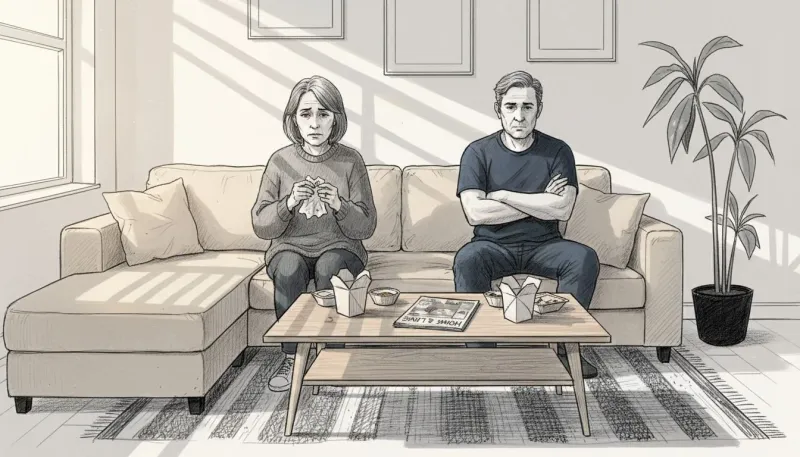
Your value was never stored in his ability to recognize it, and it does not increase or decrease based on what happens in his next relationship. The new woman’s presence in his life does not revise your history, and her apparent happiness does not mean your pain was a misreading of what occurred.
You do not need their relationship to fail in order to trust what you lived through. Recovery that depends on watching his charm eventually wear off is recovery that keeps you watching him instead of building something for yourself. That is a long time to stay in a waiting room for a verdict that may never come, and that you do not actually need.
The work available to you now is quieter and more durable than that. It involves naming what you experienced in language that is honest, setting limits that protect your peace, finding support from people who know your full story, and making decisions about your future that are based on your own values and needs rather than on what he is doing next. None of that requires knowing how his new relationship turns out.
What you watched at the beginning of your relationship was also a beginning. You are not less than the woman who gets to watch this one. You are simply further along in the story, and further along is exactly where your healing lives.