
Saying something honest to a partner – asking for reassurance, setting a limit, or naming a worry – should feel safe. But when the response is sudden silence, a lot of women find themselves replaying the conversation, wondering what they did wrong, and feeling desperate to fix a tension they did not create. That experience is real, and it deserves a careful look. This article explores what repeated withdrawal after a reasonable need can mean, how to tell it apart from ordinary space, and what to do if silence starts to feel more like control than calm.
The silence hurts even when you cannot know why it happens

Reaching out to a partner with something real – a need, a limit, a worry you finally found the words for – and then watching him go completely quiet is one of the more disorienting experiences in a close relationship. The room does not change. The dishes are still in the sink. But something essential has been removed, and you can feel it in your chest before you can name it.
Research helps explain why that feeling is so sharp. A study on partner ostracism as intimate-partner violence found that being ignored or excluded by someone close to you can threaten your sense of belonging, your self-esteem, your feeling of control, and even your sense that your life is meaningful. Those are not small things. They are foundational to how a person experiences safety in a relationship, and silence can shake all of them at once.
The pain does not wait for proof of intent. You do not need to know whether your partner is punishing you, processing something privately, or shutting down because he is overwhelmed before the hurt registers. The impact arrives first, and it is legitimate regardless of what drove the silence.
At the same time, impact alone cannot tell you what the behavior means. A 2026 systematic review on silent treatment in close adult relationships found that withdrawal is driven by multiple motives – emotion regulation, conflict avoidance, expressing displeasure, and exerting control can all produce similar-looking silence. A single quiet episode, even a painful one, does not establish that punishment or control is the purpose.
What the rest of this article asks you to do is hold both truths at once: your distress is real and worth taking seriously, and the pattern over time matters more than any one moment of withdrawal for understanding what is actually happening.
Look for a repeated pattern, not a verdict from one quiet moment
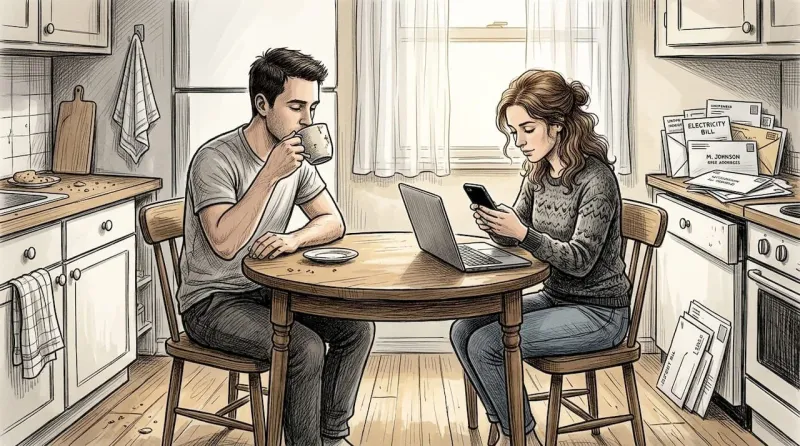
One quiet evening after a disagreement is not a pattern. A partner who needs an hour to settle his thoughts before talking is not necessarily using silence as a weapon. The question worth sitting with is not “Was he silent?” but rather “What does the silence consistently do, and when does it reliably appear?”
Certain features, taken together, can indicate that withdrawal may be functioning punitively rather than as genuine emotional regulation. Consider whether silence follows specifically when you raise a reasonable need or set a limit – not just after large fights, but after ordinary requests for attention, honesty, or accountability. Consider whether you find yourself chasing contact, texting repeatedly, or softening your original concern just to get a response. Consider whether the silence ends only after you apologize, retract what you said, or accept some version of blame.
And consider whether this sequence repeats across weeks or months rather than appearing once.
The National Domestic Violence Hotline identifies withholding attention or affection as a possible form of emotional abuse when it is part of a broader pattern intended to control, isolate, humiliate, or disempower a partner. That framing is important: the behavior’s context and repetition matter, not the behavior in isolation.
CDC guidance on intimate-partner violence defines psychological aggression as verbal or nonverbal communication intended to harm a partner mentally or emotionally or to exert control. Withdrawal can fit that definition when the broader pattern involves harm or control – but a single incident of needing space does not meet that bar.
None of these indicators prove deliberate intent on their own. What they do is give you something more solid than a gut feeling to examine: a repeating sequence with a consistent result, which is that your original concern gets dropped and his discomfort gets resolved.
Healthy space keeps a path open to repair

Not every withdrawal is a red flag. People genuinely need time to calm down before they can talk productively, and stepping away from a heated moment can actually protect a conversation rather than destroy it. The difference between that kind of space and the kind that leaves you anxious and guessing lies mostly in what gets communicated before and after the pause.
A constructive pause tends to include a signal – something as simple as “I need some time to think; I’ll come back to this tonight” or “I’m too overwhelmed right now to talk well, but I do want to talk.” It names the overwhelm, sets a rough expectation, and keeps the original subject on the table. When the person returns, the unresolved concern is still there to be addressed. The pause was about regulating emotion, not about making the concern disappear.
The Gottman Institute’s research on stonewalling draws a distinction between a regulated break – where a person steps away to calm physiological arousal – and stonewalling, which involves emotionally checking out or refusing engagement while a problem remains unresolved. The regulated break is a tool for better conversation. Stonewalling shuts conversation down entirely.
Overwhelm and conflict avoidance are genuine. Some people learned early that conflict means danger, and going quiet is a self-protective reflex rather than a calculated move. That context matters and deserves compassion. But compassion for why someone withdraws does not require you to accept a pattern that consistently leaves your needs unaddressed.
The practical test is not how many hours passed. It is whether communication happened before the silence, whether the partner returned willing to engage, and whether your original concern got a real hearing. The 2026 systematic review on silent treatment linked recurring silence with lower relationship satisfaction and unresolved conflict – outcomes that accumulate when a pause never actually leads back to repair.
Your pursuit may reinforce the cycle without making you responsible for it

When someone goes silent, the natural response is to try to restore contact. You text again. You soften what you said. You revisit the conversation to figure out what went wrong.
That impulse is not weakness or manipulation – it is attachment doing exactly what it is designed to do when connection feels threatened.
Relationship researchers describe a demand-withdraw pattern in which one partner disengages while the other pursues answers more urgently. Research linking avoidant attachment and withdrawal-aggression conflict patterns shows that pursuit and withdrawal can reinforce each other once the cycle begins – the more one person withdraws, the more the other pursues, and the more intense the pursuit feels, the more the withdrawal deepens. This can make the dynamic feel like your fault even when you did not start it.
Your original need did not automatically cause the withdrawal. Raising a reasonable concern, asking for something fair, or holding a limit are not provocations that justify being shut out. The cycle that follows is a relational pattern, not a verdict on whether your request was legitimate.
Research on emotional reactions following silent treatment found that guilt is a common response after being ignored by a close partner. That guilt can redirect your attention toward restoring contact instead of evaluating whether your original concern was ever addressed. Noticing that pull – the urgency to fix the relationship rather than revisit what you actually asked for – is itself useful information.
You do not have to become silent to keep peace, and you do not have to abandon a reasonable need to prove you are not the problem. The goal is not to out-maneuver the pattern but to see it clearly enough to decide what you want to do about it.
A controlling pattern does not prove a narcissism diagnosis

Popular relationship writing often describes punitive silence as a narcissistic tactic, and that framing resonates because it names something real: some people do use withdrawal to avoid accountability, punish disagreement, reassert dominance, or make ordinary needs feel like unreasonable demands. The behavior exists, and naming it can be clarifying.
But calling the behavior narcissistic is not the same as diagnosing the person. Narcissistic personality disorder is a clinical diagnosis that requires professional assessment across multiple areas of functioning. Research on how people with narcissistic traits influence romantic partners does link certain manipulative strategies to those traits, but that research cannot diagnose an individual from a single behavior. A partner who uses silence to pressure you may or may not have a personality disorder.
What matters practically is what the behavior does, not what label explains it.
Redirecting from label to behavior is actually more useful. Ask whether the withdrawal repeatedly sidesteps accountability after he has done something hurtful. Ask whether silence appears specifically when you raise concerns that would require him to change something. Ask whether the pattern makes your needs feel smaller over time, so that you preemptively edit yourself to avoid triggering the quiet.
Those observations are actionable regardless of any diagnosis.
CDC guidance on intimate-partner violence and the Hotline’s definition of emotional abuse both focus on patterns of control and harm rather than on diagnosing the person responsible. Following that same logic keeps the focus where it belongs: on whether the relationship is safe and respectful for you, not on whether your partner fits a particular clinical category.
Track what happens before and after the silence, if it is safe

Patterns can be hard to see when you are inside them. One way to get clearer is to write things down – privately, and only if doing so does not create risk. A simple record of specific episodes can reveal whether silence is random or whether it clusters around a particular kind of conversation.
Consider noting what need, limit, or concern came just before the withdrawal. Write down whether your partner said anything about needing space before going quiet, or whether the silence arrived without warning. Record how contact resumed – whether he came back on his own, whether you reached out first, and whether you had to apologize, soften your original concern, or drop it entirely before things felt normal again. Note how long the silence lasted and whether anything else was happening at the same time, such as financial pressure, increased isolation from friends or family, or comments that felt like threats.
The National Domestic Violence Hotline recommends documenting abusive behavior as part of safety planning but is clear that safety and privacy come first. If a partner monitors your phone, reads your messages, or has access to your accounts, written records can become a source of risk rather than protection. The Hotline’s safety-planning guidance includes strategies for keeping personal records private – including using a trusted friend’s device or a secure app he does not know about.
Documentation is not about building a legal case. It is about giving yourself something concrete to look at when the cycle makes everything feel uncertain. Seeing three or four entries in a row where your concern preceded the silence, and where you retracted your request before things resumed, can clarify what has been hard to name out loud. Public health definitions of psychological aggression emphasize patterns rather than single incidents – and a personal record can help you see yours.
When silence comes with fear, shift from interpretation to safety

Silence that makes you anxious is worth examining. Silence that makes you afraid is a different situation, and the response it calls for is different too.
Certain circumstances move withdrawal out of the category of poor communication and into the territory of possible abuse or safety concern. Those circumstances include threats – stated or implied – about what will happen if you continue to push a concern. They include monitoring your phone, location, or social contacts. They include isolating you from friends or family who might offer perspective or support.
They include controlling access to money in ways that limit your ability to leave or seek help. They include threats involving children or pets. And they include a felt sense of fear about what might happen if you speak up again, even if nothing overtly threatening has been said.
When any of those features are present, the question is not “Is he punishing me or just cooling off?” The question is “Am I safe, and what do I need to protect myself?”
The National Domestic Violence Hotline offers confidential support by phone, chat, and text, with advocates who can help you think through your specific situation without telling you what to do. Their stalking safety-planning resources address what to do if a partner monitors your movements or contacts. Their guidance on technology-facilitated abuse covers digital monitoring and how to protect your privacy online and on your devices.
Universal advice – confront him, ignore him back, leave tonight – is not appropriate here because every situation carries different risks. Individualized safety planning with a trusted person or a confidential advocate is far safer than a one-size approach. If you are in immediate danger, emergency services are the right first call.
You do not have to surrender a reasonable need to reopen communication

Asking for respect, reassurance, honesty, or accountability does not make you demanding. Raising a concern about how you are being treated does not make you the problem. Those things are ordinary parts of a healthy relationship, and the fact that they are followed by silence does not retroactively make them unreasonable.
When withdrawal repeatedly pressures you to drop a fair request, that pattern deserves attention – even when you cannot determine what your partner privately intended. Research on partner ostracism describes how repeated exclusion can erode belonging and self-worth over time, making it harder to trust your own perceptions. One of the quieter costs of recurring silence is that it can train you to edit yourself before you even speak, shrinking what you ask for until it fits inside the space he seems willing to tolerate.
The Hotline’s definition of emotional abuse centers on patterns that control, isolate, or disempower – and a pattern of silence that consistently results in your needs going unmet fits that frame when it is part of broader control. You do not need a diagnosis, a label, or certainty about intent to recognize that something is not working and to seek support.
Reflection, a trusted friend, a therapist, or a confidential advocate can all help you think through what you are seeing without pressure to reach a verdict immediately. What you do not have to do is keep making yourself smaller in hopes that a quieter version of your needs will finally be safe to express. A relationship where speaking up reliably costs you something is a relationship worth looking at honestly.