
You finally found the courage to walk away, and then you hear the news: he has a new baby. Suddenly the guilt, the confusion, and the old pull start creeping back in, and you wonder if you were wrong to leave. What you feel isn’t weakness, it’s a reaction to a very specific playbook, and psychologists say a narcissist can turn even a newborn into a tool to draw you back. Understanding these moves can help you protect your heart and trust the choice you already made.
1. The Sudden Redemption Story

Nothing lands quite like the message that says he has changed. A mutual friend mentions it, or he tells you himself, that fatherhood finally softened him and made him a better man. The timing feels almost cinematic, arriving right when you were starting to feel steady.
Psychologists point out that this narrative is often less about real growth and more about your reaction to it. If you believed he could never change, the baby becomes living proof that he can, and that little seed of doubt can be enough to make you question everything you decided.
The catch is that character change tends to show up quietly and over years, not in a single announcement wrapped in a baby blanket. Real transformation usually comes with accountability for the past, not a highlight reel of the present. When someone skips the apology and jumps straight to the makeover, it may be worth noticing what is missing rather than what is being sold.
2. Casting You as the Only One Who Understands Him

He calls late one night sounding overwhelmed, whispering that the new baby cries constantly and that no one gets him the way you did. That line does heavy lifting. It flatters your empathy while quietly pushing you back into a role you already left behind.
Empathetic, loving women are especially vulnerable here, because being needed feels a lot like being valued. Psychologists note that a narcissist often learns exactly which emotional buttons to press, and your compassion becomes the lever. He isn’t asking you to co-parent his child, he is asking you to co-manage his feelings.
Worth remembering is that his current partner, or the baby’s other parent, is not your responsibility, and neither is soothing a man who chose to leave you or push you away. Being the only one who understands him is not a compliment. It is a job you were never meant to keep.
3. Weaponizing Photos and Milestones
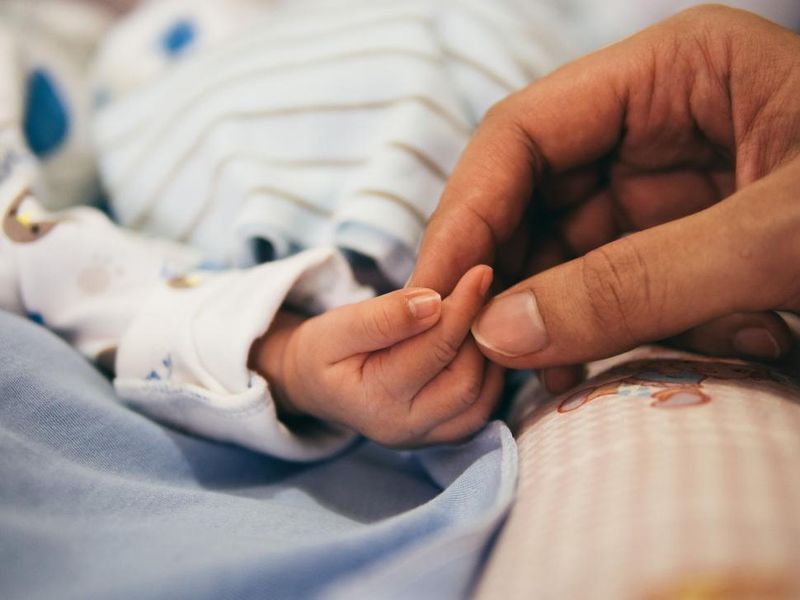
Your phone lights up with a photo of a tiny hand wrapped around his finger, no caption needed. It looks innocent, even sweet, and that is exactly why it works. A single image can bypass all the logic you built up and go straight for the heart.
These curated glimpses are rarely random. Sharing first smiles, hospital bracelets, or nursery snapshots keeps him present in your mind and frames him as tender and devoted, the version of him you always hoped existed.
Psychologists describe this as a kind of emotional bait, designed to reopen a door you carefully closed. The images show a moment, not a man, and a posed photo cannot tell you how he behaves at 3 a.m. or how he treated the person who carried that baby. You are allowed to admire a cute picture and still not let it rewrite your history with him.
4. Guilt-Tripping You About the Child

“Don’t you want to be part of this baby’s life?” The question sounds gentle, almost generous, but underneath it sits a hook made of guilt. It suggests that stepping away from him means turning your back on an innocent child.
That framing is powerful because it targets your goodness, not your weakness. He knows you have a big heart, so he ties his access to you to the wellbeing of a newborn who did nothing wrong.
Here is the quiet truth psychologists keep circling back to: a baby’s needs and a narcissist’s wants are not the same thing. A child deserves love and stability, but you are not obligated to reenter a painful relationship to provide it, and you are certainly not responsible for a situation you did not create. Feeling compassion for the baby does not mean you owe him your presence. Guilt is a feeling, not a fact, and it should not be the reason you walk back into something you already escaped.
5. Playing the Devoted Father in Public

Scroll through his social media and you would think he just won father of the year. Suddenly there are park outings, breakfast photos, and captions about how his little one changed his whole world. The performance is loud, and it is meant to be seen, especially by you.
Image is currency for a narcissist, and a baby offers a shiny new one. By broadcasting his devotion, he rewrites the story so that friends, family, and maybe even you begin to wonder if you misjudged him all along.
The gap between the public dad and the private partner is where the truth usually lives. Anyone can post a smiling photo at the playground; showing up consistently, without an audience, is a different thing entirely. If his goodness only exists when there is someone watching, that is not devotion, that is a stage. You were there when the camera was off, and that memory is more honest than any post.
6. Framing You as the Missing Piece

He starts hinting that the baby needs a real family, and that things would just feel complete if you were around. It is a fantasy dressed as an invitation, offering you a ready-made home and a chance to be the hero of the story.
For a woman who has felt overlooked or replaceable, being called the missing piece can be intoxicating. Psychologists say this taps into a deep longing to matter, to be irreplaceable to someone, and a narcissist is skilled at dangling exactly that.
Slow down before you step into the picture he painted. Notice that he is offering you a role in his life, not a partnership built on respect. You are not a puzzle piece meant to fix his family or fill a gap he created. A relationship that only works because you sacrifice your peace to complete his story is not a home, it is a trap with soft lighting.
You were whole before him, and you still are.
7. Using the Baby to Break Your No-Contact

You blocked his number and promised yourself no more contact, then a message slips through: “The baby has your eyes, thought you should know.” It is small, almost throwaway, and that is what makes it slippery. One reply feels harmless, but it is the crack in the wall he was hoping for.
No-contact is one of the strongest tools for healing after a manipulative relationship, and a narcissist knows it. A newborn becomes the perfect excuse to reach out, because it seems too warm and human to ignore. Reject it and you might feel cold; answer it and the door swings open again.
Recognizing the pattern is what gives you your power back. The baby is real, but the message is strategic, and you can hold both of those truths at once. Protecting your boundaries does not make you heartless, it makes you someone who finally learned her own worth. You are allowed to stay silent, and that silence is not cruelty.
It is self-respect.