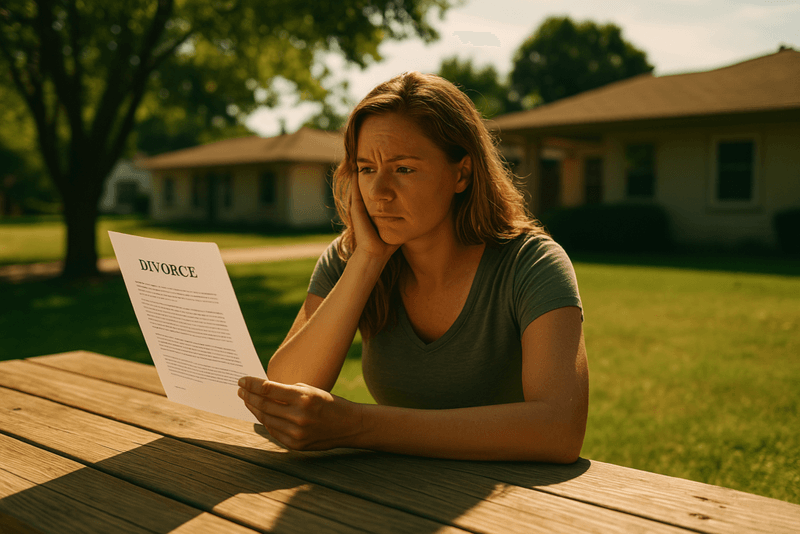
Some women reach a point where the waiting itself becomes the heaviest thing they carry. Not waiting for a fight, not waiting for a crisis, but waiting for ordinary life to finally feel like it belongs to them again. If you have been quietly rearranging yourself around someone else’s promises, this article is for you. Choosing yourself is not a declaration of defeat – it is the decision to stop measuring your life by what someone else might eventually become.
Waiting Has a Daily Cost

Every morning she wakes up and makes a calculation she has been making for years: what do I hold back today so things stay manageable? She might not call it sacrifice. She calls it keeping the peace, being patient, giving it more time. But underneath those phrases, real things are being set aside, sometimes quietly, sometimes under pressure.
The daily costs are concrete. Spending money without asking first, calling a friend without worrying about the reaction, sleeping through the night without anxiety about what mood the house will hold in the morning. Making a medical appointment and keeping it. Disagreeing about something small without bracing for the aftermath.
ACOG’s guidance on intimate partner dynamics notes that surrenders like these, including access to money, transportation, privacy, friendships, reproductive choices, and the ability to disagree without retaliation, are worth paying attention to, even when no single moment looks dramatic enough to name.
None of those surrenders automatically proves that something harmful is happening. What matters is the pattern: how often, how deliberate, how much fear is woven into it, and how tightly one person’s preferences seem to govern what the other person is allowed to do. A relationship can be exhausting and lonely without meeting any clinical threshold, and it can also carry real warning signs that deserve a clearer look.
Research tracking couples over time shows that persistent negative communication patterns are associated with declining satisfaction and greater risk of relationship breakdown – not as a verdict on any one marriage, but as a signal that the current dynamic is doing cumulative damage. Waiting is not neutral. Every day spent hoping a promise will finally hold is also a day of practicing self-erasure, and that practice leaves marks whether or not the marriage ends.
Measure Change by What He Does

Words are easy to produce after a hard moment. Tears, apologies, promises, grand gestures, sudden tenderness that appears right when the pressure is at its peak – these feel significant because they are emotionally intense. But intensity is not the same as change, and it is worth separating the two.
Meaningful change tends to look quieter and more durable. He acknowledges what happened without redirecting blame toward her stress, her tone, or her past behavior. He accepts consequences without negotiating them away. He stops the specific behavior over time – not just in the days after a confrontation, but in the ordinary weeks when no one is watching closely.
He seeks appropriate help voluntarily, without her having to arrange it, monitor it, or reward him for attending. He respects what she has asked for even when he is disappointed, frustrated, or convinced she is being unreasonable.
Contrast that with patterns that feel like change but function more like management: improvement that lasts until the immediate pressure lifts, apologies that pivot quickly to what she did wrong, or declarations about who he really is that are not reflected in daily behavior. Longitudinal research on relationship communication supports examining patterns of behavior across time rather than relying on a single conversation or a global sense that things feel better right now.
None of this means a partner cannot change. Research does not establish a universal point at which change becomes impossible, and studies on relationship trajectories show that outcomes vary considerably. What it does mean is that promises alone, however sincere they sound in the moment, are not evidence of change. Sustained, observable, accountable behavior over time is the only thing that is.
She does not have to decide whether change is theoretically possible. She only has to notice whether it is actually happening.
A Draining Marriage Is Not Automatically Abuse

Calling a marriage draining is honest, but it covers a wide range of very different situations. Loneliness inside a partnership, an unequal division of household and emotional labor, chronic disappointment, incompatibility that has grown over years, a partner managing untreated depression or a substance problem – these are real and serious, and they can hollow a marriage out slowly. They are not the same thing as a relationship organized around control.
The difference matters because it shapes what kind of help is actually useful. In a marriage marked by recurring conflict, disconnection, or unequal effort, both partners generally retain the ability to disagree, seek outside support, make personal decisions, and set limits without genuine fear of what follows. In a relationship where one partner uses monitoring, isolation, threats, financial control, sexual coercion, or intimidation to maintain dominance, the other partner’s freedom to make those same moves is systematically restricted. CDC guidance on intimate partner violence recognizes psychological aggression and coercive control as distinct forms of abuse, separate from physical violence.
The scale of these experiences is significant. The CDC’s National Intimate Partner and Sexual Violence Survey brief found that 30.2% of U.S. women reported lifetime psychological aggression by an intimate partner, and 27.2% reported one or more forms of coercive control or entrapment – including being monitored, isolated from family or friends, denied access to money, overruled in personal decisions, threatened, or having important belongings destroyed. These are lifetime measures from a U.S. population sample, not predictions about any individual relationship.
A useful question is not whether a partner has been diagnosed with anything, but whether she can safely disagree, reach out to people she trusts, access her own medical care, and make basic decisions about her own life. CDC frequently asked questions on NISVS offer additional context on how these patterns are measured and defined. The answers to those practical questions tell her more than any label could.
Restore the Options You Have Been Surrendering

Agency does not begin with a decision to leave. For many women, it begins much earlier, with something smaller: texting a friend she stopped calling two years ago, opening a bank account in her own name, scheduling a doctor’s appointment she has been putting off, or simply going somewhere without explaining herself first.
Restoring access to trusted people, private communication, money, transportation, medical care, rest, and independent decision-making is valuable in itself – not merely as preparation for a future exit. These are not dramatic moves. They are the quiet act of remembering that she has a life that belongs to her, not just a role inside someone else’s household. The National Domestic Violence Hotline’s safety guidance frames access to support and options as foundational, regardless of whether a woman has decided what comes next.
Research on advocacy and community support offers a realistic picture of what outside connection can and cannot do. Reviews of advocacy interventions find that links to case management, community resources, and supportive people often improve social support and mental health outcomes for women in difficult relationships. Those same reviews note that advocacy does not reliably stop a partner’s behavior – the benefit lives primarily in her expanded support network and her own sense of possibility, not in transforming him.
That distinction matters. Rebuilding her options is not a strategy for fixing the marriage. Further research on women’s support outcomes reinforces that the mental-health benefit of having people and resources around her is real and meaningful on its own terms. Whether she ultimately stays or goes, she is better positioned to make that decision clearly when she is not completely isolated, financially dependent, or exhausted beyond the ability to think.
Match Help to the Relationship’s Reality

Not every struggling marriage needs the same kind of help, and choosing the wrong kind can make things harder rather than easier. For a marriage that is chronically disconnected but not controlled – where both partners can speak honestly, make their own decisions, and seek outside support without fear – individual counseling, couples counseling, clearer agreements about labor and expectations, and structured conversations are all reasonable starting points.
These options may genuinely help. Research on relationship intervention outcomes shows that couples who engage with structured support can experience real improvements in satisfaction and communication. The important qualification is that none of these approaches guarantee that a partner will develop insight, take responsibility, or sustain behavioral change. Presenting them as possibilities rather than solutions is the honest framing.
One productive conversation, one ultimatum, or one round of couples sessions does not reliably transform a person who has not chosen to change.
The boundary around abuse and coercive control is firm. When one partner cannot speak freely, fears retaliation for what she discloses, or participates in joint sessions under the influence of monitoring or intimidation, couples therapy can increase her risk rather than reduce it. A systematic review of couples interventions in the context of partner violence found possible benefits for carefully selected cases of situational, lower-level conflict, but also raised concerns about retaliation, coercion, and whether both partners can participate without one holding power over the other. Additional clinical research and earlier foundational work on this question consistently recommend individual advocacy and safety assessment before joint counseling is considered when abuse may be present.
CDC prevention resources support a tiered approach: match the intervention to the actual dynamic rather than treating every relational problem as a communication failure that a shared worksheet can solve. She deserves help that is calibrated to what is actually happening in her home.
Put Safety Before a Dramatic Exit

Leaving a relationship can feel like the logical next step once a woman recognizes what has been happening to her. But for some women, the period around separation carries its own specific dangers, and moving quickly or publicly can increase rather than reduce risk.
Threats, stalking, escalating physical violence, the presence of weapons, strangulation, extreme jealousy, monitoring, or coercive control are all factors that research has linked to elevated danger during and after separation. A national study on intimate partner homicide risk and research on risk among estranged versus intact intimate partners both identify these factors as significant warning signs. This does not mean she should stay. It means she should plan carefully, with support, rather than announcing her intentions or confronting her partner before she has assessed her situation with someone qualified to help.
Confidential domestic-violence advocacy exists precisely for this moment. The National Domestic Violence Hotline’s safety planning resources for women still living with an abusive partner include guidance on identifying safer areas in the home, keeping communication access available when it is safe to do so, planning for children’s safety, and building options without tipping off a partner who may retaliate. The Hotline also notes that internet use may be monitored, so using a private browser, a trusted friend’s device, or a library computer can matter.
If sexual or reproductive coercion is part of her experience – including contraception sabotage, pressure around pregnancy, or interference with reproductive health decisions – ACOG guidance on reproductive and sexual coercion recommends confidential medical care, private screening, and harm-reduction strategies tailored to her specific situation. Discreet care is possible, and she does not have to manage that part alone either. Safety planning is not a dramatic move. It is the careful, private work of protecting her options before she makes any public one.
Choosing Herself Is Not a Contest

There is a version of this story that turns self-choice into a scoreboard: the woman who left is winning, the one who stayed is losing, and independence proves something about her worth that the marriage never could. That framing is satisfying for about thirty seconds, and then it runs into real life.
Research on relationship dissolution outcomes and studies on well-being after marital transitions consistently show that outcomes after separation vary widely – shaped by prior relationship quality, financial circumstances, children, social support, safety, and health. Longitudinal research following women after leaving difficult relationships found meaningful improvement in depression, PTSD symptoms, and chronic pain over time, while also finding that clinically significant symptoms could persist years later for some women. Relief and grief tend to arrive together, not in sequence.
Choosing herself does not require her to prove that unmarried women are universally healthier or that leaving is always the braver move. CDC data on marriage and divorce offers no single story about what relationship status means for a woman’s life. What it means is something quieter: she stops letting promises replace evidence. She stops organizing her days around managing someone else’s mood.
She starts asking, with support and honesty, what a life that does not require her daily disappearance could actually look like – and she gives that question the same care she has spent years giving everyone else.