Most women in relationships share their plans naturally, the way you share a meal or a laugh, because closeness feels good. But somewhere along the way, some women notice that telling a partner about a plan stops feeling like connection and starts feeling like a test she might fail. That shift is worth paying attention to. Recognizing it is not the same as accusing anyone of anything, and it is certainly not the same as hiding something.
When sharing information starts to feel like asking permission

There is usually a moment a woman can point to, even if she could not name it at the time. She mentioned a plan, something ordinary like catching up with a friend, signing up for a pottery class, booking a weekend trip, or spending money she had earned, and before the plan ever got off the ground, it was already in question. Not because she asked for his opinion. Because she mentioned it.
Sharing information in a relationship is normal and often healthy. Coordinating schedules, checking in about finances, keeping each other informed about travel or childcare, all of that can be part of building a life together. The concern is not the sharing itself. The concern is what happens after the sharing, and whether the pattern starts to look less like connection and more like a review process she never agreed to.
A permission checkpoint is what it becomes when disclosure consistently leads to a veto, a guilt trip, an interrogation, a withdrawal of warmth, a threat, or sustained pressure to drop the plan entirely. Over time, the woman on the receiving end may start editing her plans before she even speaks, trimming them down or abandoning them quietly to avoid the reaction she has learned to expect. That is a different thing from partnership.
CDC guidance on intimate partner violence describes psychological aggression and coercive control as including attempts to monitor, control, isolate, threaten, or make decisions for a partner. ACOG’s clinical guidance on intimate partner violence specifically identifies monitoring cell-phone use and social media as examples of controlling behavior. Neither source is saying that one awkward conversation proves a pattern. What they are pointing to is the repeated, cumulative effect of behavior that chips away at a person’s ability to make ordinary choices freely.
You are not required to arrive at a verdict about your relationship to find this useful. All that is needed right now is the willingness to notice what has actually been happening, not what it was supposed to be.
His response is one clue within a larger pattern
Any single reaction, even a sharp or unfair one, does not tell you everything about a relationship. People have bad days. They communicate clumsily. They ask for reassurance in ways that land wrong.
One conversation, one disagreement, one moment where he pushed back harder than felt right, none of that is enough to define a pattern on its own.
The question worth sitting with is what happens consistently. The CDC’s NISVS frequently asked questions draw a clear distinction between ordinary relationship friction and conduct intended to control, harm, or threaten. The relevant signals are repetition, power imbalance, fear, and whether disagreement costs her something real, like her safety, her confidence, her relationships with others, or her sense of being a capable adult.
Some questions that can help a woman see the pattern more clearly: Does she find herself mentally rehearsing how to present a plan before she brings it up? Does she soften or abandon ideas before speaking them, anticipating a reaction she has learned to dread? Does she hide harmless choices, not because she has done something wrong, but because the reaction feels easier to avoid than to manage? Does she feel disloyal or guilty for simply deciding something for herself?
These are not a diagnostic checklist. They are reflective signals. Curiosity, logistical coordination, and even respectful disagreement can coexist with genuine autonomy. A partner can want to know your plans and still fully respect your right to make them.
The difference shows up in what happens when you say yes to something he would rather you skipped. Does he express a concern and then let you decide? Or does something follow, surveillance, withdrawal, humiliation, threats, pressure to cut off the friend or cancel the plan, that makes you wish you had never mentioned it?
His response in any given moment is one data point. The pattern across many moments is the more honest picture.
Coercive control can shrink the life she feels free to choose

Coercive control is not always loud. It does not always involve a raised voice or a visible threat. Sometimes it works quietly, through accumulated small moments that each feel manageable on their own but add up to something much larger over time.
The CDC’s 2023/2024 NISVS Intimate Partner Violence Data Brief reports that 27.2% of U.S. women experienced at least one form of coercive control or entrapment by an intimate partner during their lifetimes. Reported examples included a partner tracking where they were and what they were doing, restricting contact with family or friends, and making decisions that should have belonged to the woman herself. That statistic describes a population, not a prediction about any individual relationship, and it does not tell you what your situation is. What it does tell you is that this experience is neither rare nor imagined.
The CDC’s framework for intimate partner violence includes psychological aggression and coercive control as forms of IPV that can occur without physical violence. Behaviors that fall within this framework include monitoring a partner’s whereabouts, restricting her contact with family or friends, intimidating or threatening her, and making decisions that are rightfully hers to make. These behaviors are not about conflict or even about strong opinions. They are about limiting the space inside which she is allowed to live her life.
When a permission checkpoint becomes a regular feature of a relationship, its effects can spread well beyond any single plan. A woman may stop calling certain friends because the follow-up questions are not worth it. She may skip a class, a job opportunity, or a medical appointment rather than deal with what comes after she mentions it. The visible result is not just a vetoed plan.
The visible result is a smaller life, shaped around what he will and will not allow, even if no one has ever said it out loud in those terms.
Coercive control does not always escalate to physical violence, but research does associate it with greater overall danger and with more frequent psychological, physical, and sexual IPV among women who are already experiencing IPV. Recognizing the pattern early matters, not to rush any decision, but to see the situation as clearly as possible.
Repeated control can teach her to doubt her own judgment

One of the quieter effects of living inside a repeated control pattern is what it does to a woman’s relationship with her own thinking. She may not notice it happening gradually, but over time she can find herself second-guessing decisions she once made easily, deferring to him on matters that are entirely hers, or feeling a strange guilt for wanting something he has not approved.
Research on coercive control and intimate partner violence found associations between coercive control and greater danger as well as more frequent psychological, physical, and sexual IPV among women already experiencing IPV. Separately, a systematic review on the trauma and mental health impacts of coercive control found associations with trauma-related and depressive outcomes, while also noting that the strength and form of these effects can vary depending on the person, the duration and severity of the behavior, available resources, and other circumstances. Psychological harm is not inevitable, but it is a real possibility that deserves to be taken seriously.
In practical terms, this erosion of confidence can look like rehearsing an explanation before making a simple purchase. It can look like abandoning a plan early, before he even reacts, because she has already predicted how it will go. It can look like confusing temporary calm with genuine partnership, settling into a quiet stretch and telling herself things are fine now, only to find the same dynamic returning the next time she tries to move independently.
These experiences are better described as conditioning or an erosion of confidence than as any single dramatic event. They build through repetition. The woman who once trusted her own instincts learns to run them past an internal filter first, asking not “what do I want?” but “what will he think of this?” That shift is worth naming, because naming it is often the first step toward seeing it clearly.
His intent, whatever it may be, cannot be determined from the outside. What can be observed is the effect: a woman who once made choices freely, and now finds that freedom narrowed.
Healthy coordination leaves room for two adults to decide

Wanting to know your partner’s plans is not, by itself, a red flag. Couples coordinate all the time, around work schedules, shared finances, childcare logistics, travel, health decisions, and household responsibilities. That kind of coordination can involve questions, pushback, and even disagreement without crossing into controlling territory.
The distinction that matters is whether information exchange is genuinely mutual and whether each person’s ordinary choices remain their own. Healthy coordination tends to be reciprocal. Both people share, both people adjust when needed, and neither person’s disagreement functions as a final veto the other has to negotiate around. A partner can say “I wish you weren’t going” and still mean “but of course you can go.” That is different from a situation where saying “I’m going” reliably sets off surveillance, punishment, isolation tactics, or sustained pressure to reverse the decision.
ACOG’s guidance on intimate partner violence draws a line between ordinary relationship dynamics and behavior that attempts to dominate or control a woman’s life. The controlling end of the spectrum can include demands to know her location at all times, insistence on access to her phone or accounts, pressure to cut off family or friends, and consequences for saying no to any of it.
One poorly handled conversation is not that. A request for reassurance during a stressful period is not that. The concern is the recurring pattern, one that involves power, fear, retaliation, or a consistent loss of her autonomy over her own ordinary choices. Holding that distinction clearly keeps the conversation honest and avoids both dismissing real patterns and overstating isolated moments.
You deserve a partnership where sharing your plans feels like connection, not like submitting a proposal for review.
Privacy and documentation may require a safety lens
At some point, a woman recognizing a control pattern may want to start keeping a record. Documenting dates, messages, incidents, financial interference, or monitoring behavior can be useful if she ever needs to speak with an advocate, consult an attorney, or seek a protective order. That said, documentation is only a good idea if it can be done safely, meaning without the risk of him finding it and escalating.
The National Domestic Violence Hotline’s guidance on safety planning while living with an abusive partner advises thinking carefully about where records are kept, who has access to shared accounts, and what steps are realistic given her specific circumstances. There is no single right approach. The right approach is the one that keeps her safer, not the one that checks every box on a general list.
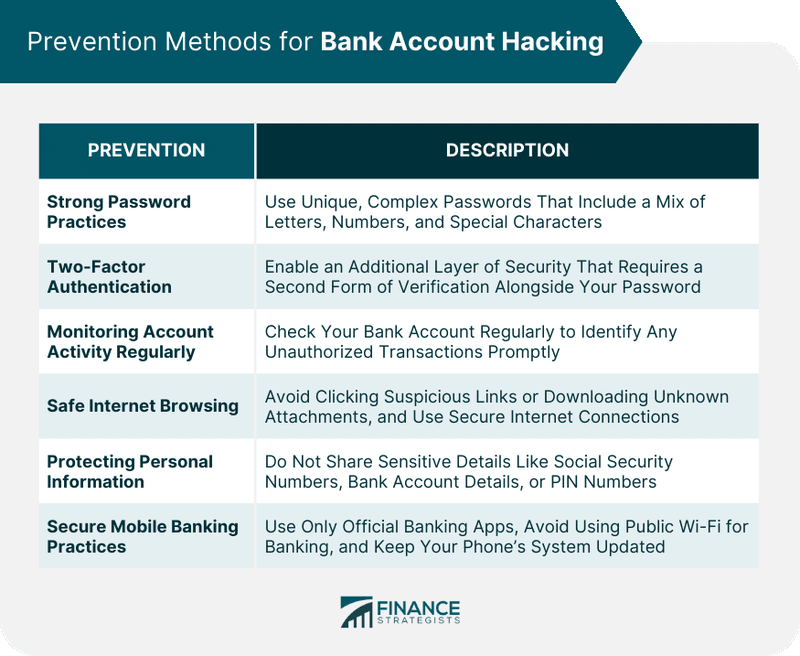
Technology is a specific area where caution matters. NNEDV’s technology safety planning resource recommends considering a safer device for private communications, reviewing which accounts and location-sharing settings a partner can access, using unique passwords, and enabling two-factor authentication where possible. Each of these steps can increase privacy. Each also carries a potential risk: abruptly removing a tracker, changing account access, discarding a monitored device, or making sudden visible changes to digital settings can alert a controlling partner and cause escalation.
Timing and method matter as much as the action itself.
A domestic-violence advocate can help think through which steps make sense in a specific situation and in what order. Many hotlines and local organizations offer confidential consultations that do not require a woman to have made any decisions yet. She does not need to know what she wants to do next in order to ask for information. Getting information is not the same as committing to a course of action, and it does not obligate her to anything.
Every option here is worth weighing carefully, not avoided out of fear of making a mistake, but approached with the same attention she would give any situation where safety is part of the picture.
She does not have to announce her next move

Recognizing a pattern does not create an obligation to confront it out loud or on a timeline that belongs to anyone other than her. She does not owe him a disclosure of what she has figured out. She does not need to announce that she has stopped running her plans through his approval process. And she does not need to leave immediately, or at all, before she has thought through what safety looks like for her specifically.
The National Domestic Violence Hotline’s overview of safety planning makes clear that a safety plan is personalized. It covers living with an abusive partner, preparing to leave, and staying safe afterward, because all three situations are real and all three require different kinds of thinking. Their guidance specifically for women still living with an abusive partner does not assume that leaving is immediately safe or possible. It starts where she actually is.
WomensLaw.org’s guidance on leaving an abusive relationship notes that separation can increase danger for some survivors, particularly when a controlling partner perceives a loss of control. This is not a reason to stay indefinitely. It is a reason to plan carefully, with support, rather than to act suddenly in a way that could escalate risk. Responsibility for abusive behavior and for any escalation belongs to the abusive partner, not to her.
Reaching out to a domestic-violence advocate confidentially, whether through a local organization, a trusted person, or a hotline, does not commit her to a specific outcome. It gives her more information and more options, which is exactly what a permission-checkpoint dynamic has been quietly taking away.
If there is immediate danger, call 911. In the United States, the National Domestic Violence Hotline can be reached at 800-799-SAFE (7233), by chat at thehotline.org, or by texting START to 88788. Advocates are available around the clock, and the call does not have to mean she has decided anything yet.
Information can connect two people without giving one person veto power

Stopping the habit of pre-announcing every plan does not make a woman secretive. For many women, that change is less about hiding and more about reclaiming the space to think through a choice before it gets challenged. Wanting that space is not deception. Sometimes it is the first quiet act of restoring something that was slowly taken away.
The central test is not whether she shares information. The test is what sharing does. Does it create mutual connection and easier coordination between two people who each respect the other’s right to decide? Or does it place her ordinary choices in front of someone who treats access to her plans as an entitlement to approve them, and who makes disagreement costly in ways that have taught her to be careful?
CDC guidance frames coercive control as conduct that attempts to monitor, control, or make decisions for a partner. The Hotline reminds survivors that they know their own circumstances best, and that support is available whenever they are ready for it, without pressure toward any particular choice.
She gets to decide what partnership should feel like. Information shared freely between two people who trust each other looks and feels different from information extracted as a condition of peace. She already knows the difference. That knowledge belongs to her.