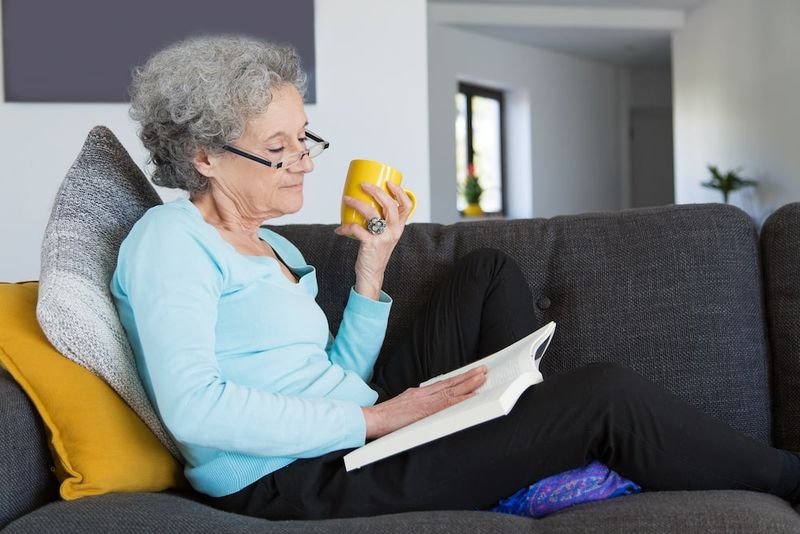
Starting over alone after a long relationship is one of the most disorienting things a woman can do after 50, and one of the least talked about. The fear isn’t just about being by herself – it’s about what that silence might say about her worth, her future, and whether she made the right call. This article sits with that fear honestly, separates what living alone actually means from what it doesn’t, and looks at what it really takes to make a solo life feel like something worth having.
The fear is not the empty house—it is what the quiet might seem to prove
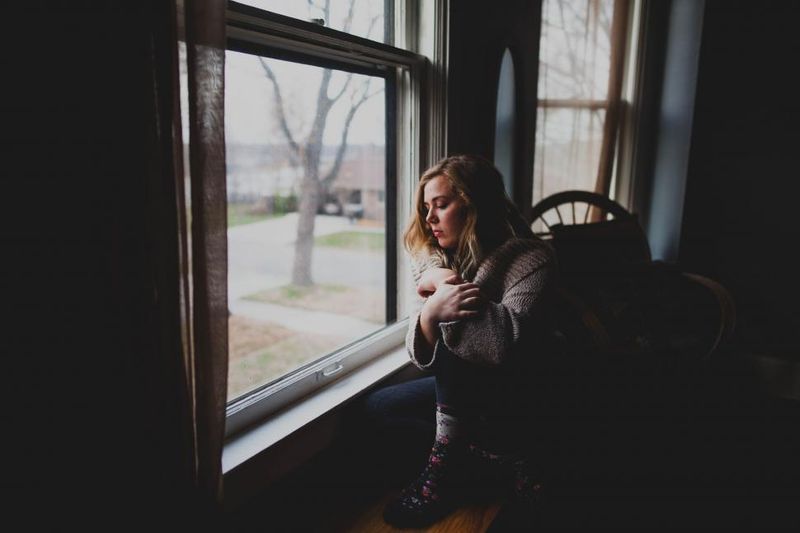
Something shifts in the first few days after a long relationship ends and you find yourself in a house that is suddenly, completely yours. The refrigerator hums. The television stays off because you didn’t turn it on. Nobody needs anything from you right now, and that fact lands differently than you expected – part relief, part vertigo, part a quiet that feels almost too loud to trust.
The fear most women carry into this moment is rarely about the practical details. It is about what the silence might seem to confirm: that she is unwanted, that the relationship proved something unflattering about her, that the years ahead will narrow rather than open. Living alone, in that frame, starts to feel like evidence – of failure, of aging, of being left behind.
That framing deserves to be named, because it is doing a lot of quiet damage. A house with one person in it does not prove anything about her desirability, her warmth, or her capacity to be loved. What it describes is a household arrangement, nothing more and nothing less. The relief she might feel when she no longer has to manage another person’s moods, anticipate reactions, or account for her time is real and worth acknowledging – but that relief also does not prove the relationship was toxic or that her former partner was a bad person.
Her experience is her own.
According to CDC guidance on social connectedness, loneliness is a subjective feeling of disconnection – distinct from the objective fact of living alone. A quiet house can reflect freedom. It can also, at times, feel genuinely lonely. Both things can be true, sometimes within the same afternoon, and neither one cancels the other out.
Living alone and feeling lonely are different realities

Two things get collapsed together so often that they start to feel like the same word: living alone, and being lonely. They are not the same thing, and keeping them separate matters more than it might seem.
Living alone is an objective fact about a household. It describes who sleeps there, who pays the bills, who makes the coffee in the morning. Loneliness is something else entirely – it is the distress that arises when the connection a person has falls short of the connection she wants. A woman can live alone and feel deeply connected to the people in her life.
She can also live with a partner, a family, or a full house and feel profoundly unseen. Household status and emotional experience are not the same variable, and one does not reliably predict the other.
Social isolation is related but different again. Where loneliness is felt, isolation is more structural – it involves having limited relationships, infrequent contact, or insufficient support. A woman living alone is not automatically isolated, especially if she maintains regular contact with friends, family, neighbors, or a community. The risk is real but not predetermined.
That said, the health stakes around loneliness and isolation are worth taking seriously. CDC data on social connectedness links chronic loneliness and isolation to higher risks of depression, anxiety, heart disease, stroke, dementia, and earlier death across older adult populations. The World Health Organization has identified social isolation among older adults as a significant global public health concern. These are population-level patterns, not predictions about any individual woman’s future.
What this means in practice: living alone after a long relationship does not guarantee loneliness, and it does not protect against it either. The arrangement itself is neutral. What shapes her experience will be the quality of her relationships, the degree to which her solitude feels chosen, and the practical supports that make daily life manageable – not the number of people sharing her address.
Autonomy changes what time alone can feel like

There is a specific kind of tiredness that builds up over years of shared living – not from the relationship itself necessarily, but from the constant low-level work of accounting for another person. What time will he be home. Whether this is a good moment to bring something up. How to phrase a preference without it becoming a negotiation.
That labor is often invisible until it stops.
When solitude is chosen rather than imposed, and when it arrives without the background noise of conflict or ongoing tension, it can feel like putting down something heavy you had stopped noticing you were carrying. Research on why people seek time alone suggests that the motivation matters considerably. A study on motivational profiles of solitude and well-being found that positive or low-conflict reasons for seeking solitude – rest, reflection, creative work, or simply preference – were associated with greater life satisfaction and personal growth, while solitude driven by avoidance or social anxiety showed different patterns.
Autonomy plays a related role. Research on solitude experiences in adulthood and older age found that a sense of autonomy – feeling that alone time was self-directed rather than forced – was linked to more positive everyday experiences of being alone. The practical translation: choosing what to eat, when to sleep, how to spend a Sunday afternoon, or whether to leave the kitchen light on is not a trivial pleasure. For some women, those small freedoms accumulate into something that genuinely feels like returning to themselves.
This is not a universal experience, and it should not be treated as one. Not every woman who leaves a long relationship feels relief, and not every shared household was emotionally costly. Some women grieve the loss of companionship sharply, even when the relationship had real difficulties. Studies on solitude and social relationship quality suggest that people with stronger, higher-quality relationships tend to experience their alone time more positively – which means that the connections she keeps and builds after the transition will shape how her solitude actually feels, day by day.
Her life does not have to become smaller just because her household did
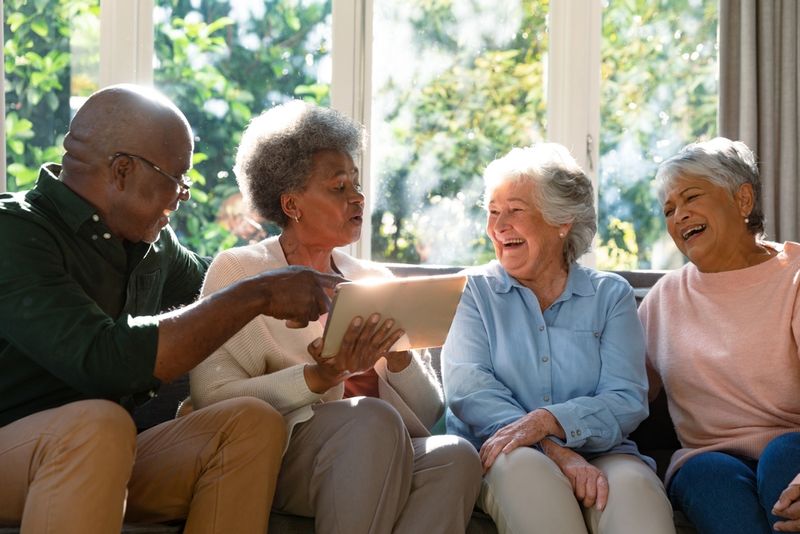
One of the quieter losses in a long relationship ending is the assumption that her social world was built for two and will now shrink to one. That assumption is worth questioning directly. A household with one person in it is not a smaller life – it is a differently shaped one, and the shape of her social world is something she can actively influence.
Research on older adults living alone points to something useful here. A study examining whether living alone means aging alone found that older adults with friend-oriented or diverse social networks generally fared well, while poorer outcomes were concentrated among those with restricted networks – regardless of whether they lived alone or with others. The quality and variety of her connections appears to matter more, for some outcomes, than whether someone else lives under her roof.
That finding opens up real options. Friendships she may have let drift during a long relationship can be renewed. Family relationships can deepen when she is no longer navigating them through the lens of a partnership. Neighbors become more relevant when she is the one who notices whether a light was left on too long.
Volunteering, classes, faith communities, hobby groups, and local organizations all offer regular, low-pressure contact that can build into genuine connection over time.
Shared meals are worth a specific mention. Research on eating with others and happiness among older adults living alone found that sharing meals was associated with greater well-being – a small, concrete, repeatable form of connection that does not require a romantic partner.
The National Institute on Aging recommends scheduling regular contact with friends and family, joining activities that bring her into consistent contact with others, and staying physically active. For women who have recently relocated or whose local network is thin, the Administration for Community Living’s network of State Units on Aging can connect her with local programs, social services, and community resources. Connection after 50 does not have to be rebuilt from scratch – but it does need to be tended with some intention rather than left to chance.
Peace becomes sustainable when the practical details are part of the plan
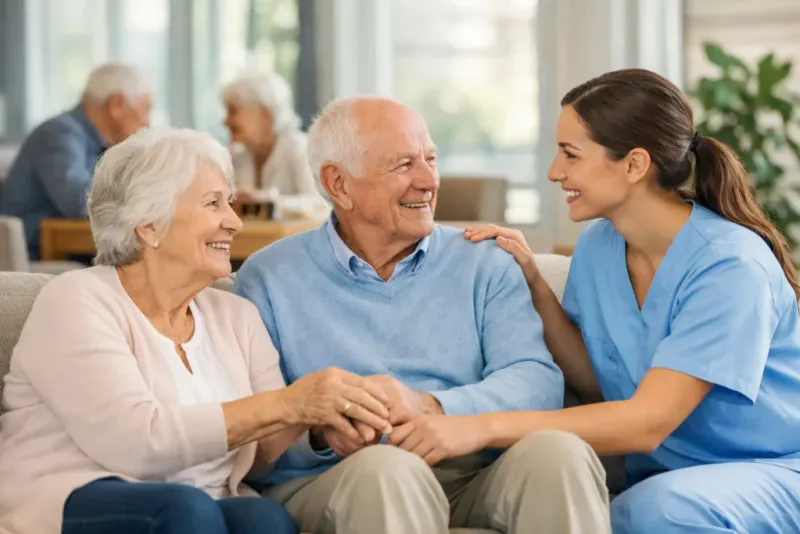
Emotional readiness to live alone is real and worth honoring. So is the fact that a solo household runs on more than good intentions. The practical infrastructure of solo living – transportation, home maintenance, health care, emergency planning – does not arrange itself, and putting it in place is not a sign that she doubts her own capability. It is how capable people stay safe.
The National Institute on Aging’s guidance on aging in place recommends thinking ahead about transportation to medical appointments and errands, identifying help with household tasks, and learning what local aging services are available before they are urgently needed. Financial realities matter here too – housing costs, health insurance, and long-term care options are all worth reviewing, ideally with a financial advisor who works with women in transition.
Home safety becomes more important over time, and a few targeted changes can significantly reduce risk. CDC fall prevention guidance recommends removing trip hazards such as loose rugs and clutter in walkways, improving lighting in hallways and stairwells, installing grab bars in the bathroom and railings on both sides of stairs, reviewing any medications that may cause dizziness or drowsiness, keeping up with vision exams, and doing regular strength-and-balance exercises. Falls are the leading cause of injury among older adults, and most of the conditions that increase fall risk are addressable before anything goes wrong.
An emergency plan is one of the most straightforward things a solo household can have and one of the most commonly skipped. CDC emergency planning resources outline the basics: a designated emergency contact who knows her situation, a way to receive weather or community alerts, a supply of essentials at home, and a clear plan for both sheltering in place and evacuating if needed. Telling at least one trusted neighbor or friend that she lives alone – and how to reach her if they haven’t heard from her – costs nothing and matters more than most people expect.
None of this preparation undermines her independence. Scaffolding is how structures stay standing. The peace she is building deserves a foundation solid enough to hold it.
When quiet starts taking more than it gives

Relief and loneliness are not opposites, and they do not take turns politely. A woman can feel genuinely glad to be out of a difficult dynamic and still find herself, three months later, moving through her days without much color. Both experiences are honest. The problem comes when the second one gets labeled as the first – when withdrawal starts being called independence, and persistent emptiness gets dressed up as self-sufficiency.
Normal post-relationship disorientation looks like disrupted routines, unfamiliar quiet, occasional sadness, and some loss of direction. Those feelings tend to shift over weeks or months as a new rhythm takes shape. What looks different is when the heaviness does not lift – when she is not sleeping or is sleeping too much, when food has lost its appeal or she is eating compulsively, when she has stopped returning calls not because she needs space but because she does not see the point, when small tasks feel impossibly heavy, or when she finds herself thinking that things would be better if she simply were not here.
Those are not signs of deep independence. NIA guidance on depression and older adults notes that depression is not a normal or inevitable part of aging, that it is treatable, and that it often goes unrecognized in older women because the symptoms can be subtle or attributed to life circumstances. Confusion, persistent fatigue, and loss of interest in things that used to matter are all worth bringing to a doctor, not waiting out.
If she is having thoughts of suicide or self-harm, she should call or text 988 – the U.S. Suicide and Crisis Lifeline – which is available around the clock. For a broader look at when an older adult may need additional support, NIA’s guidance on recognizing when someone needs help offers practical signs to watch for. Reaching out is not a retreat from her independence.
It is how she protects it.
If leaving involved abuse, freedom begins with safety—not a makeover
For some women reading this, the quiet in the house is not just the absence of another person’s preferences. It is the absence of something that felt dangerous – a relationship that used control, humiliation, financial restriction, surveillance, threats, or physical harm to keep her in place. If that describes any part of her experience, the frame of this article shifts considerably.
The U.S. Department of Justice defines domestic violence broadly, to include physical, sexual, emotional, psychological, economic, and technological abuse, as well as coercive control. These forms of harm do not always leave visible marks, and they do not require a legal definition to be real. A woman who has lived with any of them deserves support that is specific to her situation, not a lifestyle essay.
Leaving an abusive relationship can be the most dangerous period in that relationship. Announcing plans, confronting a partner about the decision to leave, or moving without a safety plan can escalate risk significantly. The peaceful-homecoming narrative in this article is not a script for how to leave – it is a description of what some women find on the other side, after they are safe.
If she is still in the relationship, or recently out of one that involved any form of abuse, confidential help is available. The National Domestic Violence Hotline’s resources for after leaving address safety planning, emotional recovery, financial rebuilding, and what to expect in the weeks and months that follow. The hotline itself – 1-800-799-7233, or text START to 88788 – is free, confidential, and available 24 hours a day. Her autonomy is worth protecting.
That protection starts with safety, not with redecorating.
The quiet can be a homecoming without becoming a sentence

Living alone after 50 does not come with a guaranteed emotional outcome, and it should not have to. A woman does not need to prove she is never lonely, never sad, or permanently self-sufficient to build something genuinely worth having in her solo years. The pressure to perform contentment – to reassure everyone that she is fine, that the quiet is peaceful, that she has no regrets – is its own kind of score-keeping, just with a different audience.
What the research actually supports is more modest and more useful: that solitude experienced with a sense of choice, combined with relationships that are varied and genuinely supportive, is associated with better outcomes for many older adults living alone. Studies on living alone and social networks suggest that connection quality and network diversity may matter more than co-residence for some well-being outcomes – which means the life she builds around her solo household carries real weight.
She can shape that life through honest attention to what she actually needs – not what she is supposed to need, or what proves she made the right decision. Some weeks will feel like reclaimed territory. Others will feel like loss. Both are part of a real life rather than a performed one.
The NIA’s practical guidance on staying connected remains useful not as a checklist but as a reminder that connection is something she can tend actively, on her own terms.
The quiet in her house is not a verdict. It is just quiet – hers to fill, hers to sit in, hers to leave some mornings without explaining to anyone at all.