The public usually meets cirrhosis late. It shows up when a death certificate surfaces, when a superstar comes out of a transplant and tells the world, “Don’t be like me,” or when a former NFL quarterback reveals internal bleeding while waiting for a new liver. By then, whatever private struggle came before has already hardened into something brutal and hard to ignore.
That is why these stories keep cutting through. Cirrhosis does not just attach itself to famous names. It tends to break into public view at the worst possible moment, when the body has already started presenting the bill.
1. Bernie Kosar
Bernie Kosar’s cirrhosis story did not arrive as a tidy diagnosis. It arrived as liver failure, Parkinson’s disease, and then a 2025 report that he was undergoing procedures for internal bleeding while waiting for a transplant. When People first covered his health disclosure in July 2024, Kosar said he had learned he had cirrhosis the year before. By November 17, 2025, he was sharing news that a donor liver had finally come through.
Fans were not watching a retired quarterback manage a lingering condition. They were watching a Cleveland sports icon talk in the language of emergency medicine and donor availability, with every update sounding more urgent than the last.

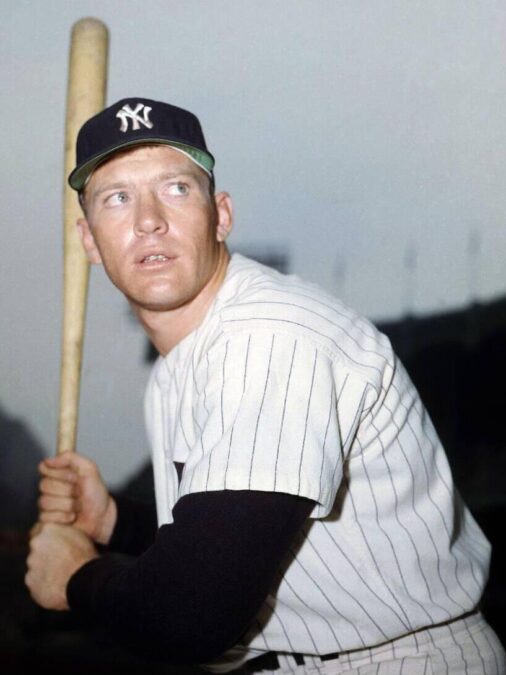
2. Mickey Mantle
After Mickey Mantle’s liver transplant on June 8, 1995, he went public with a message that still stings: “Don’t be like me.” It was the opposite of nostalgic mythmaking. One of baseball’s most cherished figures was telling fans, in plain language, what years of alcohol use and liver disease had done to him.
By then the damage was overwhelming. Mantle’s liver had been ravaged by cancer, hepatitis, and cirrhosis, and the transplant bought him only a short final window before his death that August. What shocked people was not simply that Mantle was sick. It was hearing an American sports monument speak from the other side of denial, with almost no time left.

3. Larry Hagman
Larry Hagman spent years embodying TV excess so perfectly that real life seemed to bend around him. Then it didn’t. AP reporting later carried by CBS said Hagman was diagnosed with cirrhosis in 1992 after years of heavy drinking. Three years later doctors found a malignant liver tumor, and he underwent a transplant.
Hagman turned that survival into part of his public identity. Instead of treating the operation like a private repair job, he spoke openly about transplants and organ donation. That candor gave his story an unexpected second act: not the swagger of J.R. Ewing, but the testimony of someone who knew exactly how close the bill had come due.

4. Billie Holiday
Billie Holiday’s life is so wrapped in legend that it is easy to miss how stark the ending was. In 1959, she was diagnosed with cirrhosis in a New York hospital and died that July at 44. The age alone is enough to jar. So is the gap between the size of her legacy and the physical ruin of her final months.
Holiday had already become one of the defining voices in American music, a singer who could make pain sound intimate without reducing it to melodrama. Cirrhosis turned that towering cultural presence into a devastatingly small human scene: a body failing long before the legend had stopped growing.

5. Anita Roddick
Anita Roddick’s revelation landed differently because she used it to puncture a stereotype. In 2007, the Body Shop founder disclosed that she had hepatitis C and cirrhosis, and said the chain of events started with a 1971 blood transfusion she received while giving birth. She did not wait for tabloids, whispers, or posthumous disclosures. She put the diagnosis on the record herself.
That mattered. Roddick’s story forced readers to confront how quickly the word cirrhosis can trigger assumptions, especially when the real story is medical error, delayed detection, and years of quiet damage. She turned a health disclosure into a correction.

6. Elizabeth Pena
Elizabeth Pena’s death looked sudden until official records made it look haunted. ABC News, citing her death certificate, reported that she had cirrhosis of the liver due to alcohol and had been living with the condition for months before the gastrointestinal bleeding and cardiogenic shock that preceded her death in 2014.
Pena was not publicly framed as someone in visible collapse. She was still remembered as a warm, sharp, effortless screen presence. Then the documents arrived and revealed that a quieter, uglier medical reality had been running underneath the public image.

7. Derryn Hinch
Derryn Hinch explained his silence in a phrase that was impossible to forget: he had seen cirrhosis as “the drunk’s disease.” When the broadcaster finally went public in 2007, he did it with almost embarrassing candor, revealing advanced cirrhosis and a liver tumour after years of heavy drinking. He later underwent a transplant.
Hinch admitted the shame outright. The diagnosis had carried stigma for him long before it carried headlines, which made his eventual public confession feel less like a managed PR moment than a man running out of places to hide.

8. John Cassavetes
John Cassavetes made films that felt wired to live danger. Nothing about his artistic reputation suggested stillness or retreat, which is one reason his death from complications of cirrhosis in February 1989 landed so hard. He was 59, still young enough that the loss felt like an interruption rather than an ending.
Cassavetes remains a different kind of celebrity case on this list. There was no transplant narrative, no redemption arc, no late public campaign. Just the abrupt fact that one of American independent cinema’s defining figures had been cut down by cirrhosis, leaving the disease attached forever to a body of work that still feels agitated and alive.

9. “Superstar” Billy Graham
Few people built a public image around physical domination as successfully as “Superstar” Billy Graham. That image makes the medical timeline almost surreal. Sports Illustrated reported that he underwent a liver transplant in 2002 because of hepatitis C and cirrhosis, and later coverage of his health battles described advanced liver disease that kept dragging him back into public concern.
Wrestling has always dealt in exaggeration, but Graham’s body had once made the exaggeration believable. Cirrhosis stripped that illusion down to something helpless and biological: not muscles, not charisma, just an organ failing in public after years of damage.

10. Walter Trout
Walter Trout has described a period in 2014 when cirrhosis and hepatitis C pushed him to the edge of death. He lost massive weight, needed a transplant, and later said doctors told him he was going to die. Trout has also said he temporarily lost the ability to speak and play.
That detail makes the collapse harder to shake. This was not only a famous musician getting sick. It was a musician nearing the point where the disease could take music away from him altogether. His comeback is real, but it only matters because the collapse was that severe.

11. Robert Schimmel
Robert Schimmel had already lived through more medical disaster than most people could absorb when cirrhosis entered the picture. In January 2010, he disclosed that he had liver cirrhosis after hepatitis C linked to a blood transfusion and was trying to get onto a transplant waiting list. For fans who knew him as the comic who could turn almost any horror into a joke, the update felt especially merciless.
Cirrhosis was not some isolated twist in an otherwise easy life. It was one more catastrophic chapter in a body that had already been through cancer, chemotherapy, and heart trouble. By the time he talked about the disease, the public was not just hearing bad news. It was hearing exhaustion.

Again and again, cirrhosis entered these celebrity stories as aftermath: after the hidden decline, after the damage, after the point when privacy was no longer sustainable. The names were famous. The pattern was brutally ordinary.