
You spent years reading between the lines of someone’s texts, waiting for a call that never came, wondering if you were too much or somehow not enough. Somewhere after 50, a quiet shift can happen: you stop chasing, and instead of feeling lonely, you feel lighter. Psychologists have noticed that many women who let go of the constant pursuit actually report feeling more content, more settled, and more like themselves. Here are nine reasons that shift so often leads to a happier life, and maybe a few you will recognize in your own story.
1. She stops mistaking anxiety for chemistry

For a long time, that fluttery, can’t-eat, can’t-sleep feeling got labeled as love. In truth, a lot of it was worry dressed up as passion, the nervous energy of not knowing where you stood with someone.
Psychologists point out that the brain can confuse anxiety with attraction, especially when a partner keeps you guessing. When a woman stops chasing after 50, she gives that jittery signal a chance to go quiet.
What rises in its place is calmer and steadier. She starts noticing the difference between someone who makes her feel safe and someone who simply keeps her on edge, and that clarity often feels like relief more than loss.
2. Her sense of worth stops depending on being chosen

Think about how much of your younger dating life was spent auditioning, hoping the other person would pick you. That waiting to be selected can quietly wear down how a woman sees herself.
After 50, many women stop handing that power away. Instead of measuring their value by whether someone texts back, they start measuring it by how they feel about their own days.
Researchers who study self-worth note that people tend to feel more stable when their sense of value comes from inside rather than from someone else’s approval. When she no longer needs to be chosen to feel like enough, the pressure lifts, and so does a lot of the old ache of being unseen.
3. She reclaims the time and energy she used to spend pursuing

Chasing someone is a job nobody pays you for. Drafting the perfect message, analyzing what a pause meant, rearranging your week around a maybe, all of it quietly eats hours you never get back.
Once that pursuit stops, a surprising amount of space opens up. Women describe suddenly having the energy for a painting class, a garden, a long-neglected friendship, or simply an evening that belongs entirely to them.
Psychologists talk about this as reclaiming your attention. When your focus is no longer aimed at winning someone over, it can flow back toward the things that genuinely fill you up. That redirected energy often becomes the foundation of a happier, fuller life.
4. She becomes harder for manipulators to reach

Here is something empathetic women learn the hard way: warmth and generosity can make you a target. The very qualities that make you loving are the ones a manipulative partner may try to use against you.
When a woman stops chasing, she also slows down. She stops rushing to fill silences, stops over-explaining herself, and stops bending to keep someone interested.
That slower pace gives her time to notice red flags she might have sprinted right past in her younger years. Psychologists observe that people who feel less desperate for connection are often less vulnerable to those who take advantage of it. Her kindness stays intact, but it comes with sturdier boundaries around it.
5. Her friendships finally get the spotlight

How many times did a promising romance push your friends to the back burner? For years, a new partner could swallow whole seasons of your life while the women who truly showed up got squeezed into leftover moments.
Stepping back from the chase reverses that pattern. Suddenly there are Sunday brunches, phone calls that last two hours, and trips planned with people who have known you through everything.
Studies on long-term happiness keep landing on the same finding: close friendships are one of the strongest predictors of feeling good in later life. When a woman stops pouring everything into pursuing a partner, those steady, loyal bonds get room to deepen, and they tend to give back far more than they take.
6. She learns to enjoy her own company

Being alone once felt like a problem to fix, a gap that needed filling as fast as possible. That fear of solitude can push a woman to chase almost anyone just to avoid a quiet house.
After 50, something shifts. Solitude stops feeling like punishment and starts feeling like a treat, a whole evening with no one to please but herself.
Psychologists describe this comfort with being alone as a quiet superpower. A woman who genuinely enjoys her own company never has to settle out of loneliness. She chooses connection because she wants it, not because she is scared of the silence, and that changes everything about the choices she makes.
7. She stops shrinking herself to fit someone else

There is a particular exhaustion that comes from becoming smaller so a relationship can feel bigger. Maybe you hid your opinions, dimmed your ambitions, or laughed at things that did not actually feel funny, all to keep the peace.
When the chasing ends, that shrinking often ends with it. She stops editing herself down to a version she thinks will be easier to love.
What comes back is her full personality, opinions and quirks and all. Relationship researchers note that people feel most alive when they can be authentic instead of performing. A woman who no longer contorts herself to hold someone’s attention gets to meet the world as her whole self, and that honesty is its own kind of happiness.
8. Her nervous system finally gets to rest
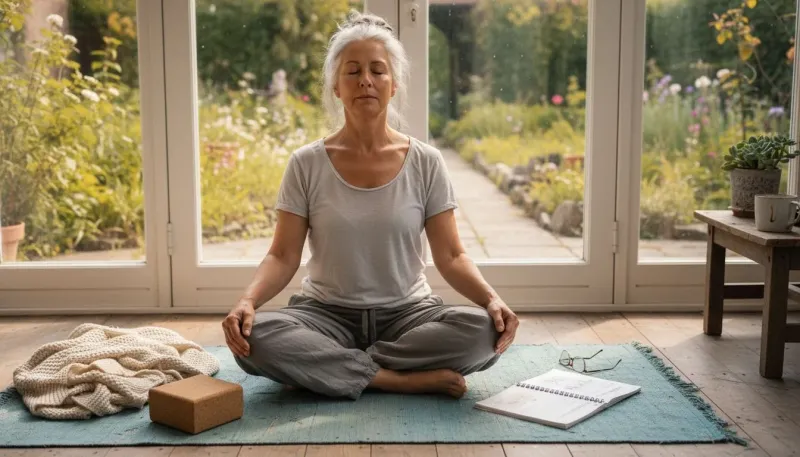
Chasing keeps the body on high alert. That constant checking, hoping, and bracing for disappointment keeps stress hormones humming in the background, even when nothing dramatic is happening.
Letting go of the pursuit can quiet all of that. Women often notice they sleep better, their shoulders drop, and the low hum of worry they carried for years starts to fade.
Health researchers connect chronic stress to a long list of physical troubles, so calming that inner alarm is more than an emotional gift. When a woman stops living in fight-or-flight over a relationship, her whole body gets a chance to settle, and that steadiness tends to show up as real, everyday contentment.
9. She redefines what a good relationship even looks like

Old scripts run deep. For decades, love may have looked like effort, sacrifice, and proving yourself worthy of someone’s attention, no matter how much it cost you.
By stepping back, a woman gets space to question that whole picture. She starts asking what she actually wants instead of what she was taught to chase.
Often the answer is quieter than the drama she once mistook for romance: mutual respect, ease, someone who meets her halfway without a struggle. Psychologists say this kind of reflection tends to lead to healthier partnerships when she does choose one. And whether or not another relationship ever comes along, she has already given herself the greatest gift, which is the knowledge that her happiness was never something she had to chase in the first place.