
Some dates feel like they carry weight, and for a lot of people, a full moon in late August is one of them. If you have been carrying an exhausting relationship for a long time, the idea that a cosmic event might finally give you permission to let go can feel like a lifeline. But what if the real gift of that date is not a push out the door, but a chance to finally sit with what you have been feeling? That is what this article is actually about.
The August 2026 full moon can mark a pause, not predict who leaves

Maybe you found this article because you wanted someone to tell you it is finally time. That the stars lined up, that a specific date means something, that the universe is pointing at your relationship and saying: enough. That hope makes complete sense, and it deserves a honest answer.
The August 28, 2026 full moon is a real astronomical event. According to the U.S. Naval Observatory’s lunar phase data, it occurs at 04:18 UTC on August 28. For readers in the United States, that timing lands on the evening of August 27 in Pacific, Mountain, and Central time zones, and shortly after midnight on August 28 for those in Eastern time.
NASA also notes a partial lunar eclipse visible on August 28 UTC, meaning parts of the Americas, Europe, and Africa will be able to watch the Moon move partially through Earth’s shadow.
Here is what the science actually says: no reliable evidence shows that a full moon causes breakups, emotional release, courage, or relationship decisions. A full moon is an astronomical phase, meaning the Moon is positioned opposite the Sun as seen from Earth. NASA explains moon phases as a product of orbital geometry, not a force that rewires how people feel or decide. The eclipse adds visual drama, but drama in the sky does not translate into a mechanism for changing what happens in your living room.
None of that means August 28 cannot matter to you. Symbolic dates are real in a different way. People use birthdays, anniversaries, and new years to take stock of their lives, and that reflection is genuinely useful. If the full moon feels like a natural stopping point to ask yourself hard questions about your relationship, use it.
Just know the date is a prompt you are choosing, not a cosmic verdict being handed down to you.
Cancer, Libra, and Pisces can serve as symbolic mirrors
You have probably seen articles that promise a specific list of signs who will “finally” walk away this month. The signs chosen are usually Cancer, Libra, or Pisces, and the reasoning tends to go something like this: these signs feel deeply, give too much, and absorb their partner’s emotions until they have nothing left. That description might feel uncomfortably accurate to you right now, regardless of when you were born.
That is actually the more honest use of these archetypes. Rather than treating them as predictions about what people born under specific dates will do, you can treat them as story lenses. Cancer is often described as the caretaker who puts everyone else’s comfort before her own. Libra is the peacekeeper who dreads conflict so much she edits herself to keep the relationship calm.
Pisces is the empath who takes on a partner’s emotional weight as if it were her own job to carry it.
Ask yourself whether any of those descriptions feel familiar, not because of your birth date, but because of patterns you have noticed in yourself. Do you consistently prioritize a partner’s emotional state over your own? Do you find yourself managing someone else’s moods to avoid conflict? Have you slowly stopped doing things that used to matter to you because keeping the relationship steady became a full-time effort?
Those are the questions worth sitting with. The zodiac labels are just a way of giving a name to experiences that many women recognize. Think of them as a journaling prompt or a conversation starter, not a personality verdict or a breakup schedule. Whatever your sign, the real mirror here is the pattern, not the planet.
What the evidence can—and cannot—say about astrology and lunar effects
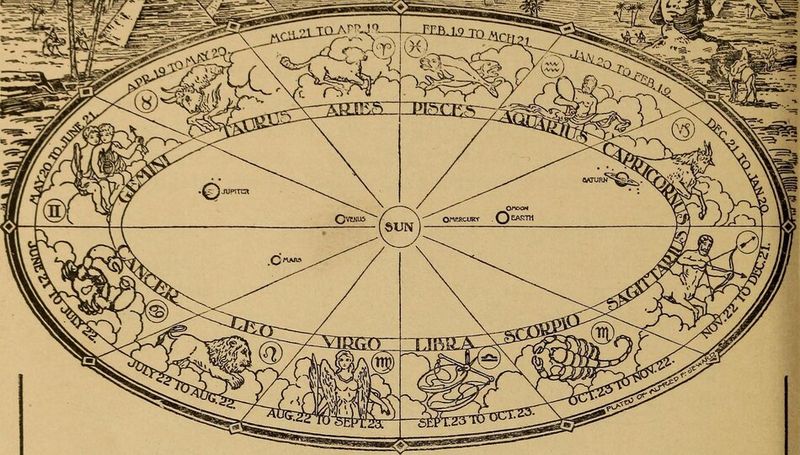
Astrology has real cultural and personal meaning for a lot of people, and there is nothing wrong with finding comfort or clarity in it. At the same time, being honest about what research has actually found helps you make decisions from a grounded place rather than a borrowed promise.
On the question of whether zodiac signs predict personality or behavior, the findings are consistent. A double-blind study published in Nature tested whether professional astrologers could match natal-chart interpretations to participants’ actual personality profiles, and they could not do so at a rate better than chance. A separate large-scale study of more than 15,000 people found no meaningful relationships between date of birth, personality, intelligence, and astrological sun signs. An earlier study examining zodiac signs and personality traits also found no reliable associations.
Together, these findings mean there is no validated scientific basis for using a zodiac sign to predict relationship decisions or life events, including whether someone will leave a relationship by a particular date.
The evidence on lunar effects is a separate conversation, and it is more uneven. Some studies have looked at whether full moons affect sleep, mood, or behavior, with mixed and often contradictory results. A recent review of lunar cycles, sleep, and physical performance found inconsistent evidence that does not support strong conclusions. More directly, a study of psychiatric emergency consultations found no evidence that full moons increased suicidal behavior, sleep disorders, or psychiatric decompensation among the populations studied.
None of this means that the full moon feels like nothing to you, or that your symbolic relationship with it is invalid. Symbolic meaning and causal evidence are simply two different things. You can find August 28 meaningful without needing the Moon to be the reason you feel what you feel. The feelings were already there.
The date just gives you a place to look at them.
Name the behavior before you name the relationship
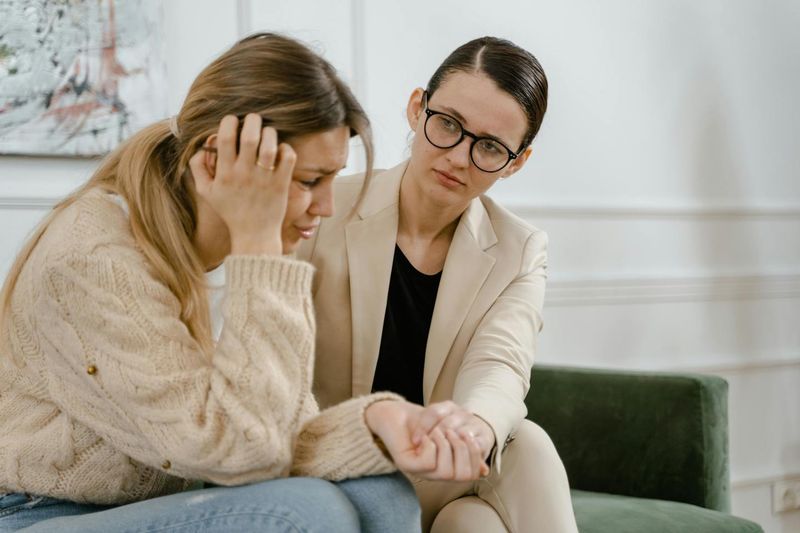
“Draining” is a word that covers a lot of ground. A relationship can feel exhausting because of ordinary stress, because one person is going through something hard, because the two of you have genuinely grown apart, or because something more serious is happening. Before you label the relationship, try naming what is actually happening in it.
A few honest questions can help. Can you express a different opinion without it turning into a punishment? Do you still have regular contact with friends and family, or has that quietly narrowed over time? Are you the one managing your partner’s emotional reactions on a regular basis, working to keep things calm so things do not escalate?
When an apology happens, does the behavior actually change, or does the same cycle repeat within days or weeks?
According to the U.S. Office on Women’s Health, emotional and verbal abuse can include insults, humiliation, attempts to scare a partner, and efforts to isolate or control her. The U.S. Department of Justice defines domestic violence broadly to include psychological, economic, and technological control, not just physical harm.
And the Office on Women’s Health’s guide to signs of abuse lists monitoring, intimidation, and isolation as warning patterns worth paying attention to.
Use these as reflection questions, not a checklist that delivers a verdict. One painful argument does not establish a pattern. What matters is whether these experiences repeat, whether you feel safe being yourself, and whether things actually get better or just get quieter for a while before the same thing happens again.
Naming what is happening, even just in a private journal, is not a commitment to any particular action. You do not have to decide what to do next in order to be honest with yourself about what you have been living with.
Match your response to the level of risk
Not every exhausting relationship carries the same level of risk, and how you respond matters a great deal depending on what is actually happening. Ordinary dissatisfaction, unequal emotional labor, and chronic conflict are real problems, but they call for different responses than coercive control, stalking, or physical violence. Collapsing all of these into one category, or assuming they will all inevitably escalate, does not serve you well.
When a relationship involves controlling, humiliating, or threatening behavior, labeling a partner a “narcissist” can feel satisfying, but it is not a diagnosis and it does not tell you what to do next. What matters more than a label is the pattern of behavior: does your partner monitor your phone, location, or finances? Does he use anger or silence as tools to manage your behavior? Has he threatened consequences if you talk to certain people or make certain choices?
If leaving feels like something you are considering, the most important thing is not the date you choose. The Office on Women’s Health explains that a thoughtful safety plan includes identifying safe people and places, securing important documents and medication, and thinking carefully about whether a partner may be monitoring your planning. The National Domestic Violence Hotline’s preparing-to-leave guidance also covers finances, housing, children, and what to do if a partner has access to weapons.
Digital safety is part of this too. The Hotline’s technology safety guidance notes that an abusive partner may monitor browsing history, GPS location, social media, or shared wireless accounts, and that clearing your browser history can itself create suspicion and risk. If you are researching options, consider using a device your partner does not have access to. Stalking safety planning is also worth reviewing if a partner has tracked your location or movements.
Do not announce plans publicly or confront a partner about leaving in a moment of conflict. Research reviewed by the Department of Justice supports the understanding that leaving can increase danger when a partner perceives a loss of control, which is why timing and preparation matter more than a symbolic date. Couples counseling or mediation is also not recommended where coercive control may be present, as the Department of Justice’s program guidance cautions against joint sessions in domestic-violence situations. A trained advocate, not a horoscope, is the right guide for those decisions.
Use the date for clarity, then reach for support

You do not need a zodiac sign’s permission to take your own exhaustion seriously. You do not need the Moon to be in the right position to acknowledge that something in your relationship has been costing you more than it should. Whatever you feel right now is already enough of a reason to pay attention.
If August 28 feels like a useful date to pause, journal, or have an honest conversation with yourself, use it that way. Write down what you have been carrying. Write down what you wish were different. Write down what you would tell a close friend if she described your relationship to you.
You do not have to decide anything yet. Clarity often comes before a decision, not at the same moment.
If you are looking for real support, the National Domestic Violence Hotline offers confidential help, safety planning, and referrals at 1-800-799-SAFE (7233), or you can text START to 88788. The National Domestic Violence Hotline program, supported through federal funding, connects people across the country with local resources. For immediate danger, call 911. The Department of Justice’s domestic violence resource page also links to legal, housing, and advocacy support.
A horoscope cannot replace an advocate, a therapist, a doctor, or an attorney. What astrology can do, at its best, is give you a language for something you were already feeling. The full moon on August 28 is a real event in the sky. What you do with the quiet it might offer you is entirely, and only, yours to decide.