
Somewhere between hoping things will get better and exhausted from carrying everything alone, a quiet question starts to form: is this really what love is supposed to feel like? If you have ever found yourself doing all the reaching, all the apologizing, and all the work of keeping a relationship alive, you already know the weight of that question. The truth is that staying single can be a healthier choice than staying in a relationship where your needs are consistently invisible. This article is about what it actually looks like when someone genuinely wants to keep you, and why that standard is worth holding onto.
The standard is mutual investment, not dramatic pursuit

When people hear the phrase “fight to keep you,” the mind can jump to grand gestures: the last-minute airport run, the bouquet left on the doorstep, the tearful declaration. Those moments make good movies, but they are a poor measure of whether someone is genuinely invested in a relationship with you.
What the phrase actually points to is something quieter and more consistent. A partner who fights to keep you shows up in ordinary moments: they listen when you raise a concern, they follow through on what they said they would do, they make time for you even when life gets crowded, and they care about your experience of the relationship, not just their own. Researchers describe this quality as perceived partner responsiveness, defined as feeling understood, validated, and cared for by the person you are with.
That feeling matters more than most people realize. Research on responsiveness in close relationships consistently connects it with greater intimacy, commitment, and relationship satisfaction. When you feel genuinely seen by someone, the relationship has a foundation that a single romantic gesture simply cannot build on its own.
A 10-year longitudinal study of more than 2,000 married U.S. adults found that perceived partner responsiveness predicted increases in eudaimonic well-being a decade later, which is the kind of well-being tied to meaning, purpose, and personal growth. That is a meaningful finding, though it does not mean a responsive partner is a guarantee of lifelong happiness or that effort alone determines compatibility.
What it does mean for you is this: the emotional language of “fighting to keep you” is best understood as a description of sustained, respectful investment. It is not jealousy. It is not pressure. It is not someone who refuses to accept your decision to leave.
It is someone who chooses, repeatedly and in small ways, to understand you, value you, and stay engaged with the relationship you are building together. That is the standard worth keeping.
Being alone can be better than being repeatedly unseen

There is a specific kind of loneliness that comes not from being alone, but from being with someone who does not really see you. You are in the same room, maybe even the same bed, and yet your needs keep getting passed over, your feelings keep getting minimized, and the emotional labor of keeping the relationship afloat keeps landing on you. That loneliness is real, and it deserves to be named.
Choosing to be single rather than staying in a relationship that consistently asks you to shrink yourself is a legitimate and sometimes protective decision. A review of singlehood research found substantial variation in how single people experience their lives: some thrive, particularly when they have secure self-worth, supportive friendships and community, and genuine comfort with being on their own. Others experience loneliness or social stigma, and both of those realities are worth acknowledging honestly.
Being single is not a universal solution, and it is not automatically easier than being partnered. Research comparing relationship status and well-being is complicated by factors like social support, personal desire for partnership, financial security, and the quality of the relationships being compared. The point is not that singlehood will always feel better. The point is that it can be a genuinely livable, even nourishing, life context, especially when the alternative is a relationship where you are invisible.
Staying single also gives you something a one-sided relationship rarely does: the space to know your own needs without someone else’s indifference constantly redefining them. That clarity is not a consolation prize. It is a foundation. And it does not require you to promise yourself that the right person is coming.
It only requires you to stop abandoning yourself in the meantime.
Real effort shows up in ordinary, repeatable choices
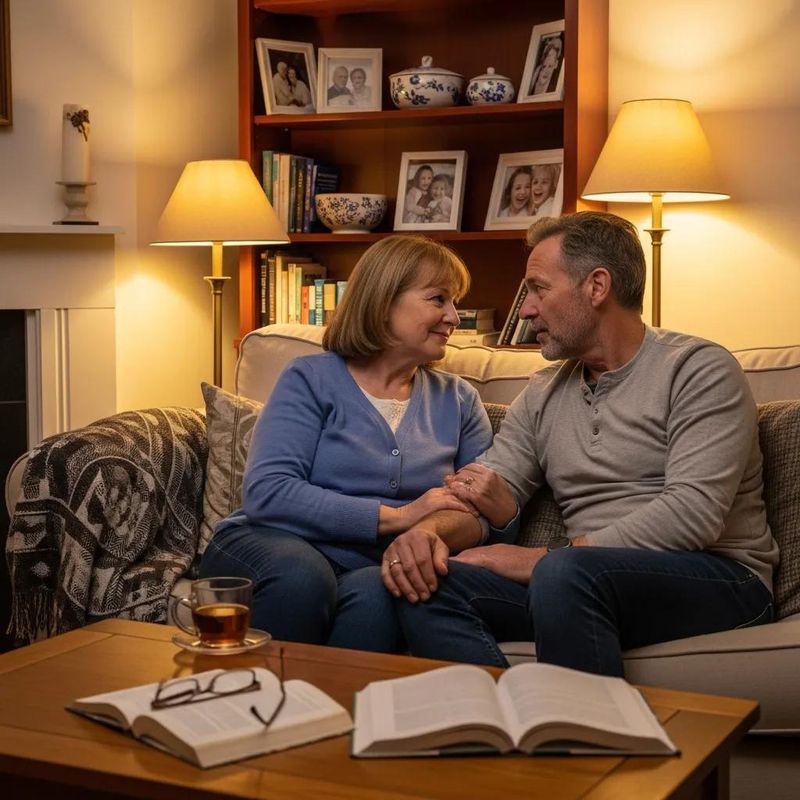
Mutual investment rarely looks like a dramatic declaration. More often, it looks like a partner who puts their phone down when you are talking. It looks like someone who remembers what you said mattered to you last week and asks how it turned out. Those small, repeatable choices are where genuine effort actually lives.
Healthy-relationship guidance points to open communication, mutual respect, support, compromise, kindness, personal space, and honoring boundaries as the building blocks of a relationship that works for both people. None of those things require a grand gesture. All of them require consistency.
When you are evaluating whether someone is genuinely invested, the more useful question is not “did they do something romantic this week?” but rather: do they listen when you raise a concern, or do they redirect the conversation back to themselves? Do they follow through, or do they agree in the moment and forget by morning? Do they support your goals even when those goals take your attention away from them? Do they respect the space you need without punishing you for needing it?
A partner who understands you, validates your experience, and genuinely cares about your needs, which is what responsiveness research describes as core to close relationship quality, is not performing love. They are practicing it. And practice, by definition, is something you do again and again, not once when the moment calls for it.
None of this means a good partner is a perfect partner. People get tired, distracted, and overwhelmed. What you are looking for is not someone who never misses a beat, but someone whose overall pattern tells you that you are a priority to them, not an afterthought. Every person deserves a relationship where that kind of care goes both ways.
Patterns matter more than the moment they make up

A well-timed apology can feel like proof that someone finally understands. An unexpected gift after a long stretch of distance can make the distance feel like a misunderstanding. But a single moment, no matter how charged with feeling, cannot tell you whether a relationship is actually working. What tells you that is the pattern.
A large-scale analysis across 43 longitudinal datasets identified perceived commitment, appreciation, satisfaction, and conflict patterns as among the most consistent relationship-specific predictors of relationship quality over time. That finding points to something worth sitting with: what shapes a relationship’s trajectory is not the peak moments but the steady, recurring experience of being with someone.
So when a partner comes back with intensity after a period of withdrawal, the more informative question is not “did they show up?” but “what happens next?” Does the concern that prompted the conversation get addressed, or does it get replaced by the warm feeling of making up? Does the follow-through last a week, or does it hold over months? Grand gestures can be genuine, but they can also be a way of resetting the emotional clock without changing the underlying dynamic.
This does not mean one difficult stretch or one missed moment proves someone does not care. Relationships move through hard seasons, and people have capacity limits shaped by stress, health, and circumstance. What it means is that you deserve to look at the full picture, not just the highlight that came after the low point. Consistent investment, not intensity at the right moment, is what actually builds a relationship you can rely on.
Repair is an important sign of mutual investment

Conflict is not a sign that a relationship is broken. Every relationship that lasts long enough will hit friction, misunderstanding, and moments where both people feel unheard at the same time. What matters is not whether conflict happens, but what both of you do with it.
The more telling pattern involves whether both people can raise a concern without it becoming a shutdown, whether both can listen without immediately defending, whether both can take some responsibility and return to the conversation when things have cooled. Research on conflict and relationship quality connects destructive patterns, particularly demand-withdraw interactions where one partner pursues and the other disengages, with lower satisfaction and, in some studies, greater risk of relationship dissolution over time.
Temporary space during conflict is not automatically abandonment. Studies on withdrawal in conflict note that stepping away can sometimes help de-escalate, and that the meaning of withdrawal depends heavily on context, timing, and whether the person returns to the conversation. A partner who says “I need an hour to calm down and then I want to talk this through” is doing something different from a partner who goes silent for days and waits for you to apologize.
What repair looks like in practice: both people acknowledge what happened, take some ownership of their part, and make a genuine attempt to understand the other’s experience. Research on demand-withdraw communication reinforces that it is the pattern across multiple conflicts, not any single argument, that shapes relationship quality over time.
Repair is one meaningful indicator of mutual investment, but it cannot by itself tell you whether a relationship is compatible, safe, or worth continuing. Compatibility, commitment, and safety all shape that picture alongside how well two people navigate conflict. Still, a relationship where only one person ever tries to close the distance after a rupture is telling you something important about where the investment actually sits.
Love and effort cannot erase incompatibility

One of the most painful relationship experiences is caring deeply about someone and still finding that the relationship does not actually fit your life. The effort is real. The feeling is real. And yet something keeps not working, not because either person is failing, but because what each of you needs points in different directions.
Research on relationship standards shows that the fit between a person’s standards and a partner’s qualities is meaningfully related to satisfaction, and that what people need in a relationship varies across individuals and cultures. There is no single universal definition of a good relationship, which also means there is no version of effort that can substitute for genuine alignment on things that matter to you.
Those things might include whether you want children, how you handle finances, where you want to live, what role faith or community plays in your life, or how much emotional availability you need from a partner. Studies on ideal standards and relationship quality suggest that when a partner falls significantly short of what someone genuinely needs in core areas, satisfaction tends to suffer over time regardless of how much both people care.
A partner’s willingness to work on the relationship is worth something real. But it is a separate question from whether the life you would build together actually fits who you are and what you need. Staying in a relationship because someone is trying hard, when the fundamental shape of the relationship does not match your life, asks you to trade your actual needs for the comfort of being chosen. You deserve both: someone who tries and someone whose life is genuinely compatible with yours.
Persistence stops being love when it overrides your choice

Holding a standard for how you want to be treated is healthy. Staying in a relationship that consistently falls short of that standard is painful. But there is a version of “fighting to keep you” that has nothing to do with love, and everything to do with control, and it is worth being able to name the difference.
Healthy persistence looks like someone continuing to show up with care and respect, making genuine changes, and staying engaged with the relationship. It does not look like refusing to accept your decision to leave, escalating pressure when you try to create distance, or treating access to you as something they are entitled to. A boundary describes what you will accept or do, and it is not a tool for controlling a partner’s friendships, clothing, or communication. The same principle applies in reverse: a partner’s “effort” does not give them the right to override your boundaries or your decisions.
Healthy relationships involve boundaries that both people can discuss without fear of anger or retaliation. When that safety is missing, what looks like devotion can actually be control. Extreme jealousy, monitoring your location or messages, isolating you from people who support you, intimidation, threats, unwanted repeated contact after a clear no, and sexual pressure are not signs of how much someone loves you. They are warning signs.
The CDC classifies physical violence, sexual violence, stalking, and psychological aggression as forms of intimate partner violence. If any of those are present in your relationship, the priority is your safety, not communication strategies. The National Domestic Violence Hotline offers personalized safety planning and notes that internet use can sometimes be monitored, so reaching out safely matters. A relationship health self-assessment can also help you get clearer on what you are experiencing.
You do not have to earn the right to leave, and someone’s refusal to accept that decision is not evidence of love.
Choose the relationship that does not require you to disappear

Reciprocity, respect, accountability, and a willingness to work through hard things together: these are not impossible standards. They are the baseline of a relationship where both people are actually present. You can carry those standards with you whether you are single right now or building something with someone new.
Waiting, in the way this article means it, is not about holding out for someone who will pursue you relentlessly or never cause you pain. Research on singlehood is clear that being on your own can be a genuinely livable and meaningful life, particularly with strong social connections and a secure sense of your own worth. It is also not a guarantee of what comes next. Waiting means refusing to abandon your core needs to keep a relationship alive that was never feeding you equally.
When you do bring these standards into a relationship, you are not asking for perfection. Perceived partner responsiveness is not about a partner who never gets it wrong. It is about someone who genuinely tries to understand you, comes back after ruptures, and stays engaged with your shared life in a way that you can actually feel. Every person deserves a relationship built on that kind of mutual care.
The relationship worth choosing is the one where you do not have to make yourself smaller to keep it going. That is the clearest version of what it means for someone to fight to keep you: not drama, not pressure, but a consistent, chosen presence that leaves room for all of you.