
Watching a former partner look happy with someone new can shake everything you thought you understood about your own experience. The photographs, the affection, the apparent ease of it all can make you wonder whether you were the problem all along. You were not. A polished new beginning cannot tell you how a relationship handles pressure, disappointment, or the slow erosion of admiration over time.
His new happiness cannot rewrite what you lived through
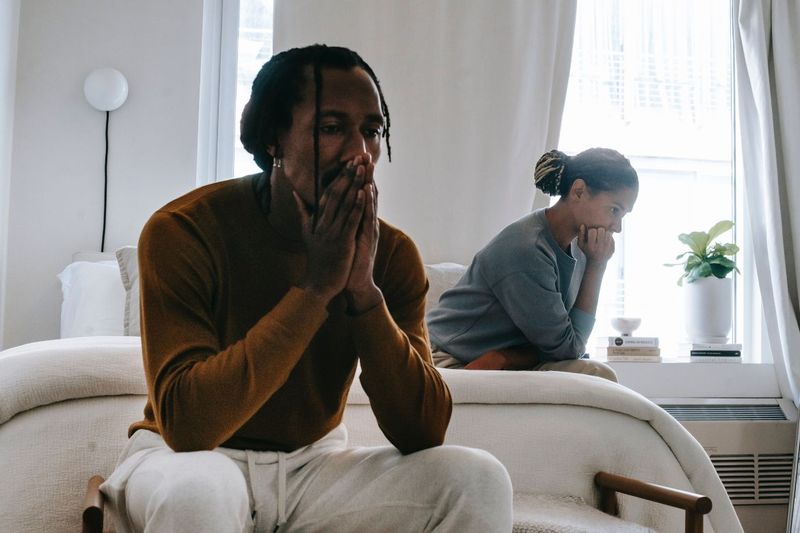
Somewhere between the first photograph and the tenth, a quiet question takes root: if he can look that happy, was it really that bad? Maybe you were too sensitive. Maybe you asked for too much. Maybe, somehow, the problem was you.
That particular wound is worth naming before anything else, because it shapes everything you believe about what you experienced.
His visible happiness with someone new offers you very limited information. It tells you that a new relationship exists and that it currently appears positive from the outside. A 2024 longitudinal study on relationship transitions found that people entering a new relationship reported higher satisfaction at the start of that relationship than they remembered feeling at the start of the previous one, and yet satisfaction still declined over time within both relationships. Early brightness is real.
It is also partial.
What those images cannot show you is how he handles accountability when something goes wrong, how he responds when a boundary is enforced, how he manages disappointment, conflict, or the quiet stretches when admiration naturally fades. Those are the conditions that reveal how a relationship actually functions. A romantic beginning, however genuine it feels to both people, does not carry that information yet.
This article will not tell you whether his new relationship will last or whether he has changed. Nobody outside that relationship can answer those questions honestly. What it can do is explain why a convincing beginning does not erase your story, why a label is less important than observable patterns, and how to redirect your attention from his new chapter toward your own safety and recovery. The new couple may currently feel genuinely happy.
That possibility does not threaten what you lived through. Your memory is not a verdict on their future.
Why a new beginning can feel so convincing

There is a reason a new relationship can look so effortless from the outside, and it has less to do with the specific people involved than with the conditions that new relationships naturally create. Early romance tends to produce heightened energy, focused attention, and a shared sense of possibility. Both people are typically presenting their most appealing selves, and neither has yet been tested by the ordinary friction of sustained closeness.
Research adds a more specific layer to this picture. A seven-study analysis on narcissistic traits and romantic outcomes found that narcissistic admiration, the side of narcissism associated with confidence, charm, and actively seeking positive attention, was linked to stronger initial romantic appeal. The antagonistic dimension, which includes rivalry, devaluation of others, and exploitative behavior, was more strongly associated with poorer longer-term relationship outcomes. In plain terms: the qualities that can make someone difficult to live with over time are not always the qualities that are visible at the beginning.
Pair that with what the 2024 longitudinal study showed about satisfaction in new relationships: people can enter a new relationship feeling more positive than they did at the equivalent stage of their previous one. That heightened sense of satisfaction is not a performance or a deception. It reflects something real about novelty, hope, and the absence of accumulated hurt. It is also not the same as long-term relationship health.
None of this is a formula for predicting how this particular relationship will unfold. These are group-level research findings, not a map of one specific couple. What they do offer is a way to understand why a convincing beginning is not the same as proof of a transformed person or a fundamentally different dynamic. Early appeal and lasting compatibility are simply not the same measure.
Time reveals what charm leaves out

Charm is genuinely useful at the start of a relationship. It opens doors, generates warmth, and creates the kind of early connection that makes two people want to spend more time together. The difficulty is that charm operates under optimal conditions: when both people are still presenting carefully, when conflict has not yet arrived, and when neither person has had to ask the other to be accountable for something that hurt.
The conditions that reveal a relationship’s actual functioning are different ones. Disagreement, enforced limits, reduced admiration, disappointment, and moments when one person asks the other to take responsibility for real harm – these are the tests that charm cannot substitute for. Longitudinal research on newlywed couples found that some narcissistic traits predicted steeper declines in marital satisfaction and increases in relationship problems across four years of marriage. The effects differed by gender and were not uniform across all participants, which means this is not a guaranteed outcome for every relationship.
But the finding does point to something worth understanding: certain patterns that may be invisible early on can become more apparent as the initial glow fades and real-life pressures accumulate.
Research reviews on narcissistic personality pathology also note that while these patterns tend to be persistent and relationally impairing, improvement is possible and generally gradual. No one outside a relationship can predict its trajectory, and that includes predicting this one.
The reason any of this matters for you is not so that you can wait for his new relationship to falter or monitor whether the patterns repeat. It matters because it explains why what you experienced over time, rather than at the beginning, may have been the more accurate picture. You are not misremembering because the beginning felt different from what followed. That gap between the beginning and what came later is exactly where the more important information lived.
A label cannot carry the truth of your story
At some point, many women in painful relationships reach for the word “narcissist” because it offers a framework that finally makes sense of the confusion. If he is a narcissist, then the manipulation was intentional, the gaslighting had a name, and the exhaustion was real rather than imagined. The label can feel like solid ground after years of being told the ground did not exist.
The clinical reality is more complicated. The American Psychiatric Association distinguishes ordinary narcissistic traits from narcissistic personality disorder, which requires a pervasive, persistent pattern of grandiosity, need for admiration, and lack of empathy that causes significant impairment across multiple areas of life. Diagnosing that disorder requires assessment by a qualified mental health professional. Behavior described in a relationship, social media posts, or an online checklist cannot establish it.
Mayo Clinic notes that narcissistic traits exist on a spectrum, and many people display some of these characteristics without meeting criteria for the full disorder. A partner who was selfish, dishonest, emotionally avoidant, or dismissive may have caused real harm without fitting a clinical diagnosis. The harm and the diagnosis are two separate questions.
Here is the distinction that actually matters for your story: you do not need a diagnosis to take what happened seriously. Manipulation is real without a label attached to the person doing it. Repeated devaluation, intimidation, isolation, and harm are worth addressing whether or not a clinician would assign a specific disorder to the person responsible. Shifting from “what is he?” to “what happened, and what did it do to me?” is not a retreat from the truth.
It is a more useful and more honest question, and it belongs entirely to you.
Observable patterns matter more than his new promises

One of the most disorienting things about a painful relationship is that it rarely looks alarming from the outside, and it often does not feel alarming at the beginning. What builds over time is a pattern: the slow narrowing of who you are allowed to be, the gradual erosion of your trust in your own perceptions, the way certain behaviors repeat with enough variation that each instance feels isolated rather than connected.
Observable patterns are more useful than a personality label when you are trying to make sense of what happened. The National Domestic Violence Hotline describes emotional abuse as a pattern that can include humiliation, name-calling, constant criticism, and behavior designed to make someone feel worthless. Warning signs of a controlling relationship can also include isolating someone from friends and family, monitoring their movements or communications, using jealousy to justify controlling behavior, and manipulation through affection or withdrawal of it.
Financial control, pressure or coercion around sex, threats, and gaslighting – consistently making someone doubt their own memory or perception – are additional patterns associated with coercive control. The CDC describes intimate partner violence as including psychological aggression, not only physical harm. CDC research on intimate partner violence and WHO guidance on violence against women both make clear that the absence of physical violence does not mean a relationship was safe. Psychological aggression and coercive control can cause serious harm on their own and may precede other forms of abuse.
Every relationship includes conflict and occasional selfishness. What separates ordinary difficulty from a sustained pattern of control is consistency, escalation, and the effect on the person experiencing it. No article can assess your situation from a distance. What it can do is offer you these patterns as a reference point, not a checklist for diagnosing him, but a way of seeing your own experience more clearly.
You do not need his relationship to collapse before you heal

Recovery is not a verdict. It does not require his new relationship to fail, for the new partner to eventually see what you saw, or for him to publicly acknowledge what happened. Waiting for any of those outcomes as a condition for moving forward ties your healing to events you cannot control and that may never arrive in the form you need.
Monitoring his social media, tracking what mutual contacts report, or measuring your own worth against the new partner’s visibility keeps you inside a comparison that was never a fair one. You are not competing for a prize that proves your experience was real. Your experience was real because you lived it, not because an outside outcome confirms it.
Research on new relationships and recovery adds a nuance worth acknowledging here. Studies on rebound relationships have found potentially adaptive effects in some circumstances, suggesting that new relationships can provide genuine support and improved well-being for some people. More recent research on relationship transitions similarly found that new relationships are not uniformly negative or deceptive. His new relationship may currently feel good to both people.
You can hold that possibility without it threatening what you know about your own experience.
Releasing the need to predict or monitor his new relationship is not the same as accepting that what happened to you was acceptable. It is choosing to stop spending your attention on a story that is no longer yours to carry. The more useful question is not whether his new chapter will eventually look like yours. It is whether you are safe, whether you have support, and whether you are free to build something that is genuinely your own.
If you are still exposed, let safety lead
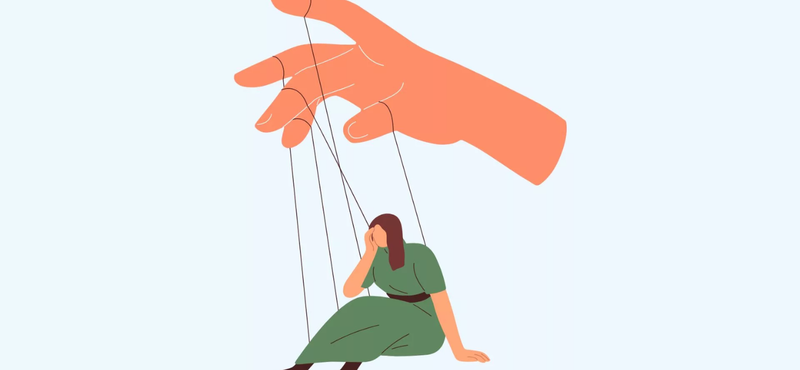
Not every reader of this article has fully separated from the person she is thinking about. Some women still share a home, children, financial accounts, or regular communication with a former partner. If that is your situation, the emotional questions in this article matter less urgently than one practical question: are you safe right now?
When ongoing contact or proximity is part of your reality, practical steps can reduce risk. The National Domestic Violence Hotline recommends identifying the safer areas of your home, knowing which exits are available, keeping a phone accessible when possible, and telling at least one trusted person what is happening. A personalized safety plan, built around your specific living situation and the specific behaviors you are managing, is more protective than general advice. The Hotline’s safety planning tool can help you build one step by step.
Some survivors find that documenting incidents helps them validate their own memories or prepare for legal or custody-related needs. The Hotline’s guidance on documenting abuse is clear that this step should only be taken when it is safe to do so. If an abusive partner discovers documentation, it can increase danger. Recording laws also vary by jurisdiction, so local legal guidance matters before you take that step.
If you are in immediate danger, please contact local emergency services first. The National Domestic Violence Hotline provides confidential support 24 hours a day, seven days a week, by phone, chat, and text, and is a US-specific resource. If you are in Germany, Austria, or Switzerland, the Hilfetelefon Gewalt gegen Frauen (08000 116 016) offers free, anonymous support around the clock. Reaching out to a local support service, a trusted friend, or a professional counselor is not a dramatic step.
It is a reasonable one, and it does not require you to have all the answers first.
Your life does not have to wait for proof

His apparent happiness with someone new cannot cancel your memories. It cannot retroactively make the confusion easier to carry, the isolation less real, or the slow erosion of your confidence something that did not happen. What he looks like in someone else’s photographs is not a measurement of what your relationship actually was.
You do not need him to fail, to return, or to confess in order to begin trusting yourself again. The more reliable question was never whether his new relationship would eventually look like yours. It was always whether you are safe, whether you have people around you who believe you, and whether you are free to build a life that reflects who you actually are rather than who you had to become to manage someone else’s reactions.
Healing does not follow a fixed schedule, and it does not require a particular outcome from him. Some days the comparison will sting less than others. Some days the photographs will not land the same way they used to. That shift does not come from proof.
It comes from gradually redirecting your attention toward your own experience, your own support, and your own next steps. Your story was real before anyone else confirmed it, and it remains real now, regardless of what his life looks like from the outside.