There is a joke that travels in quiet knowing looks between women of a certain emotional mileage: the older you get, the more you understand why witches moved to the woods. It lands because it is not really about witches or woods at all. It is about the specific exhaustion of being endlessly available to people who leave you feeling smaller, louder, and less like yourself. If that sentence just described your Tuesday, keep reading.
The witch in the woods is a metaphor for finally being left alone
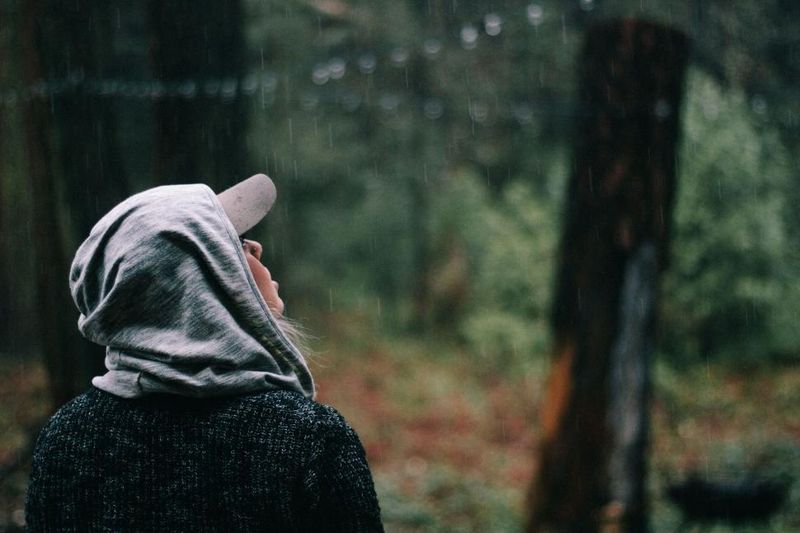
Before anything else: the title is a metaphor, and a satisfying one. The witch in the woods is not a literal historical figure who packed her cauldron and relocated to a pine forest to escape her HOA. She is a feeling. She is the version of you that has finally stopped picking up every call, explaining yourself to people who were never really listening, or shrinking to fit a room that was never built for you.
Scholarship on fairy tales and folklore describes the forest as a recurring cultural image for places beyond familiar social order, a setting where women perceived as independent, secretive, or simply inconvenient to categorize were imaginatively placed by storytellers. Research on witches, women, and the woods describes this as a cultural motif, not a record of where women actually went. The woods, in other words, were where the story put her when it did not know what else to do with her.
That is the part that resonates. Not the forest specifically, but the idea of a place where no one can interrupt you mid-sentence, ask you to manage their feelings, or expect you to be smaller than you are. The fantasy is about autonomy. It is about relief.
A peer-reviewed review of solitude research finds that voluntary aloneness can support self-direction and a stronger sense of agency, which is a clinical way of saying: sometimes being left alone feels like breathing again.
This is not an age-based rule. Not every woman reaches a birthday and suddenly craves a cabin. The fatigue beneath the joke is not about years; it is about accumulated experience with people who treat your peace as a resource they are entitled to drain.
Folklore put witches in the woods; history offers a more local picture
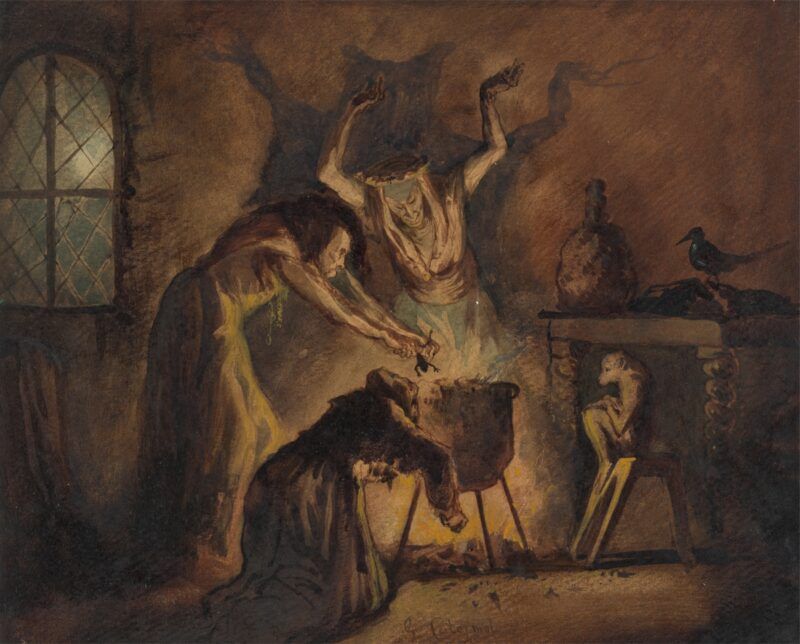
Fairy tales gave the witch a cottage in the woods and a bubbling pot. That image is so durable that it can feel like history. But the historical record is more complicated, and more sobering, than the folklore.
Scholarship examining witches, women, and the cultural role of forests treats the woodland witch as a recurring storytelling device for representing female otherness, secrecy, and danger beyond the familiar social world. That is a very different thing from evidence that accused women actually lived in forests. Many of the women and men prosecuted for witchcraft were ordinary members of their communities. Historical Association evidence on English witch trials connects many accusations to neighbor disputes, poverty, begging, illness, and conflicts within close-knit villages.
The accused were often known to their accusers. Intimately known.
Historians examining women and witchcraft in early modern Europe have shown that gender expectations shaped who got accused. Women perceived as threatening, socially deviant, or simply inconvenient to existing power structures were vulnerable. The witch figure absorbed anxieties about women who did not comply with what was expected of them. That much, at least, maps cleanly onto the modern metaphor.
What does not map cleanly is the outcome. Witch-hunt imagery should not be used casually to suggest that accused women were simply independent spirits who successfully escaped patriarchy on their own terms. Scholarship on women as witches is clear that real people were prosecuted, imprisoned, tortured, and executed. Salem alone involved more than 150 people jailed and 20 deaths among those prosecuted.
The forest fantasy is a useful emotional shorthand, but the history behind it deserves more than a wink.
She may want distance from demands, not distance from love

Here is what the fantasy is actually about, most of the time: not people, but the specific weight of being needed in ways that leave nothing left over for yourself. The wish to disappear into the woods is rarely about hating everyone you know. More often, it is about one person who calls only when something is wrong, or a dynamic where your job is to absorb and never be absorbed, or the chronic low hum of being available to everyone except yourself.
Wanting distance from demands is not the same as wanting to end every relationship you have. A boundary that says “I am not available for this particular kind of noise” is not a declaration that love is over. It is closer to the opposite: protecting your capacity to actually show up for the people and things that matter. Research on solitude and agency distinguishes between voluntary withdrawal that supports selfhood and enforced disconnection that produces distress.
One feels like relief. The other feels like punishment.
The WHO’s work on social connection distinguishes between the quality and the quantity of relationships, a reminder that fewer connections that feel genuinely safe can be more sustaining than many connections that feel like obligations. Wanting fewer interruptions can coexist with caring about specific people. The reader who fantasizes about a cabin in the woods is not necessarily asking for no one. She may be asking for a little more say over who gets through the door.
The National Institute on Aging is careful to separate the experience of choosing to be alone from the distress of feeling isolated. Those are meaningfully different experiences, and the line between them is worth knowing.
Chosen solitude can restore a sense of self
Solitude and loneliness sound like they belong to the same family, but they work very differently. Loneliness is the distressing feeling that your relationships are not enough, that you are cut off from people who matter. Research on social isolation and loneliness treats them as distinct experiences that can overlap but should not be conflated. Solitude, at its best, is chosen.
It is the hour you protect so you can think a complete thought, make a decision without input from nine people, or simply exist without performing anything for anyone.
A peer-reviewed review on solitude as a positive experience finds that voluntary aloneness can create room for freedom, self-direction, creativity, and authenticity. The same review notes that enforced or unwanted solitude can produce negative emotional states. The difference is consent. Solitude you choose feels like space.
Solitude that is imposed or driven by fear, depression, or painful disconnection feels like confinement.
A practical way to assess where you are: notice how the alone time feels and what it enables. Do you come out of it more like yourself, clearer, a little more grounded? That tends to be the restorative kind. Or do you come out of it more anxious, more convinced that no one would notice if you disappeared entirely?
That is a different signal, and it points toward connection or support rather than more withdrawal.
The WHO’s framework on social connection and guidance from the National Institute on Aging both emphasize that meaningful connection, even with a small number of trusted people, matters for well-being. Wanting quiet is not the same as needing no one. The goal is not to eliminate people; it is to stop letting the wrong ones set the terms.
Nature may ease stress or lift mood for some people
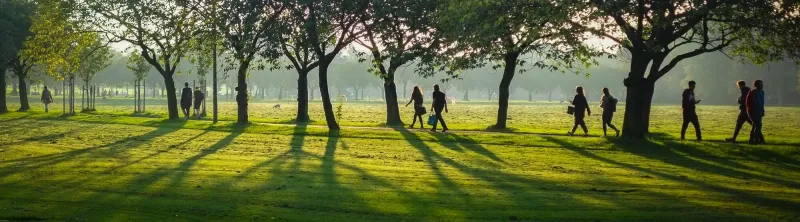
There is something genuinely appealing about the idea that trees are doing the therapeutic work while you just stand there. The research is more measured than that, but it is not dismissive either. Studies on forest bathing and psychological well-being report possible short-term reductions in perceived stress, anxiety, depressive symptoms, or negative mood for some participants after spending time in natural settings. The word “possible” is doing real work in that sentence.
Studies differ considerably in how long participants spent outside, what they were compared against, who was included, and how outcomes were measured.
Systematic reviews of nature exposure therapies note that while results are often promising, the evidence base has real methodological variation, which means confident universal claims about what nature does to the body or mind are not yet supported. What contributes to feeling better after a walk in the park is likely a combination of things: movement, sunlight, time away from your phone and inbox, lower expectations on you in that moment, and yes, contact with green space.
Research on the effectiveness of nature-based interventions on mental health covers a range of activities, including walks, gardening, and horticulture, not only remote forest immersion. That is worth holding onto. You do not need to find a forest to get some version of the benefit. A park, a garden, a patch of grass with no one asking anything of you, can offer similar opportunities for decompression.
Nature is not a cure for anything clinical, and a walk among trees is not a substitute for medical or psychological care when that care is needed. Associations between nature exposure and health outcomes suggest modest, real benefits for some people in some circumstances. That is enough to make it worth trying, without overpromising what it will deliver.
Protecting her peace starts with smaller exits than disappearing
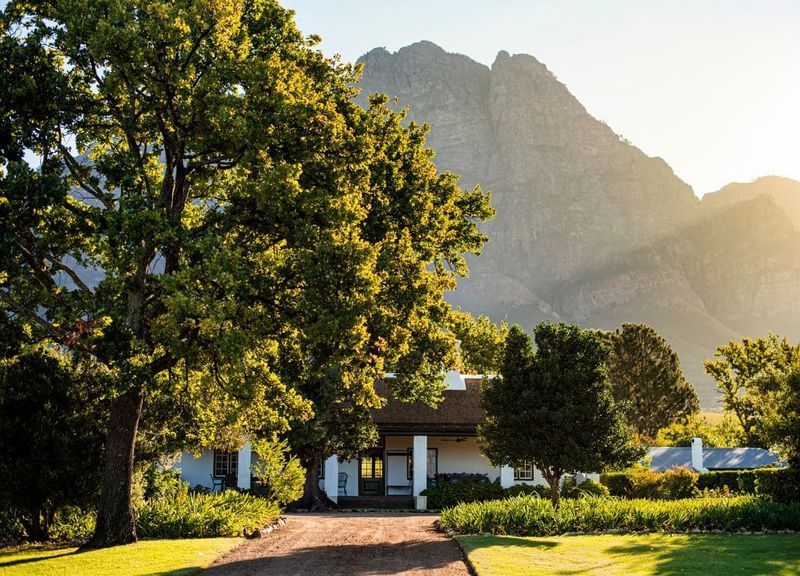
The full fantasy involves a cottage, probably some chickens, and a gate with a very clear sign. The practical version is an hour on a Tuesday where no one needs anything from you. Both count. Start with the hour.
Translating the witch-in-the-woods feeling into something livable does not require dramatic exits. It requires experiments: silence your notifications for a defined stretch of time, take a walk in a nearby park without a podcast filling every second, tend a plant or a garden bed, decline one obligation this week that you accepted out of habit rather than genuine care. These are not prescriptions. They are small tests of what actually helps you feel more like yourself.
Nature-based interventions include walks, gardening, and time in green spaces, not only remote wilderness. If an actual woods outing appeals to you, plan it with some care. The National Park Service recommends carrying ten essentials including navigation, water, a light source, first aid, and insulation, and choosing a route appropriate to your fitness and experience. Check weather and any trail alerts before you go.
NPS trip planning guidance advises telling a trusted person your itinerary and expected return time, because cell service in wooded areas is often unreliable. Hiking safety recommendations include staying on marked trails where possible, and CDC guidance on preventing tick bites recommends using EPA-registered repellent, considering permethrin-treated clothing, and checking your skin and clothing for ticks after any outdoor exposure in wooded or grassy areas.
One distinction worth making clearly: if the urge to disappear feels less like wanting quiet and more like persistent hopelessness, fear, or an inability to imagine functioning around people at all, that is not the witch fantasy. That is a different kind of pain, and it deserves support, not romanticization. The WHO and National Institute on Aging both note that painful disconnection is worth addressing with trusted people or professional support, not sitting with alone.
The real power is choosing who gets access to her peace

The witch in the woods, as a feeling, is not about hating people. She is about no longer confusing endless access with love, or constant availability with goodness, or saying yes to everything with being a person of value. She has simply decided that her peace is not a public utility.
Solitude research frames voluntary aloneness as an expression of agency, a choice made toward something rather than away from everything. That framing matters. The goal is not to sever every bond and move somewhere with no Wi-Fi. The goal is to be intentional about who and what gets your attention, your energy, and your calm.
Some relationships will make that list easily. Others may not survive the honest review, and that is allowed too.
Social connection research consistently finds that quality matters more than quantity, that a few relationships where you feel genuinely seen and safe are more sustaining than a full calendar of people who leave you depleted. Restorative solitude and meaningful connection are not opposites. They can share a life.
So: what are you actually trying to escape? What kind of quiet would feel like relief rather than loss? And which relationships, if you are honest, still feel safe enough to keep? Those questions are worth more than any fantasy about a cottage.
The real power was never in the woods.