
Society has long treated marriage as the finish line for a woman’s life, as if everything before it is just waiting. But a growing number of women are asking a harder, more honest question: does a relationship actually make my life better, or does it just make it look more complete? The answer depends far less on whether you have a husband and far more on what your daily life actually feels like inside that relationship. Understanding the difference can change the way you see your own choices.
Marriage Status Does Not Tell the Whole Story

For generations, marriage has been sold as the natural destination of a woman’s life. A ring on your finger was supposed to signal that you had arrived somewhere worthy, that your story had found its proper shape. Pressure like that is real, and if you have ever felt quietly judged for being unmarried, or quietly doubted your own choices because of it, that pressure has a name: it is a cultural script, not a personal verdict.
Here is what the research actually shows. Studies that compare married and unmarried adults often find that married people report, on average, higher life satisfaction and lower mortality rates. But those averages carry a serious limitation. Research on marriage and well-being consistently notes that healthier, wealthier, and more socially connected people are already more likely to marry in the first place, which means the group called “married” is not a random sample.
Some of the apparent benefit of marriage may reflect who marries, not what marriage does.
The category “without a husband” is equally complicated. Never-married women, divorced women, widows, women who are separated, women who are cohabiting, and women who are intentionally single all land in the same statistical bucket, but their financial circumstances, emotional lives, and daily realities can look completely different. Recent descriptive research on single adults found that single women reported slightly higher relationship-status satisfaction and life satisfaction than single men, but that study does not compare single women with married women or prove that being single caused those outcomes.
What relationship quality research does show clearly is that the conditions inside a relationship, including safety, fairness, respect, and genuine support, matter in ways that a marriage certificate alone cannot reveal. That is the comparison worth making. Not married versus unmarried, but: what does your actual life feel like, and does the relationship you are in support or subtract from that?
A Full Love Life Can Exist Outside Marriage

Love does not live only inside a marriage. That sounds obvious when you say it plainly, but the cultural message most women absorb is that romantic partnership, specifically a husband, is the primary container for love in an adult life. Everything else, friendships, family, community, your children, your work, even your relationship with yourself, gets treated as secondary.
The evidence pushes back on that hierarchy. A 2023 Pew Research survey found that 61% of U.S. adults said having close friends is extremely or very important to living a fulfilling life, compared with just 23% who said the same about being married. Most adults who reported having close friends said they were highly satisfied with those friendships. That is not a small or incidental finding.
For many people, friendship is already doing more emotional work than the institution of marriage is credited for.
A woman can build belonging through close friends, siblings, parents, neighbors, faith communities, colleagues, children, pets, and the kind of chosen family that forms around shared history and mutual care. None of those connections require a husband to be real, deep, or sustaining. The research on social support and well-being supports building multiple, dependable sources of connection rather than concentrating everything in one relationship.
That said, none of this proves that single women have more love than married women. Longitudinal studies on singlehood show that life satisfaction and connection can shift over time for anyone, regardless of relationship status. Loneliness is possible in a marriage and possible while living alone. The practical point is not that one path delivers more love than the other.
It is that love has many forms, and maintaining strong social connections matters for your well-being whether you are partnered or not.
Freedom Means Being Able to Act Without Fear

Autonomy is not a feeling. It is a set of practical conditions. You have it when you can move through your own life without having to calculate the emotional cost of every small decision. You lose it, gradually or all at once, when another person’s reactions start to govern what you say, where you go, who you see, how you spend money, or whether you feel safe saying no.
A useful way to assess your own situation is to ask concrete questions. Can you spend time with friends without being questioned or punished afterward? Can you make ordinary daily decisions without fear of how your partner will respond? Can you set boundaries, sexual, emotional, or practical, and have them respected?
Can you access money and financial information independently? Can you disagree openly without intimidation, threats, or prolonged punishment?
Guidance on healthy relationship boundaries describes these as basic conditions of a respectful partnership, not extraordinary demands. When those conditions are absent, and when a partner instead uses isolation, monitoring, financial control, threats, or repeated humiliation to manage your behavior, that pattern has a name in public health: coercive control. CDC guidance on intimate partner violence identifies psychological aggression, controlling behaviors, and financial abuse as forms of harm that exist alongside or in place of physical violence.
The Department of Justice recognizes a pattern of behavior used to gain or maintain power and control over an intimate partner as domestic violence, even when no physical assault has occurred. Naming these behaviors matters because control can feel so ordinary from the inside that it becomes invisible.
Marriage itself does not cause control. Many married women have full autonomy. And being unmarried does not automatically produce freedom, especially for women managing children, financial dependence, disability, or housing instability alone. CDC relationship health resources frame freedom in a relationship as the presence of mutual respect and shared decision-making, not the absence of a partner.
An Unfair Division of Work Can Undermine Well-Being

One of the most concrete ways a partnership can quietly drain a woman’s energy is through an unequal division of household work. This goes beyond who does the dishes. It includes scheduling, planning, remembering, anticipating, coordinating, and carrying the awareness of what needs to happen next, often called the mental load. When one person in a partnership absorbs most of that responsibility, the weight accumulates in ways that are hard to name but easy to feel.
Research on gendered household labor links a disproportionate domestic burden for women to stress, burnout, role overload, depressive symptoms, and poorer relationship functioning. A more recent study on the mental load found that women continue to carry a larger share of household cognitive labor, including planning and monitoring tasks, even in dual-income households. That invisible labor has visible consequences for well-being.
Current U.S. time-use data show that women overall spend more time on household activities than men. These numbers do not prove that every married woman has less free time than every single woman, but they support taking the question of unpaid labor seriously rather than treating it as a personal complaint.
Some couples do divide labor equitably, and the distribution of household responsibilities can shift as circumstances change, through negotiation, life transitions, or deliberate effort. Pew Research on earnings parity in marriages shows that more couples now share financial responsibility, which can open the door to more equitable conversations about unpaid work too. The problem is not marriage as an institution. The problem is when the labor is lopsided and that imbalance is treated as natural, permanent, or not worth discussing.
Relationship Quality Adds Essential Context to Well-Being

Population studies that compare married and unmarried adults tend to find a marriage advantage on average, but that average conceals a wide range of experiences. A supportive, respectful marriage can genuinely contribute to a person’s well-being. Research on marital quality and health found that higher marital quality is associated with better psychological well-being and physical health outcomes, while marital strain, including chronic conflict, criticism, or emotional withdrawal, is associated with worse health trajectories over time.
A separate line of research reinforces the same point from the other direction. Studies on marital strain and health show that the stress of a troubled relationship can affect cardiovascular, immune, and mental health in measurable ways. Being in a difficult marriage is not the same as being in a good one, and treating them as equivalent because both carry the same legal label misses the most important variable.
The recent study that found single women reported slightly higher life satisfaction and relationship-status satisfaction than single men is worth understanding carefully. That research is primarily descriptive, the observed differences were statistically significant but generally small, and it compared single women with single men rather than with married women. It does not prove that being single causes greater well-being.
At the population level, research on marriage and mortality and CDC mortality statistics by marital status generally show lower mortality among married adults. But those comparisons reflect selection effects as well as any protective benefit marriage may provide. Healthier and more financially stable people are more likely to marry, so the groups are not equivalent before marriage even begins. What all of this evidence points to is that relationship quality is a major factor in your well-being, and marital status alone cannot tell you whether a relationship is helping or harming you.
Singlehood Is Common, but It Is Not Financially Simple
Living without a husband is not a niche or unusual choice in the United States anymore. 2024 Census data show that 34% of adults age 15 and older had never married, and one-person households made up 29% of all U.S. households. Those numbers reflect a genuine shift in how American adults are structuring their lives, not a statistical anomaly or a temporary trend.
But normalizing singlehood is not the same as pretending it is financially effortless. Pew Research on wealth among unmarried adults found that single mothers had substantially less retirement savings than unmarried women without children, and that unmarried women overall face real wealth and income gaps that deserve honest acknowledgment.
Single women, particularly those raising children, may carry housing costs, childcare, healthcare, and retirement planning entirely on one income. Caregiving for aging parents often falls disproportionately on unmarried daughters. Disability, limited work history, or gaps in employment can compound those pressures significantly. None of this means a woman should stay in a harmful relationship for financial reasons, but it does mean that anyone thinking seriously about her life path deserves an honest picture of the economic terrain.
Practical support exists. Legal aid organizations, financial counselors, community resources, and workplace benefits can help address some of these gaps. Building financial literacy, an emergency fund, and independent credit history are concrete steps available to women in any relationship status. The point is not to make singlehood sound frightening, but to make sure the conversation about it is complete.
Ask Whether Your Relationship Supports the Life You Want
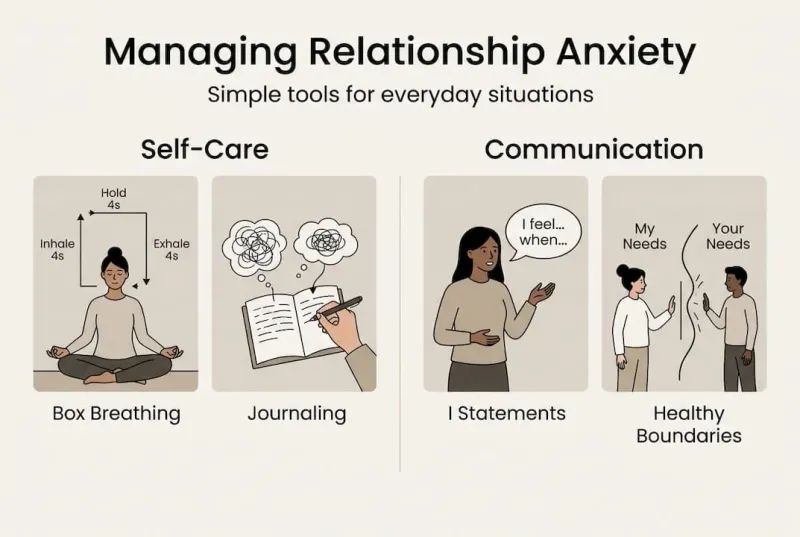
Rather than asking whether you should be married or single, a more useful question is whether your current relationship, or any relationship you are considering, actually supports the life you want to live. That question does not have a single right answer, and no article can answer it for you. But there are practical things you can look at honestly.
CDC relationship health guidance and public health frameworks for healthy relationships identify respect, honest communication, mutual empowerment, physical and emotional safety, and shared responsibility as the foundations of a relationship that supports well-being. These are not romantic ideals. They are observable, day-to-day conditions.
Ask yourself what the patterns actually look like. When you disagree, does your partner engage or shut down, criticize or listen? When you need time for yourself, friends, or your own goals, is that treated as reasonable or as a problem? When something goes wrong in the household or with the children, is responsibility shared or assigned?
When you set a limit on something, sexual, emotional, or practical, is it respected or tested? Guidance on boundaries in relationships frames these not as demands but as basic conditions for mutual respect.
Focus on behaviors rather than labels. A partner who regularly dismisses your feelings, tracks your location without consent, controls access to money, or makes you feel afraid to speak honestly is showing you something important through those actions. You do not need a clinical term to recognize that a pattern of behavior is harming you.
Research on marital quality shows that the quality of a relationship, not its legal form, is what predicts well-being over time. These reflective questions are not a test your marriage must pass or fail. They are a way of seeing your situation more clearly so that whatever you decide, you are deciding from an honest place.
Safety Comes Before Any Decision to Leave

Ordinary unhappiness in a relationship and genuine danger are not the same thing, and they call for different responses. If what you are experiencing is dissatisfaction, growing apart, or an unequal division of labor, you have time to reflect, talk, seek counseling, or make a considered decision. But if what you are describing involves physical or sexual violence, stalking, intimidation, threats, isolation from people who care about you, monitoring of your phone or location, manipulation that leaves you questioning your own judgment, or control over your access to money, those are warning signs that require a different kind of attention.
CDC guidance on intimate partner violence recognizes all of these behaviors as forms of abuse. Leaving an abusive relationship can be the most dangerous moment in that relationship. An impulsive exit, or a confrontation without a plan, can escalate risk rather than reduce it.
If any of these patterns feel familiar, the most important first step is confidential, individualized safety planning with someone who understands the specific risks involved. The National Domestic Violence Hotline offers safety planning resources for people still living with an abusive partner. A domestic violence advocate, a trusted person outside the relationship, a shelter, or a legal-aid provider can help you think through your specific situation without pressure to act before you are ready.
The Department of Justice Office on Violence Against Women provides resources for survivors navigating legal, housing, and safety needs. You do not have to be in physical danger to reach out, and you do not have to have a plan before you make a call. Getting information is a safe and private first step.
A Meaningful Life Does Not Require One Marital Outcome

The honest promise underneath this article’s original title is real, even if the broad comparison it implies is not. You do not need a husband to have love in your life. You do not need a husband to feel free, to find joy, or to build something meaningful. Women are doing exactly that, through friendships, community, work, children, chosen family, and a daily life shaped around their own values.
What research on relationship quality and data on the importance of close friendship both point toward is that the quality of your connections matters more than their legal form. A good marriage can be a genuine source of support, companionship, and well-being. A difficult one, marked by disrespect, control, chronic conflict, or an unfair burden of labor, can quietly cost you more than you realize.
The standards worth applying are not about whether you are married or single. They are about whether the life you are living, or the relationship you are in, offers you safety, fairness, genuine connection, and room to be yourself. Those standards can guide reflection without dictating a single answer, because the right answer depends on circumstances only you fully know. A complete life is built from the inside out, not from a status.