
You spent an hour typing out exactly what happened, what you meant, and why you were hurting. He came back with one line that made you feel like the problem. If you have started sending shorter replies or no reply at all, that change does not make you cold – it may mean you finally noticed that more words were not bringing more understanding.
When More Explaining Stops Feeling Like Communication

Somewhere along the way, the conversations shifted. You would write out a careful, honest account of what happened – what you said, what you meant, how it landed – and instead of feeling heard, you would end the exchange more confused, more blamed, or more certain that something you shared had been turned around on you. That feeling of dread before hitting send is worth paying attention to.
Long texts are not a sign of weakness or neediness. Many people write at length because they are trying to resolve something real, because distance makes a phone call harder, or because they want to be precise. The length of a message does not reveal a flaw in the person who wrote it.
Stopping, though, does not reveal a flaw either. Reduced communication may reflect exhaustion from conversations that go nowhere, a quiet decision to protect yourself, fear of how your words might be used, or simply a preference for saying less. None of those reasons make you cold or indifferent.
The qualified premise here is important. CDC guidance on intimate partner violence recognizes psychological aggression as communication intended to harm a partner emotionally or to exert control. In a repeated pattern like that, additional personal detail may not produce understanding – it may provide more material for an existing dynamic. But this article cannot know your partner’s private motive from texting behavior alone, and a single misunderstanding or frustrating argument does not establish that pattern.
What it can do is sit with you in the moment you recognized that explaining yourself harder was not making things better. The National Domestic Violence Hotline notes that there may be no communication strategy capable of making an abusive partner truly understand or stop. That is a heavy thing to absorb, and it matters that you give yourself room to absorb it honestly.
Look at the Pattern Before Reaching for a Label
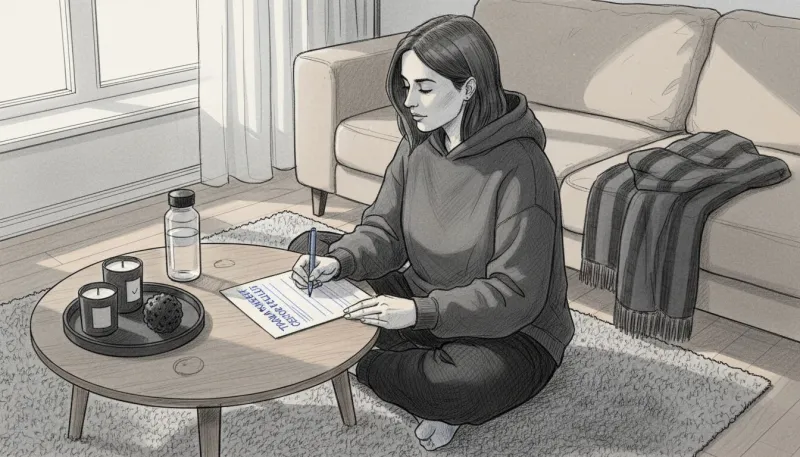
One argument where he misunderstood you is not abuse. One defensive reply, one unanswered text, one conversation where he refused to admit he was wrong – those things can be genuinely painful and still fall inside the range of ordinary conflict. Couples can have poor listening habits, incompatible ways of expressing frustration, or deeply different ideas about what an apology should sound like. That does not automatically make a relationship dangerous.
The sharper concern appears when a pattern forms. CDC data on intimate partner violence describes abuse as involving repeated behaviors – humiliation, intimidation, threats, monitoring, isolation, retaliation, or deliberate control – not a single incident. When those behaviors show up consistently, when you notice them cycling in predictable ways, that is a different situation than a rough patch.
The word “narcissist” gets used loosely in relationship conversations, and it is worth slowing down with it. According to the American Psychiatric Association, narcissistic personality disorder is a clinical diagnosis involving a pervasive pattern of grandiosity, a persistent need for admiration, and a lack of empathy – not a label that applies to every selfish, dishonest, or defensive partner. Abuse can happen without that diagnosis, and someone with narcissistic traits is not automatically abusive. Applying the label does not protect you; recognizing the behavior does.
Rather than reaching for a broad term like “gaslighting,” try naming the specific behavior you observed. A 2025 systematic review on gaslighting in gender-based violence found the term is inconsistently defined and overlaps with several forms of psychological manipulation – which means using it as a catch-all can actually make it harder to see what is happening clearly. More useful questions are: Does he deny events you both experienced? Does he rewrite conversations after the fact?
Does he use something you shared in confidence to discredit you later? Those specific behaviors are what matter.
How Personal Disclosures Can Become Leverage

Picture sending a long message where you explained that you felt dismissed during an argument last week. You were careful with your words. You named your feelings without accusing. A few hours later, he brings up that same message – not to acknowledge what you said, but to point out one sentence that, taken alone, sounds like you admitted fault.
The rest of what you wrote has disappeared from the conversation.
That is one way personal disclosure can shift from communication to leverage. A controlling or psychologically aggressive partner may isolate a single phrase from a longer explanation, deny the broader event that prompted it, reinterpret your feelings as evidence of your instability, or use your effort to clarify yourself as proof that you were the problem all along. Your attempt to be understood becomes material for blame.
This does not mean your explanation caused the manipulation. CDC resources on intimate partner violence communication make clear that psychological aggression is a choice made by the person using it – not something provoked by the other partner’s honesty or effort. The responsibility for that behavior belongs entirely to the person engaging in it.
The World Health Organization recognizes psychological abuse as a form of violence against women, including behaviors that humiliate, threaten, or control. When personal disclosures are consistently used in those ways – to discredit, to threaten, to shift blame – the pattern is recognizable even when no single incident feels dramatic enough to name.
What changes is not that you become less honest. What changes is that you recognize more words are not closing the gap. The Hotline’s overview of abuse types includes emotional and psychological abuse that involves using your own words and feelings against you. Seeing that pattern for what it is does not require certainty about his motives – it only requires paying attention to what keeps happening.
When Digital Communication Joins the Control

The conversation does not always stay inside the text thread. Sometimes the concern is not just what you said in a message – it is who has access to your phone, your accounts, your location, your call history, or your cloud storage. When a partner is monitoring those things without your knowledge or consent, a long text carries risks that go beyond its words.
CDC guidance identifies monitoring or interfering with electronic communications as a recognized form of coercive control. That can include checking your messages, tracking your location, accessing your accounts, controlling which apps you use, or using shared phone plans to watch your call activity. The abuse is not in the content of the text – it is in the surveillance surrounding it.
Research has documented how broadly this kind of abuse can extend. A scoping review on technology-facilitated abuse in intimate relationships found that tactics include harassment, surveillance, unauthorized account access, threats sent through digital channels, and other controlling behaviors carried out through technology. A separate review on technology-facilitated intimate partner violence reinforces that these patterns are consistent and recognizable across relationships where control is present.
A delayed reply, a read receipt left unanswered, or a single heated argument over text does not establish any of this. The concern becomes clearer when digital tools are consistently used to track, check up on, punish, or expose – when your phone feels less like a way to stay connected and more like something being used against you.
Recognizing that dynamic changes what a message means before you send it. You might find yourself rewriting sentences, deleting details, or choosing not to respond at all – not because you have nothing to say, but because you have learned that the channel itself is not private. That awareness is not paranoia. It is information.
A Shorter Reply May Protect Her Energy, Not Punish Him
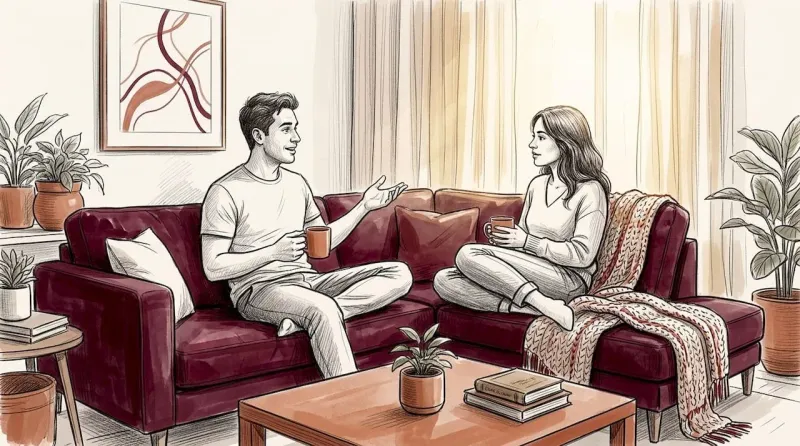
Sending a two-word reply when you used to send twelve paragraphs is not the same as shutting someone out. For some women, shorter messages represent a deliberate decision to limit how much they expose in a dynamic where more detail has repeatedly led to more confusion, more blame, or more fear. That decision can come from exhaustion, from self-awareness, or from a quiet recognition that the long version was not working.
The National Domestic Violence Hotline states plainly that you do not owe an abusive partner an extended explanation, a debate, or a response capable of making him understand. Trying harder to explain yourself in a pattern of psychological aggression or coercive control does not produce the mutual understanding you are hoping for – and it may provide more material for the existing dynamic.
When communication remains necessary – about children, shared housing, finances, work, or legal matters – brief, factual, topic-limited messages are one possible approach. Sticking to what needs to be decided, without adding emotional context or personal history, can reduce the surface area available for reinterpretation. This is practical, not punitive. It is not a method designed to hurt him; it is a way of managing what you share when the channel has proven unsafe.
At the same time, brevity is not a guaranteed solution. The Hotline’s resources on types of abuse acknowledge that a controlling partner may find ways to use silence, short replies, or a lack of response as evidence of something to hold against you. Blocking, going no contact, or suddenly withdrawing from communication can also create risk in some situations. Hotline guidance on stalking safety planning notes that actions meant to create distance can sometimes escalate a partner’s behavior rather than de-escalate it.
What that means practically is that the right communication choice depends on your specific situation – not on a universal rule about what cold silence or warm explanation signals about you as a person.
She Does Not Have to Prove Her Reality in Every Exchange

At some point, explaining yourself stops being about communication and starts being about survival – the hope that if you just find the right words, he will finally acknowledge what happened, validate what you felt, or take some accountability. That hope is understandable. It is also exhausting when the fair hearing never comes.
Over-explaining in that context is not a personality flaw. It is often what happens when someone keeps trying to reach a person who has repeatedly refused to meet them. The effort reflects how much you cared about the relationship, not how broken your communication style is.
Deciding to stop – or to say less – can be a self-protective boundary rather than a punishment. There is a real difference between choosing not to re-explain something you have already said clearly and trying to control how your partner behaves. One is about managing your own exposure; the other is a form of manipulation. You are allowed to stop performing emotional labor that produces no result without that choice being weaponized as evidence that you are cold or checked out.
Couples counseling sometimes comes up here, and it deserves a direct note. The Hotline’s guidance on couples therapy with an abusive partner is clear: when a power imbalance and abusive behavior are present, joint therapy may not be safe or effective. Disclosures made in that setting can be used against you later, and the structure of couples counseling assumes a level of equality that may not exist. That caution does not apply to every difficult relationship, but if you have recognized a pattern of control or manipulation, it is worth weighing carefully before booking a session together.
You are the one who knows whether you are facing a rough communication patch or something that has been wearing you down for much longer. The Hotline affirms that there is no obligation to keep trying to reach someone who consistently refuses accountability.
Put Safety Before Screenshots, Silence, or Leaving

Practical steps matter, and so does the order you take them in. Before deciding what to save, what to say, or what to change about your communication, the first question is whether any of those actions could alert your partner or increase your risk. Safety is not a step you take after everything else – it is the frame around every other decision.
Threatening texts, emails, voicemails, call logs, and social-media messages can help establish a pattern over time. The Hotline’s guidance on documenting abuse recommends saving messages that include threats, insults, or controlling language, and capturing screenshots that include identifying information, dates, and times when possible. Their case-building resource notes that documentation may help establish a pattern for legal or safety purposes – but it should be stored somewhere your partner cannot access, whether that means a separate email account he does not know about, a device he does not share, or a cloud folder secured with a password he has never seen.
Screenshots are not automatically admissible in court. Recording laws vary by state, and what counts as usable evidence depends on the jurisdiction and the type of proceeding. A domestic-violence advocate or legal professional familiar with your state’s rules is a better guide than a general article.
Digital safety runs alongside documentation. The Hotline’s tech safety guidance covers steps like clearing search history, reviewing which accounts are linked to shared devices, checking whether location sharing is active, and reaching out to an advocate from a device or account your partner does not monitor. Small digital habits can reduce exposure before any larger decision is made.
Blocking, confronting him with evidence, going silent, or leaving are not universally safe choices. The Hotline’s safety planning resource exists precisely because the right steps depend on your specific circumstances – whether there are children involved, shared finances, immigration concerns, a history of threats, or patterns of surveillance. Confidential advocacy can help you think through what is safest for your situation rather than following a generic script.
Let the Relationship Pattern, Not His Accusation, Guide Her Next Step

Stepping back from long explanations may simply mean you noticed that more words were not creating safety, accountability, or any real sense of being heard. That recognition is not coldness. It is not cruelty. It may be the first honest assessment you have allowed yourself about what has actually been happening in your exchanges.
Reduced communication on its own cannot tell anyone your motive or prove what kind of relationship you are in. You might be protecting yourself from a pattern of psychological aggression. You might be setting a practical limit after years of conversations that left you more depleted than understood. You might be exhausted, or grieving, or simply done performing a version of openness that was never received well.
All of those are real possibilities, and none of them make you the problem.
What the pattern of the relationship can tell you – over time, across repeated incidents – is whether you are facing ordinary conflict or something that involves control, monitoring, retaliation, or deliberate manipulation. That distinction matters for every decision that follows, including whether to keep communicating, how to document what has happened, and what kind of support would actually help.
If you recognize threats, surveillance, retaliation, or coercive control in what you have been living with, personalized safety planning through the National Domestic Violence Hotline is a more useful next step than a universal instruction to go silent, block him, or leave today. The Hotline is also clear that you are the expert on what is safe in your own situation – not a blog post, and not his version of events. The quieter you have become may not be a retreat. It may be the first thing you have done entirely for yourself.