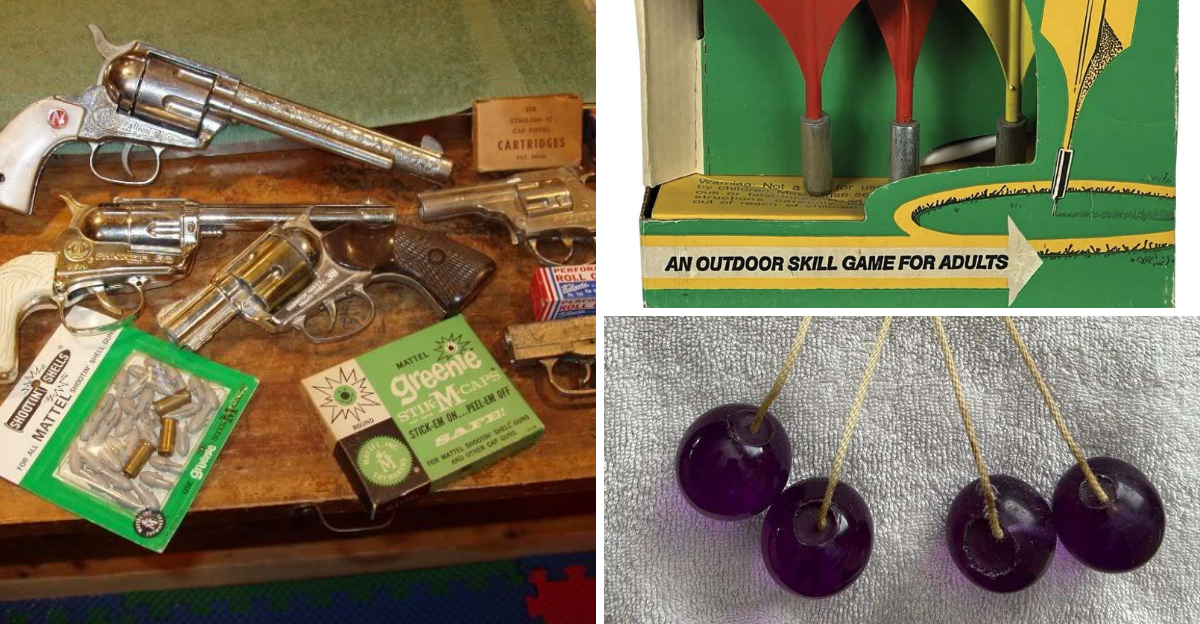
The 1980s were a golden age for toys – bright, bold, and built with almost zero concern for safety. Kids were handed lawn darts, toxic bubble kits, and scalding hot molds alongside smiles and zero warning labels.
Most parents had no idea what they were actually putting under the Christmas tree. Looking back, it’s remarkable that any of us survived childhood at all.
Lawn Darts (Jarts)
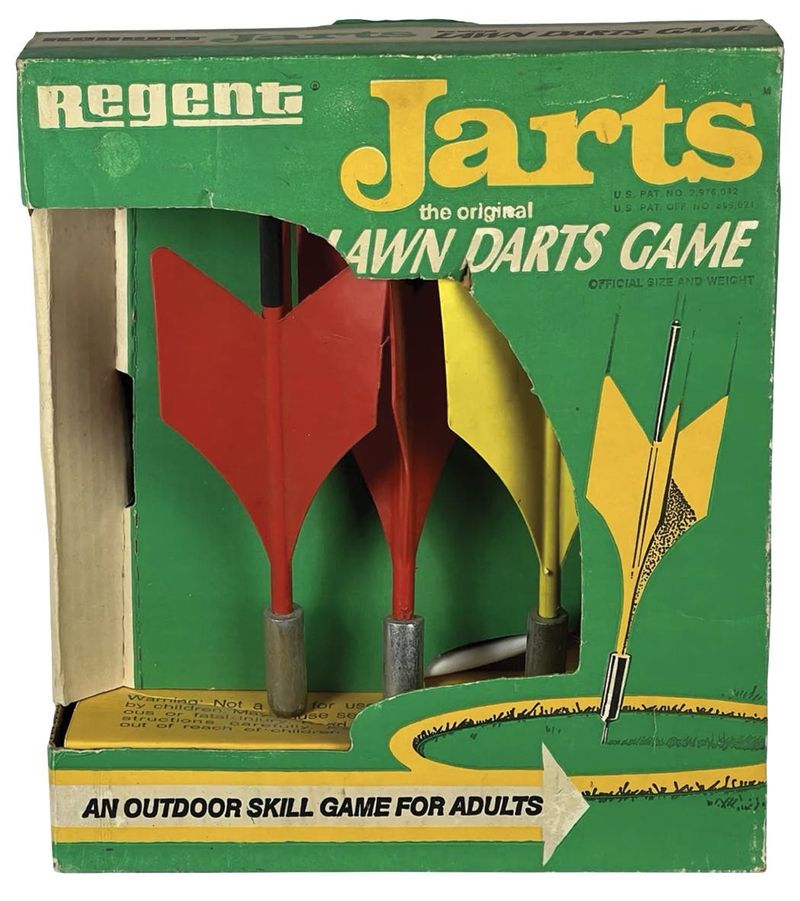
Jarts were essentially metal-tipped spears disguised as a backyard game. The premise was simple: toss heavy, pointed darts at a ground target from several feet away.
What could go wrong? Everything, as it turns out.
Between 1970 and 1988, Jarts caused over 6,700 emergency room visits and at least three child deaths.
The Consumer Product Safety Commission finally banned them in 1988 after a seven-year-old girl was killed. What’s stunning is that they sold openly for nearly two decades.
Parents tossed these metal spikes around kids without a second thought, assuming the game was as innocent as horseshoes.
Clackers
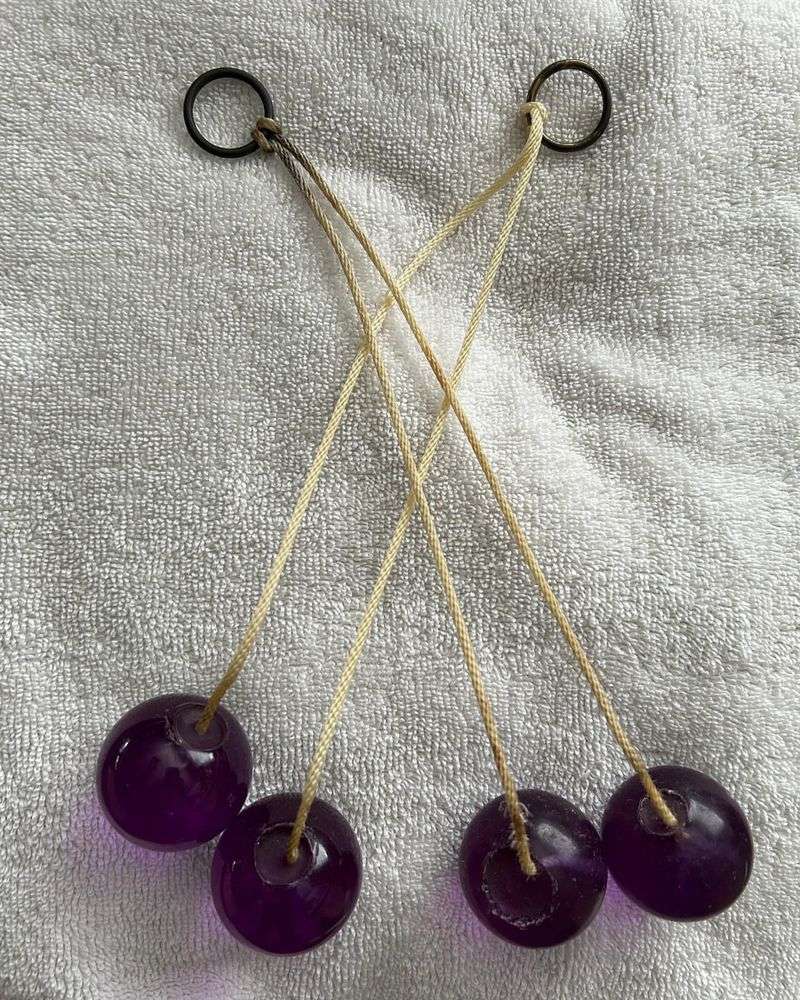
Picture two solid glass balls, each the size of a golf ball, attached to a single string. The goal was to swing them until they clacked together above and below your hand at high speed.
Sounds fun – until the glass shattered, sending shards straight toward your face.
Early versions were hard acrylic that fractured under stress. The FDA classified them as hazardous in 1976, but knockoffs kept appearing on toy shelves well into the 1980s.
Kids lost eyes and hands got sliced. Parents kept buying them anyway, because the clacking sound was undeniably satisfying to everyone in the room.
Super Elastic Bubble Plastic
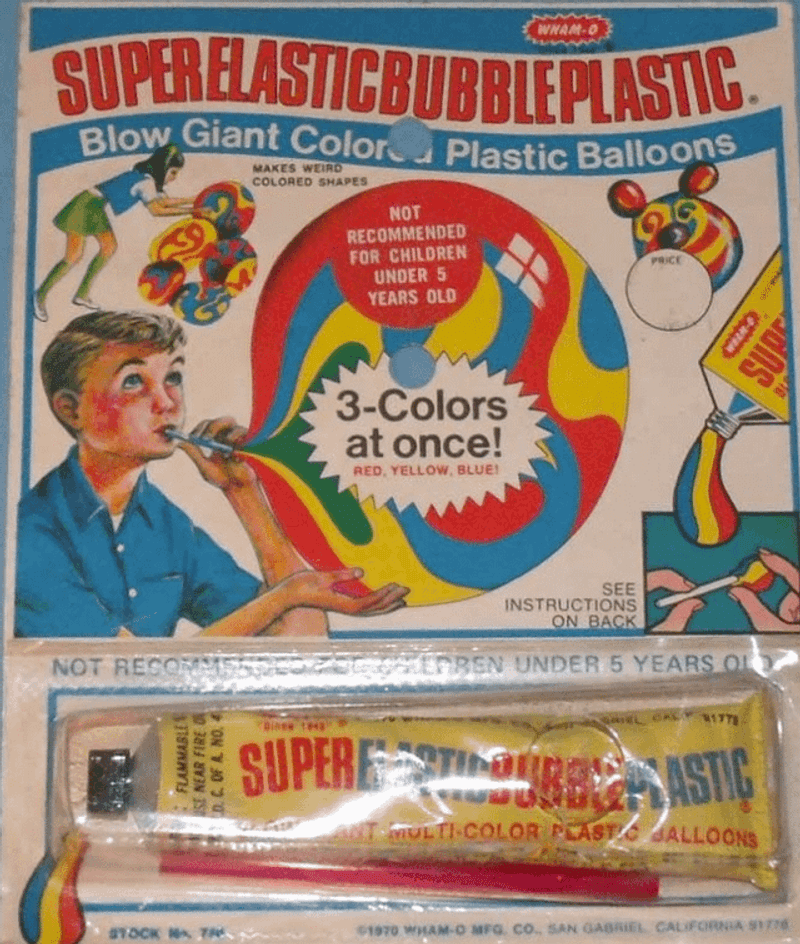
Wham-O sold this in a tube and called it a toy. You squeezed a glob of gooey plastic onto a straw and blew – creating a shimmering, iridescent bubble.
Children loved it. The main ingredient, polyvinyl acetate dissolved in a solvent, was tied to serious neurological damage when inhaled repeatedly.
The fumes were the real problem. Blowing hard into a straw delivered those chemicals directly into young, developing lungs.
No warnings appeared on the packaging at all. The CPSC eventually flagged it, but the product stayed on shelves through much of the 1980s before quietly disappearing from toy store aisles.
Creepy Crawlers (Thingmaker)
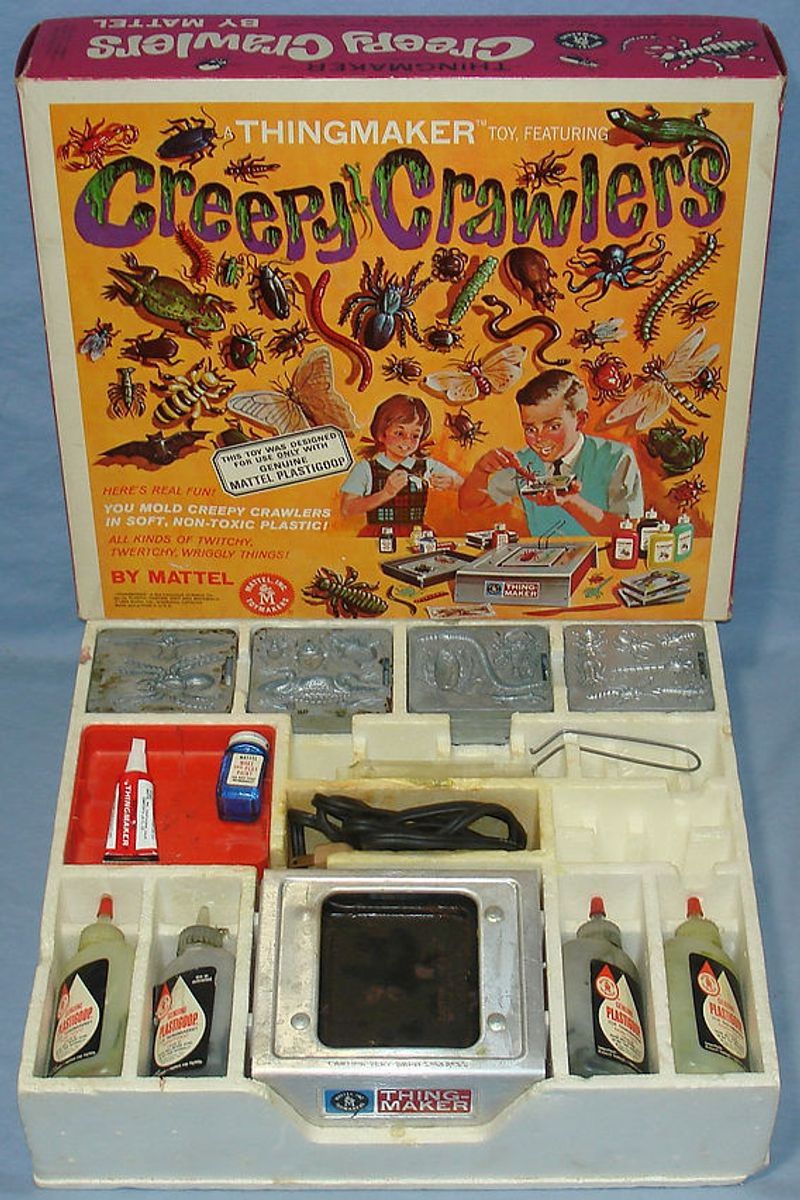
The original Thingmaker debuted in 1964, but a revamped Creepy Crawlers version kept selling through the 1980s. The concept was simple: pour liquid Plastigoop into metal molds, set them on an open hot plate, and wait.
That heating element reached over 300 degrees Fahrenheit – completely exposed, no enclosure, no automatic shutoff.
Burns were routine. The Plastigoop itself was toxic if swallowed, and impatient kids touched the molds mid-cook constantly.
Mattel eventually redesigned the toy in the 1990s with an enclosed oven. The original version, though, was essentially a beginner burn kit – marketed with cheerful cartoon bug packaging and absolutely no safety remorse.
1980s Chemistry Sets
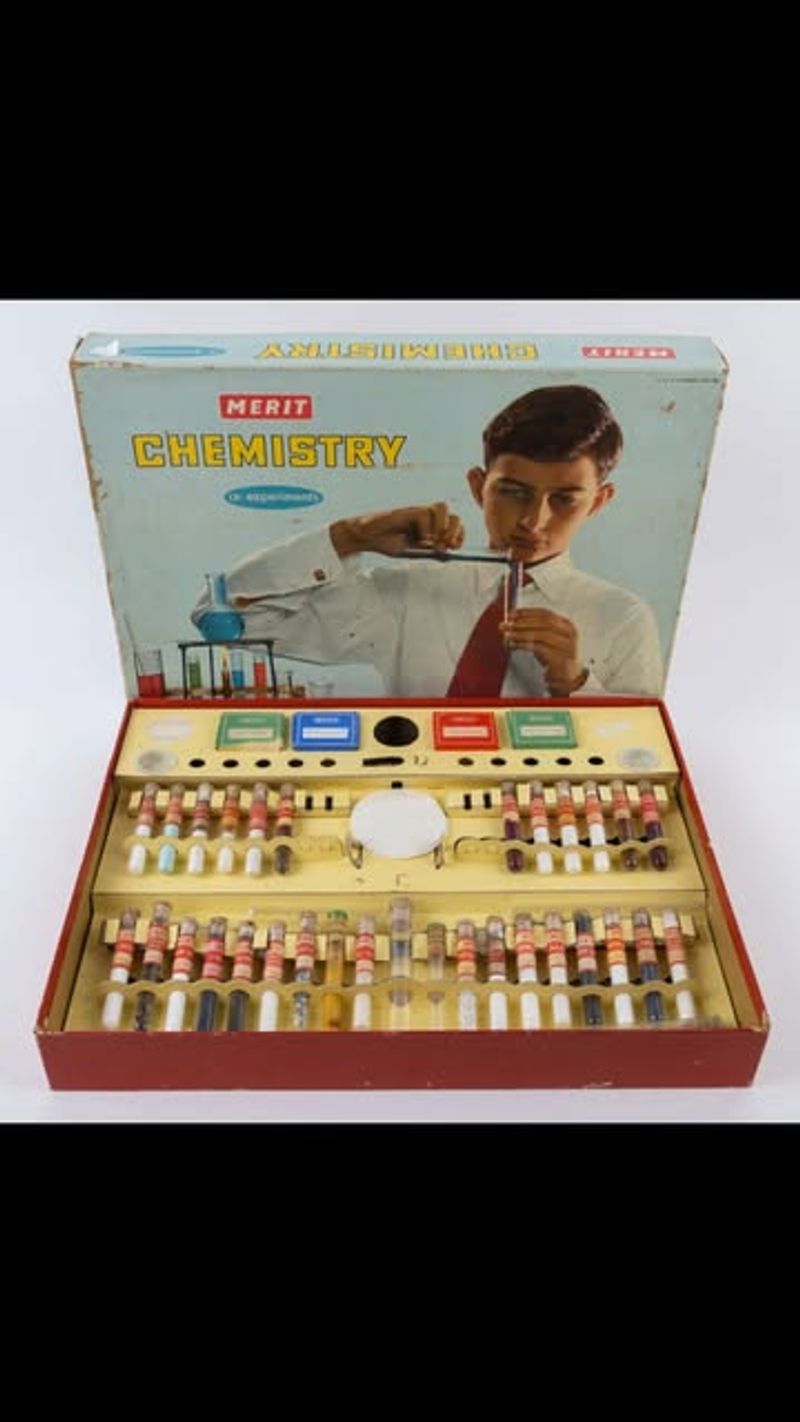
In the 1980s, chemistry sets came loaded with real chemicals – not the diluted, pre-neutralized versions sold today. We’re talking sodium hydroxide, potassium nitrate, and in some kits, sulfuric acid.
Gilbert and other manufacturers packed these sets with compounds capable of causing serious burns, fires, and toxic gas if combined wrong.
The reasoning was sound, in theory: give kids hands-on science education. The execution was reckless.
No child reads warning labels carefully. Parents assumed ‘educational toy’ meant ‘safe toy.’ Regulatory pressure eventually stripped the dangerous chemicals from hobby kits, leaving behind the glorified baking-soda-and-vinegar experiments that pass for chemistry sets today.
Cap Guns
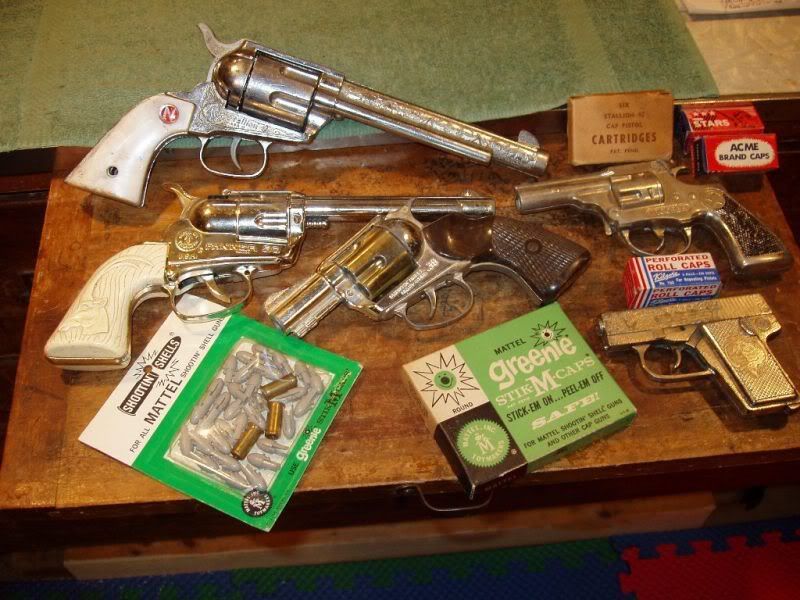
Cap guns were everywhere in the 1980s – sold in every toy aisle, gifted by every well-meaning uncle. The caps themselves, small paper discs packed with explosive powder, were the real problem.
Kids discovered fast that smashing a whole roll with a rock produced a dangerously loud, debris-scattering explosion.
Eye injuries were common. Some children tried extracting the powder to make homemade fireworks – with predictable results.
Realistic-looking cap guns were occasionally mistaken for real firearms by adults, adding another layer of risk. Nobody tracked these incidents carefully, because the toy was considered wholesome, patriotic, and completely fine for an eight-year-old.
Slip ‘N Slide
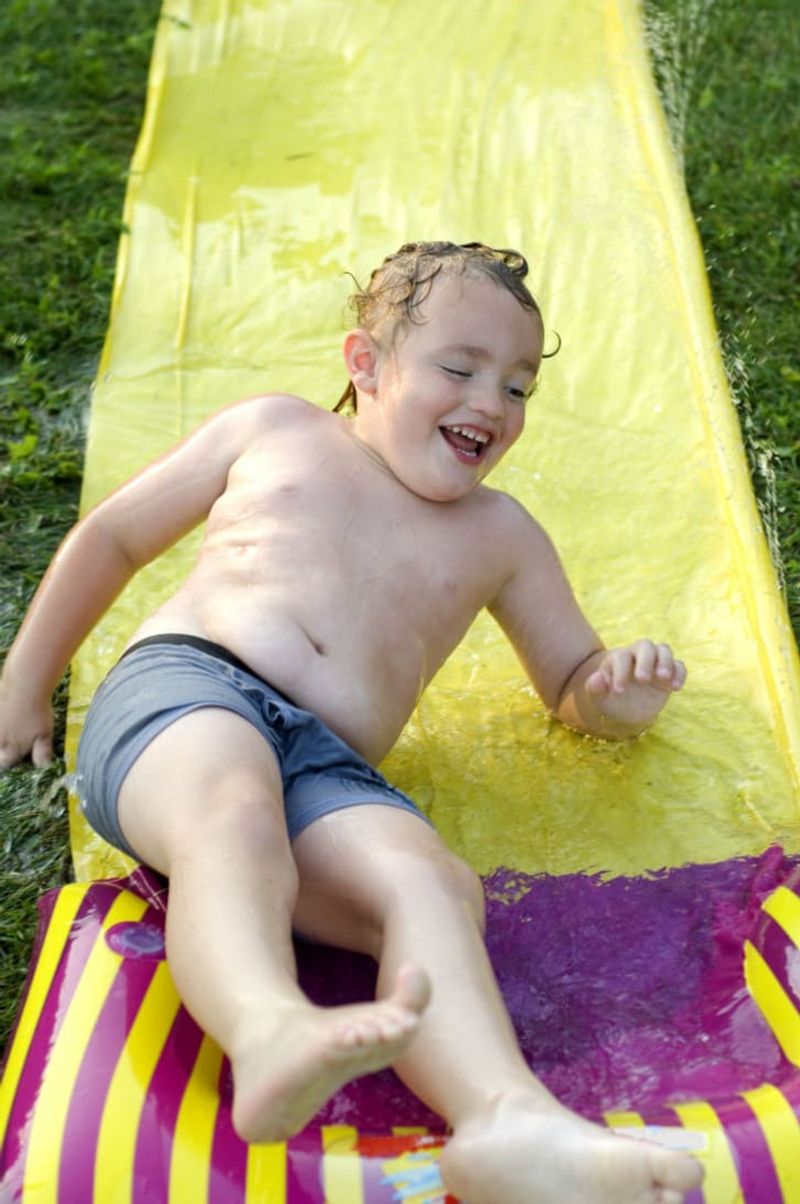
Wham-O’s Slip ‘N Slide looked like harmless summer fun – a plastic sheet, a garden hose, and a running start. For small children, it worked perfectly.
For older kids and adults who joined in, it delivered spinal injuries. Sudden deceleration at the end of the slide compressed vertebrae with brutal force.
By 1993, the CPSC had documented seven cases of serious neck and spinal injuries in older users. The packaging said ‘for children only’ – meaning Wham-O knew the risk existed.
Through the 1980s, though, the warnings were tiny, the fun looked enormous, and the injuries accumulated quietly in emergency rooms across the country.
Missile-Firing Toy Spaceships
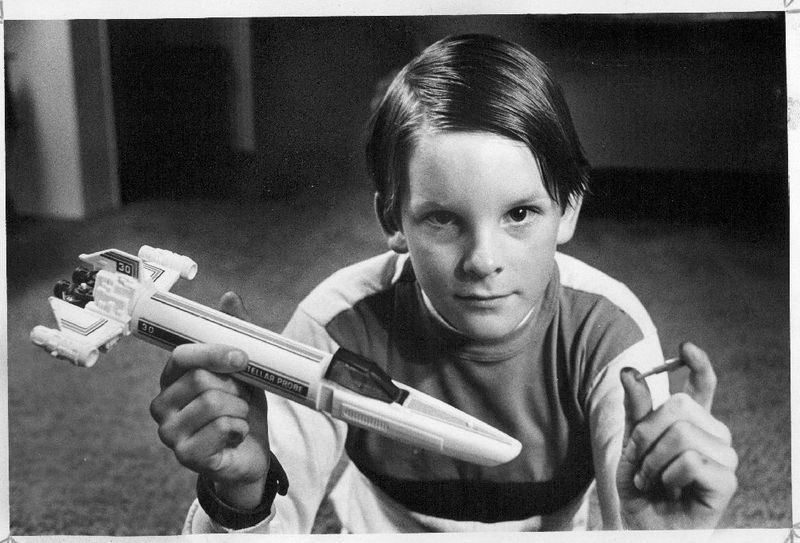
In the late 1970s and early 1980s, toy companies raced to cash in on the space craze sparked by Star Wars and Battlestar Galactica. Several released ships with small spring-loaded missiles – projectiles easily swallowed by young children.
Mattel’s Battlestar Galactica Colonial Viper was pulled after a child choked to death on one.
Millions of units had already sold before the recall hit. Replacement versions arrived with missiles permanently glued in place.
What’s striking is how many similar toys followed the same pattern: launch first, investigate the injuries later. The 1980s toy industry treated child safety as a post-market correction, not a design requirement.