
There is a particular kind of woman who walks into a room and holds it without trying. She is not performing anything. She is not waiting for permission to take up space. For some women, that quality becomes more accessible somewhere around the sixth decade of life, not because age is magic, but because self-knowledge tends to accumulate.
This article explores what that shift can look like, what the research actually says, and why your worth has never depended on anyone’s gaze.
Being seen is not the same as being desired
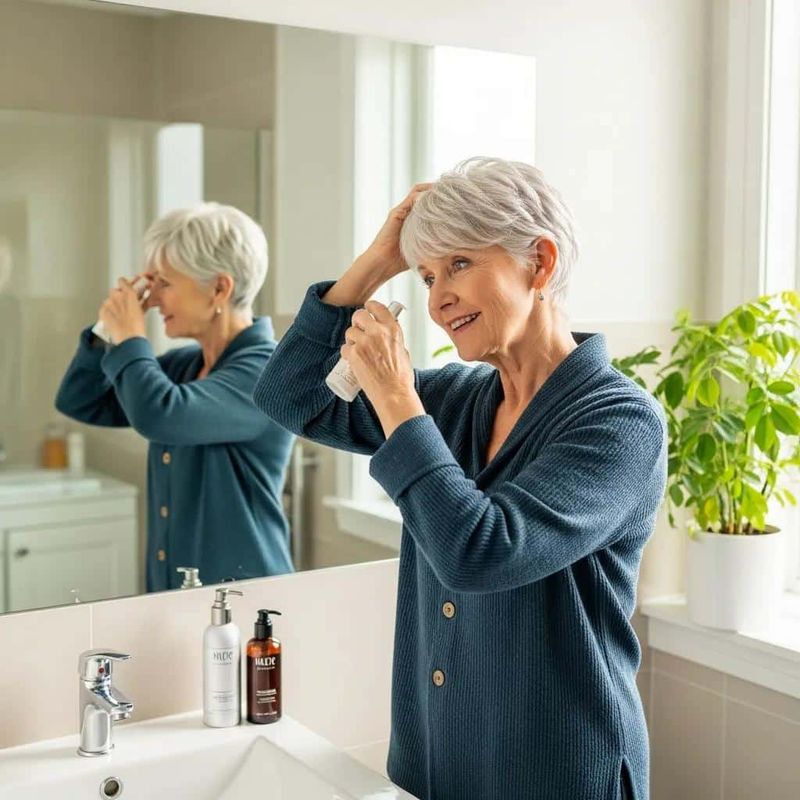
Many women approaching or past 60 describe a quiet, uncomfortable feeling: the sense that they have become harder to see. Not literally invisible, but socially overlooked in ways that feel new. A waiter addresses the younger woman at the table. A conversation partner’s eyes drift.
The cultural message, delivered in small, accumulating moments, is that desire and attention belong to youth, and that a woman past a certain age should be grateful for whatever notice she receives.
That experience is not imagined. Research on older women, invisibility, and social injustice documents how age and gender combine to narrow the space women are expected to occupy. The pressure cuts in two directions at once: conceal your aging or be seen as letting yourself go, and embrace it visibly or be accused of trying too hard. Neither path is neutral, and the exhaustion of navigating both is real.
There is also a separate problem that gets less attention. Studies on ageism and sexual health suggest that ageist assumptions can push older adults’ intimate lives to the margins, making desire and pleasure in later life less visible and less likely to receive the care or conversation they deserve. When culture treats older women as post-sexual by default, it shapes not just how others see them, but sometimes how they see themselves.
The quality often described as “magnetic” in women who seem to carry themselves differently is worth examining carefully. It may reflect self-possession, a refusal to shrink, a comfort with being present without performing. But that is not the same thing as being universally desirable, and it does not prove that men are especially drawn to older women as a group. Attraction is individual, shaped by personality, history, orientation, culture, and circumstances that no age category can predict.
Being seen on your own terms is worth something. Being desired is a separate matter entirely, and your value does not hinge on it.
What the confidence research actually supports

A long-running longitudinal study tracked self-esteem across the lifespan and found that, on average, it rises from young adulthood through midlife and reaches a peak somewhere around age 60. That same research also found that self-esteem tends to decline again in later old age, and that individual variation across the entire lifespan is substantial. So the picture is not a steady upward climb. It is a curve with a peak, a descent, and a wide range of individual experience at every point.
What the research supports is a cautious interpretation: accumulated experience may coincide with a stronger sense of self for some women around this life stage. Health, personal circumstances, financial security, social connection, and the particular challenges a woman has faced all shape where she lands on that curve. A woman navigating grief, chronic illness, caregiving, or financial instability at 60 is not failing some confidence standard. She is dealing with real life, and real life does not pause for developmental milestones.
Separating self-esteem from related but distinct ideas matters here. Self-esteem is not the same as assertiveness. Assertiveness is not the same as sexual desire. Sexual desire is not the same as attractiveness, and attractiveness is not the same as relationship satisfaction.
Evidence for one of these does not automatically apply to the others. When someone says a woman in her 60s “knows what she wants” or “owns the room,” they may be describing something real, but that something is not a single measurable trait that research has confirmed in every woman past a certain birthday.
What experience can do, for some women in some circumstances, is reduce the urgency of seeking approval from sources that were never reliable measures of worth. That quieter self-regard can change how a woman moves through a conversation, a relationship, or a room. Whether it registers as attractive to anyone else depends entirely on that other person, and that has always been true.
Boundaries make self-knowledge visible

Self-knowledge does not always announce itself. Sometimes it shows up in small, ordinary moments: saying no to a plan that does not feel right, asking for what she actually wants in a conversation instead of guessing at what the other person hopes to hear, or simply declining to apologize for having a preference. These are not grand gestures. They are the accumulated result of having learned, sometimes painfully, what it costs to ignore your own signals.
The National Institute on Aging notes that some people become more comfortable communicating their needs and preferences as they grow older, partly because circumstances change: more privacy, fewer competing demands, and a clearer sense of what matters. That is a possibility worth taking seriously, not a guarantee. Some women at 60 are still sorting out what they want, still unlearning the habit of making themselves smaller, still navigating relationships where their comfort has been treated as optional.
What clearer communication can change is the texture of an interaction. When a woman states a preference directly, she is not performing confidence for an audience. She is giving the other person accurate information about who she is and what she needs. That honesty can shift a dynamic, but it does not guarantee that the other person will respond well, stay interested, or prove to be a compatible match.
Assertiveness is not a romantic strategy. It is a form of respect for yourself and for the person you are dealing with.
The distinction between being chosen and being respected is worth holding onto. Attention, attraction, and even affection can exist without respect or compatibility. A woman who knows this, and who acts on it by declining arrangements that diminish her, is not becoming more attractive in any measurable sense. She is becoming more legible to herself, and that is the more durable gain.
When intimacy changes, honest communication remains possible

Older adults are not a uniform group when it comes to intimacy. The National Institute on Aging is direct about this: some older adults want sexual relationships, some want emotional closeness or romance without sex, some want both, and some prefer neither. All of those are legitimate. The assumption that desire fades uniformly with age is as inaccurate as the assumption that it intensifies.
What changes, for many women, is the context around intimacy, and context shapes everything.
Physical changes are real and varied. Vaginal dryness, discomfort during sex, shifts in arousal, medication side effects, chronic pain, and the effects of health conditions can all affect intimate life in ways that deserve honest conversation rather than silent accommodation. Menopause is a normal life stage, not a disease, but its effects on mood, sleep, desire, and physical comfort differ substantially from woman to woman. Some women move through it with relatively minor disruption.
Others find it significantly reshapes their experience of their own body.
Painful sex or persistent sexual difficulties are not simply the price of getting older. They can have treatable causes, and a conversation with a qualified health professional is the appropriate response, not stoic acceptance. The same applies to medication side effects that affect desire or function. Naming the problem is not a failure of femininity or of aging gracefully.
It is a reasonable act of self-care.
Bodily honesty, in this context, is one form that confidence can take. Asking for a slower pace, requesting a different kind of touch, choosing an evening of closeness that does not involve sex, or simply telling a partner what feels good and what does not: these are not dramatic declarations. They are the ordinary language of two people trying to be present with each other honestly. Whether aging makes that easier depends on the individual, the relationship, and the circumstances, not on a biological clock that automatically unlocks candor.
Connection can support confidence without replacing romance
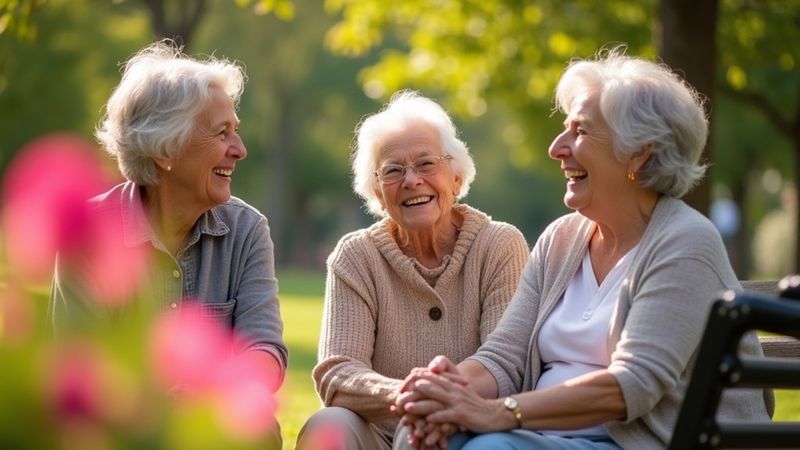
Friendship, family, community, and other meaningful relationships contribute to mental and physical well-being in ways that decades of research have documented. CDC guidance on social connection identifies meaningful relationships as beneficial to health, and their recommendations for improving connectedness emphasize nurturing varied, high-quality relationships across different areas of life. That is not a small thing. Having people who know you, show up for you, and care about your life beyond your romantic status can provide a kind of steadiness that is hard to manufacture alone.
What broader connection does not do, at least not reliably, is make a woman less lonely, less interested in romance, or automatically better at choosing partners. Those outcomes depend on the quality and depth of the relationships involved, on a person’s particular needs, and on circumstances that vary widely. A woman with a rich social life can still ache for a partner. A woman who spends most of her time alone can still make clear-eyed choices about who she lets close.
The two are not mutually exclusive.
The point is not that a woman needs a certain number of friendships to earn confidence, or that having “enough” people in her life makes romantic longing unnecessary or smaller. Wanting partnership is not a sign of insufficient self-sufficiency. It is human. The more accurate framing is that connection in its many forms, friendship, community, creative work, care relationships, can offer perspective, comfort, and a sense of belonging that does not depend on whether any one relationship is working.
Independence and connection are not opposites. A woman can want love deeply and still have a life that is not organized entirely around its presence or absence. That balance, when it exists, tends to come from accumulated experience and deliberate choice, not from aging itself.
Attention is flattering, but it is not evidence of safety

Attraction and danger can occupy the same space. A person can be genuinely interested in a woman and also be manipulative, dishonest, or harmful. Confidence, in any meaningful sense, includes the ability to notice the difference, and that means paying attention to behavior rather than to the warmth of being wanted.
Sexual health precautions remain relevant after menopause. CDC guidance on STI prevention is clear: risk depends on sexual exposure and partner history, not on fertility status. The 2021 STI treatment guidelines recommend testing for anyone with a new partner, multiple partners, a partner with concurrent partners, or a partner who has an STI. These recommendations apply regardless of age.
Skipping that conversation because it feels awkward or because a relationship feels serious is not confidence. It is a gap that deserves closing.
Financial and personal safety deserve the same directness. FTC guidance on romance scams is specific: never send money, gift cards, cryptocurrency, or wire transfers to someone you have met online or have not met in person, especially when that person creates urgency, has reasons they cannot meet face to face, or escalates emotional intensity quickly. These patterns are designed to feel like connection. They are not.
The National Institute on Aging identifies warning signs of abuse that can appear in intimate relationships regardless of how they began: pressure around sex, isolation from friends or family, unexplained financial losses, use of money or personal information without consent, and consistent disregard for stated limits. A partner’s charm, apparent sincerity, or genuine attraction does not establish safety. Noticing discomfort and taking it seriously is not paranoia. It is one of the more concrete ways confidence shows up in real life.
Discernment is not the same as suspicion of everyone. It is the practice of letting behavior, over time, carry more weight than initial feeling.
Choose your life without making attention the test
“Magnetic confidence” is not a trait that every woman develops at 60, and it is not a guarantee of anything. The self-esteem research describes an average pattern, not a promise, and that pattern includes a decline in later old age that tends to get left out of the more optimistic retellings. Real life at any age includes grief, uncertainty, illness, loneliness, and the quiet wish for love that has not arrived or has not stayed.
What confidence at this stage of life can look like, for some women in some circumstances, is becoming more legible to yourself. Knowing with more clarity what you want from a relationship and what you will not accept. Communicating discomfort instead of absorbing it. Caring for a body that is changing without treating those changes as failures.
Staying in relationships, romantic or otherwise, that make room for who you actually are. Maintaining connections that do not require you to perform a version of yourself that no longer fits.
None of that requires male attention as a measure. None of it requires you to be at a particular stage of healing, certainty, or self-sufficiency. Confidence can coexist with longing, with ambivalence, with the ongoing work of figuring out who you are when the roles that defined you have shifted.
The more useful question, maybe, is not whether you are attracting the right attention, but where you are still waiting for someone else’s approval before you act. What you might choose, and who you might become, if attention stopped being the test you measured yourself against.